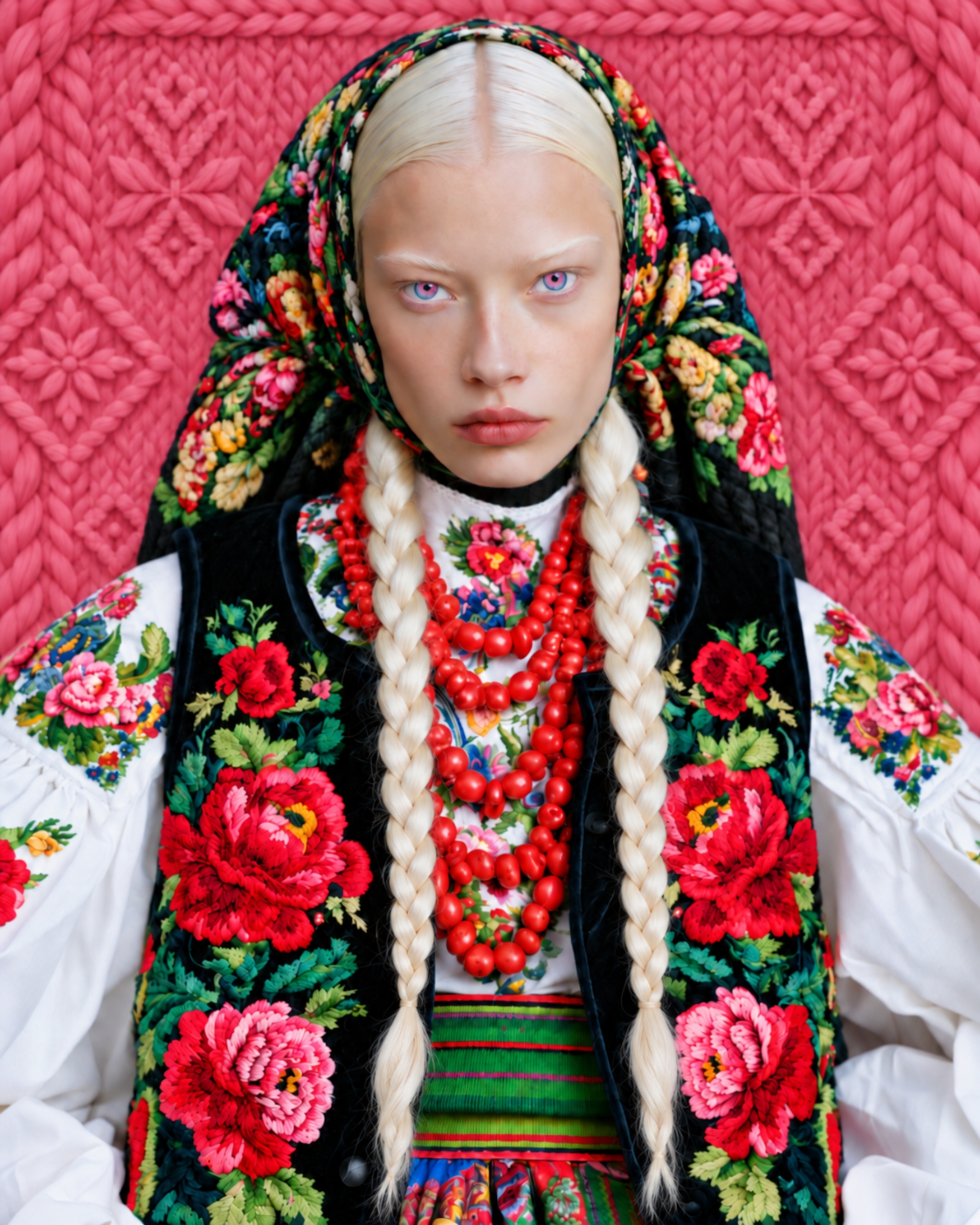
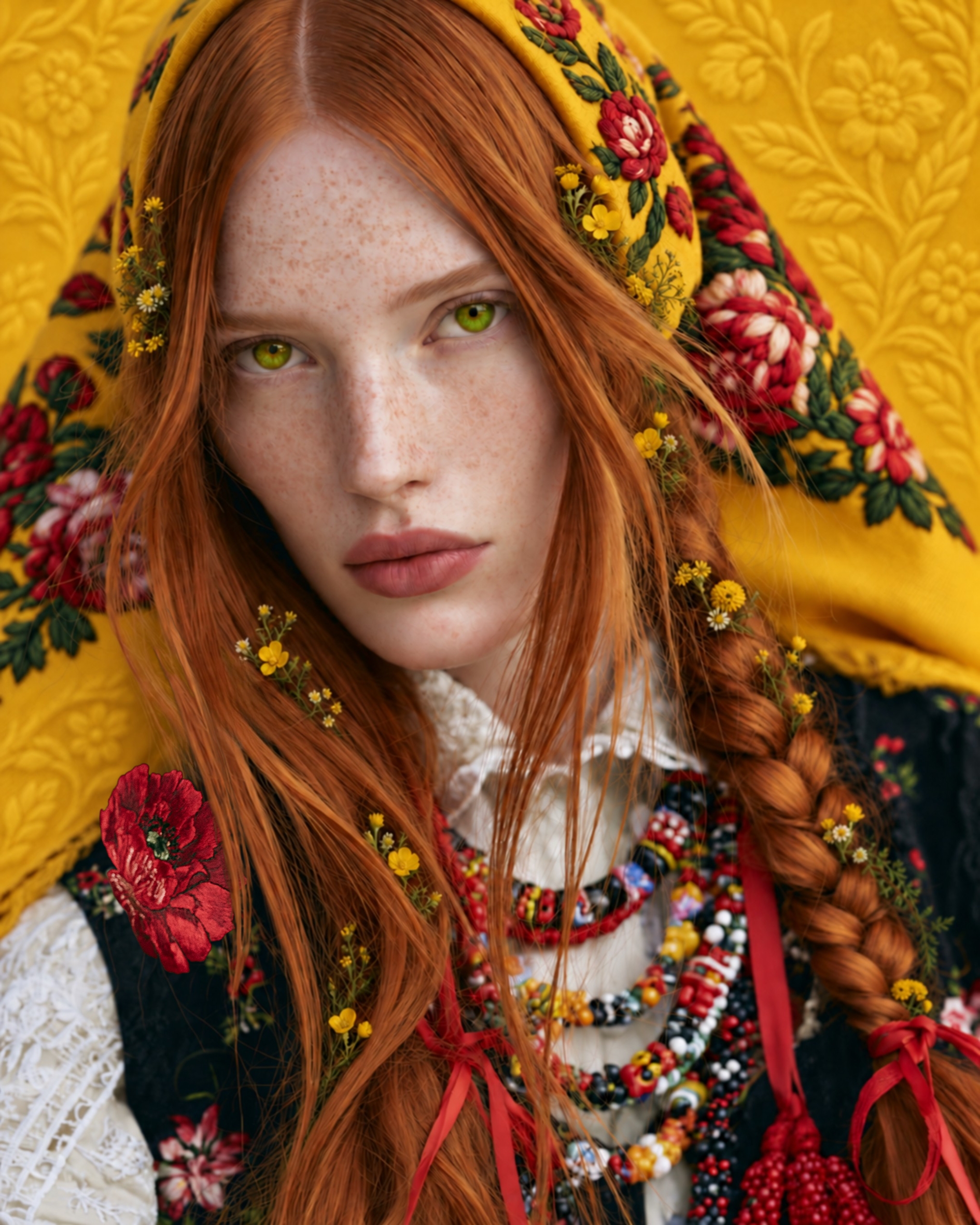
ID-ENTITY WOMAN
Short Description
ID-ENTITY WOMAN is not a reconstruction of the past.
It is a manifesto of belonging.
It is a reminder that identity never begins only in the present.
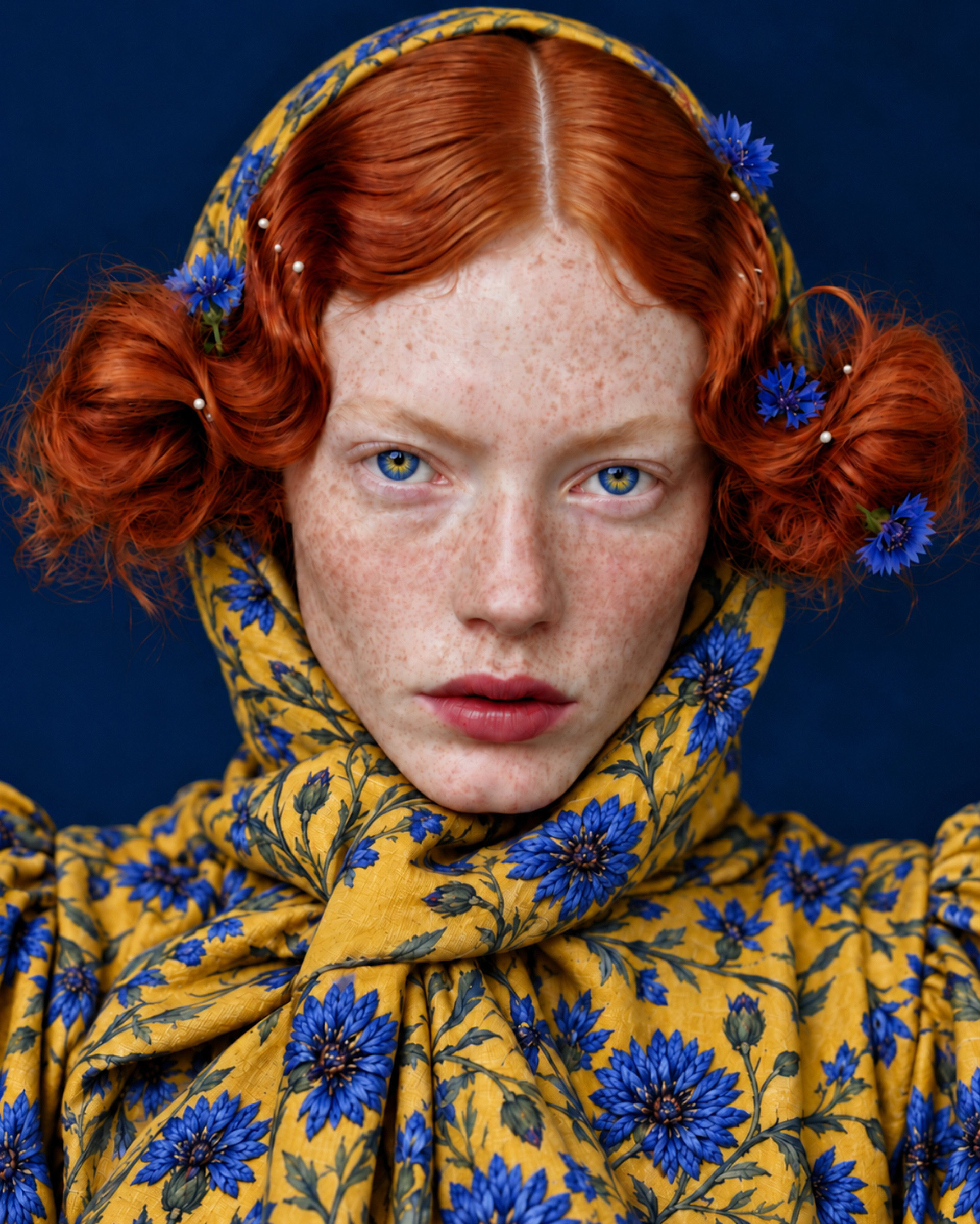
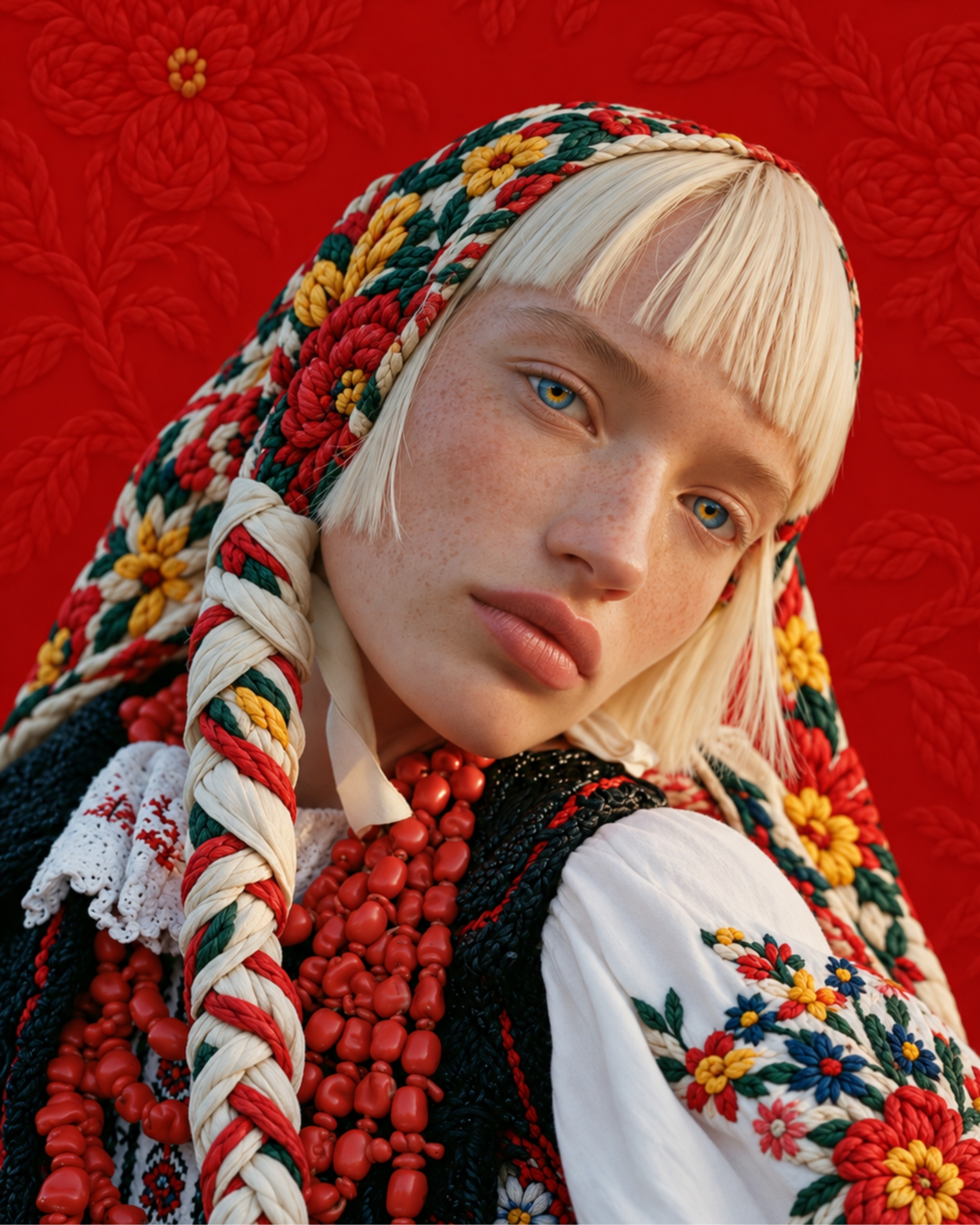
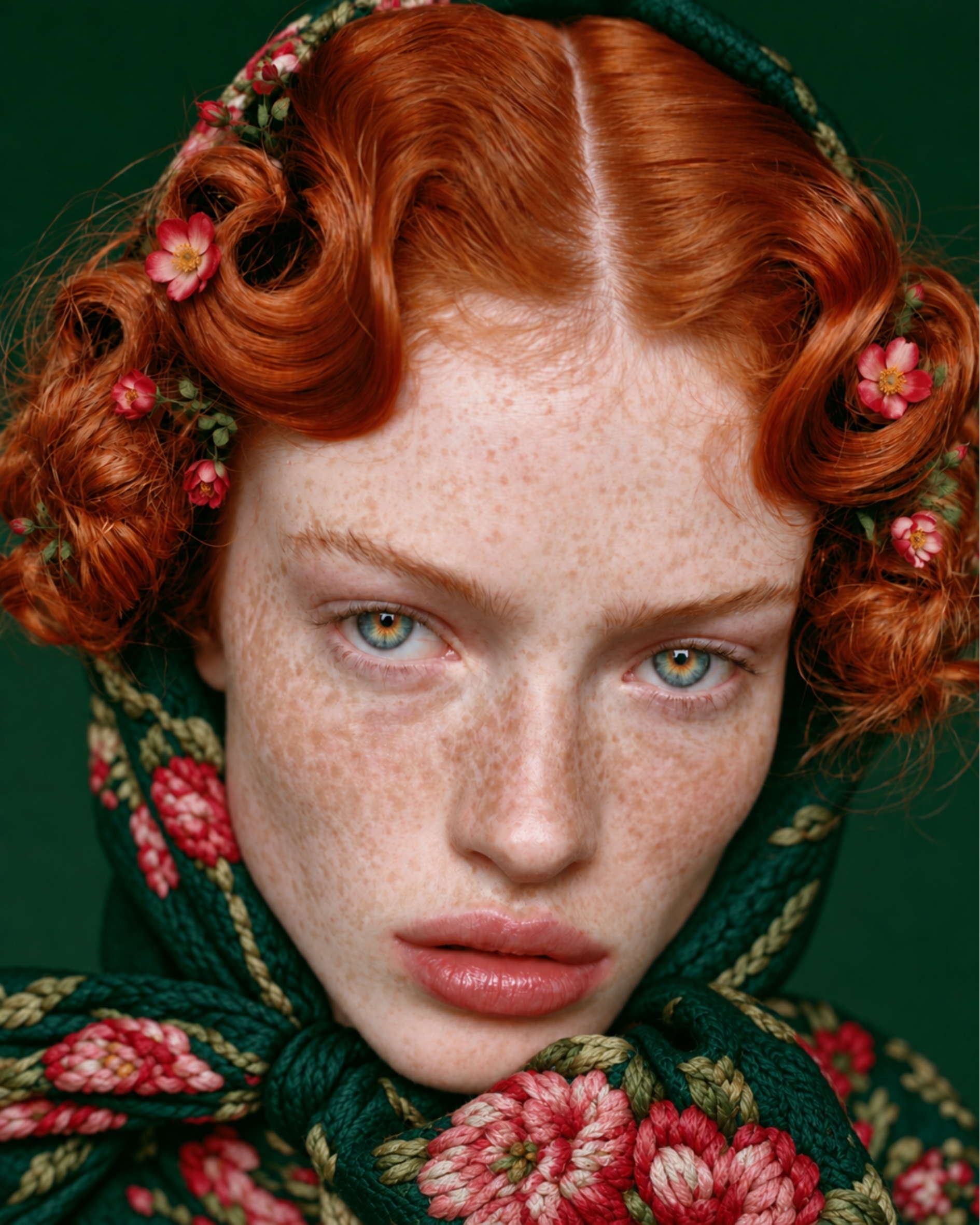
An ethnic group, a culture, its clothing, its patterns, its colors — all of this becomes one of the most intimate visual languages of the human experience and a carrier of cultural memory.
Fabrics, flowers, pearls, braids, and ornaments carry memory.
They speak of identity, origin, community, ritual, protection, pride, and transmission.
Here, tradition does not appear as folklore.
It appears as a decadence of belonging. The woman in these images does not wear her heritage like a costume.
She carries it within her.
Opulent. Sensual. Exaggerated.
Almost extravagant in its presence.
Clothing becomes a second skin.
The ornament becomes a sign.
Color becomes a declaration.
The body becomes a carrier of cultural memory.
The women in this series are at once familiar and unfamiliar.
Androgynous. Futuristic. Timeless.
They seem to come from a past we remember — and from a future that does not yet exist.
The historical visual language of Slavic tradition meets an imaginary, androgynous future. Heritage is not preserved, but transformed. Forms are enlarged, colors intensified, materials reimagined. Tradition loses none of its identity — it simply begins to assert a new one.
Because origin is not a place where we remain.
It is something we carry.
Something that changes.
Something that continues to live through us.
The past remains visible.
But the future wears it differently.
IDENTITY is not what we inherit.
It is what we choose to become from it.
Prompt Logic
The series began with research into Slavic cultural heritage, traditional clothing, floral symbolism, patterns and color. I translated these historical references into a contemporary visual language, using AI as part of an iterative creative process. Through repeated image development, selection and refinement, I exaggerated proportions, intensified colors and reimagined traditional elements to create figures that exist between cultural memory and an imagined future. The final works were selected and refined as part of a cohesive visual narrative.
Process
The inspiration came from my own exploration of heritage, identity, and cultural memory. I was particularly interested in the visual language of tradition — clothing, fabrics, flowers, ornaments, braids, and intense colors — and in the question of how this cultural heritage could be translated into a contemporary, future-oriented visual language.
Throughout the process, the series moved increasingly away from historical reconstruction. Forms were exaggerated, colors intensified, and traditional elements reinterpreted. Using AI, I developed the images through numerous iterations until figures emerged that feel simultaneously historical, androgynous, futuristic, and timeless.
The greatest challenge was to preserve a visible sense of cultural identity without simply reproducing tradition. The aim was not folklore, but transformation: the past should remain recognizable while taking on a new identity.