
The story changed

Short Description
I returned to Little Red Riding Hood without removing the elements that make the story recognizable: the red garment, the forest, the bed, and the wolf. What has changed is the woman.
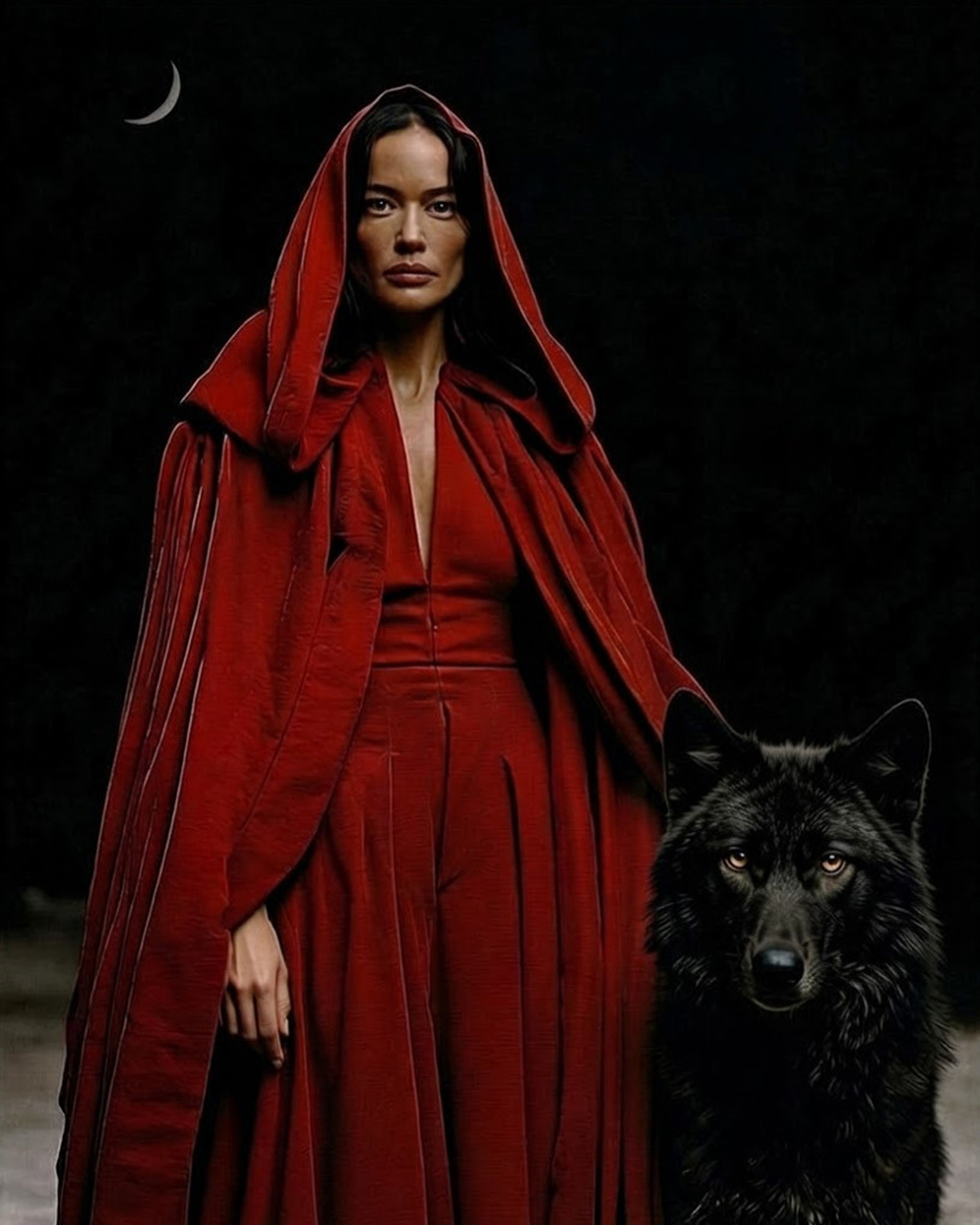
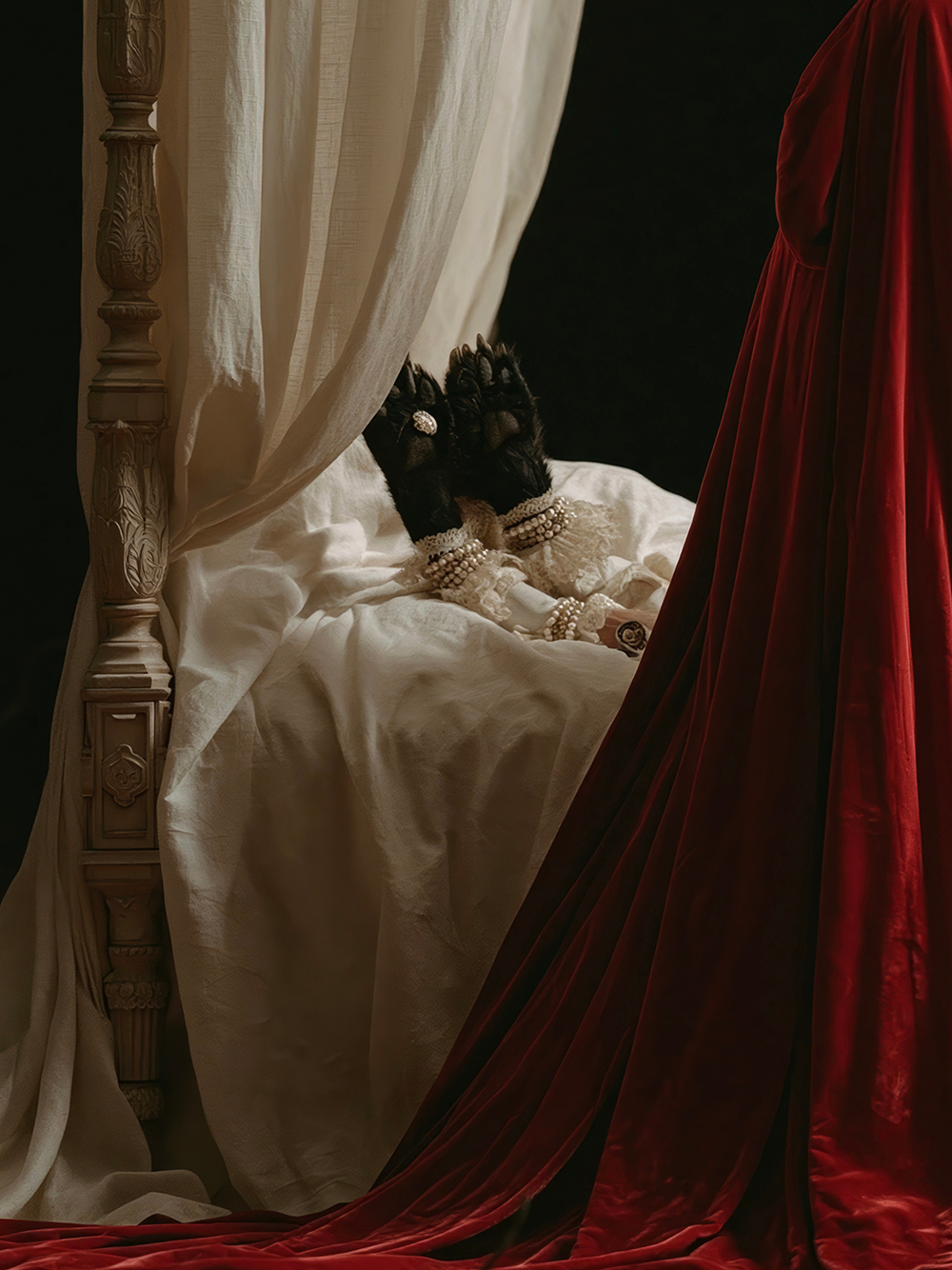
She enters the forest as a mature woman who already knows what the wolf is capable of. On the bed, he appears above the grandmother’s still visible hands, a trace of the original violence and the ending once reserved for her. She understands what has happened, but refuses to occupy the same role.
I did not want her to be rescued, nor did I want her to defeat or domesticate the wolf. In the final image, the woman and the wolf face the same direction beneath a new crescent.
The work is not about being without fear. It is about seeing danger clearly without allowing fear to decide her place.
The forest remains. The wolf remains. The story has changed.
Prompt Logic
I developed the series through recurring visual anchors, the same mature woman, a sculptural red garment, a dark forest, an ivory bed, the wolf, and the changing phases of the moon.
The bed scene became central to the prompt logic. The wolf occupies the grandmother’s place while her hands remain visible beneath him, preserving evidence of what has already happened. The woman therefore confronts him with knowledge rather than innocence.
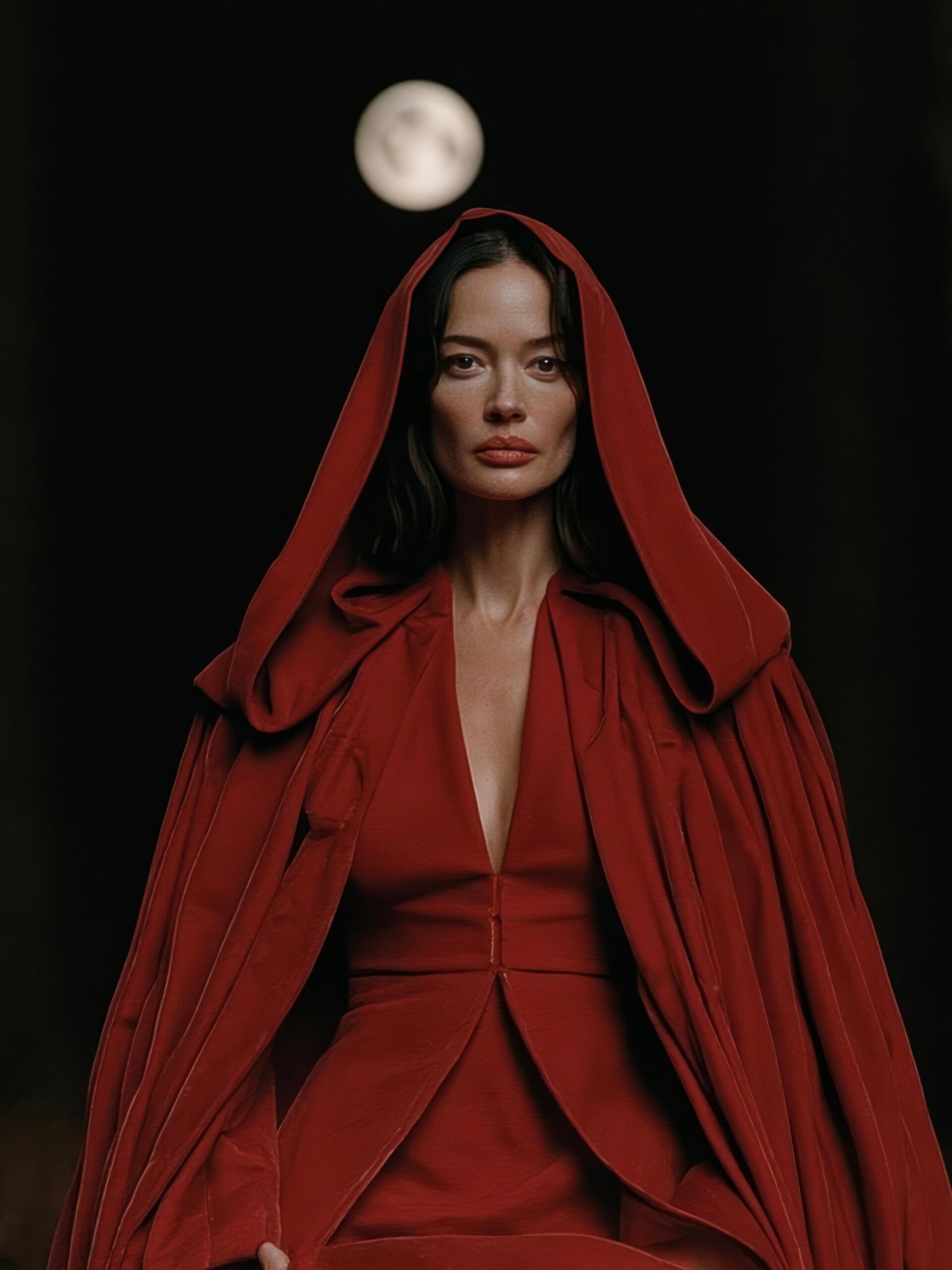
The sequence is guided by a lunar shift from the full moon of the inherited story to a waxing crescent suggesting a new cycle. Frontal compositions, a restrained palette of red, black, and ivory, cinematic darkness, and direct eye contact maintain the woman’s presence throughout.
In the final image, the wolf faces forward beside her. His nature has not changed, he is neither defeated nor domesticated. What has changed is the woman’s position in relation to him.
Process
This work is part of my exploration of how familiar stories might exist in 2026. I began with the recognizable visual language of Little Red Riding Hood, the red garment, the forest, the grandmother’s bed, and the wolf, but I wanted to move beyond a purely fashion led interpretation. The question became: what changes when the girl returns as a mature woman who already understands what the wolf represents?
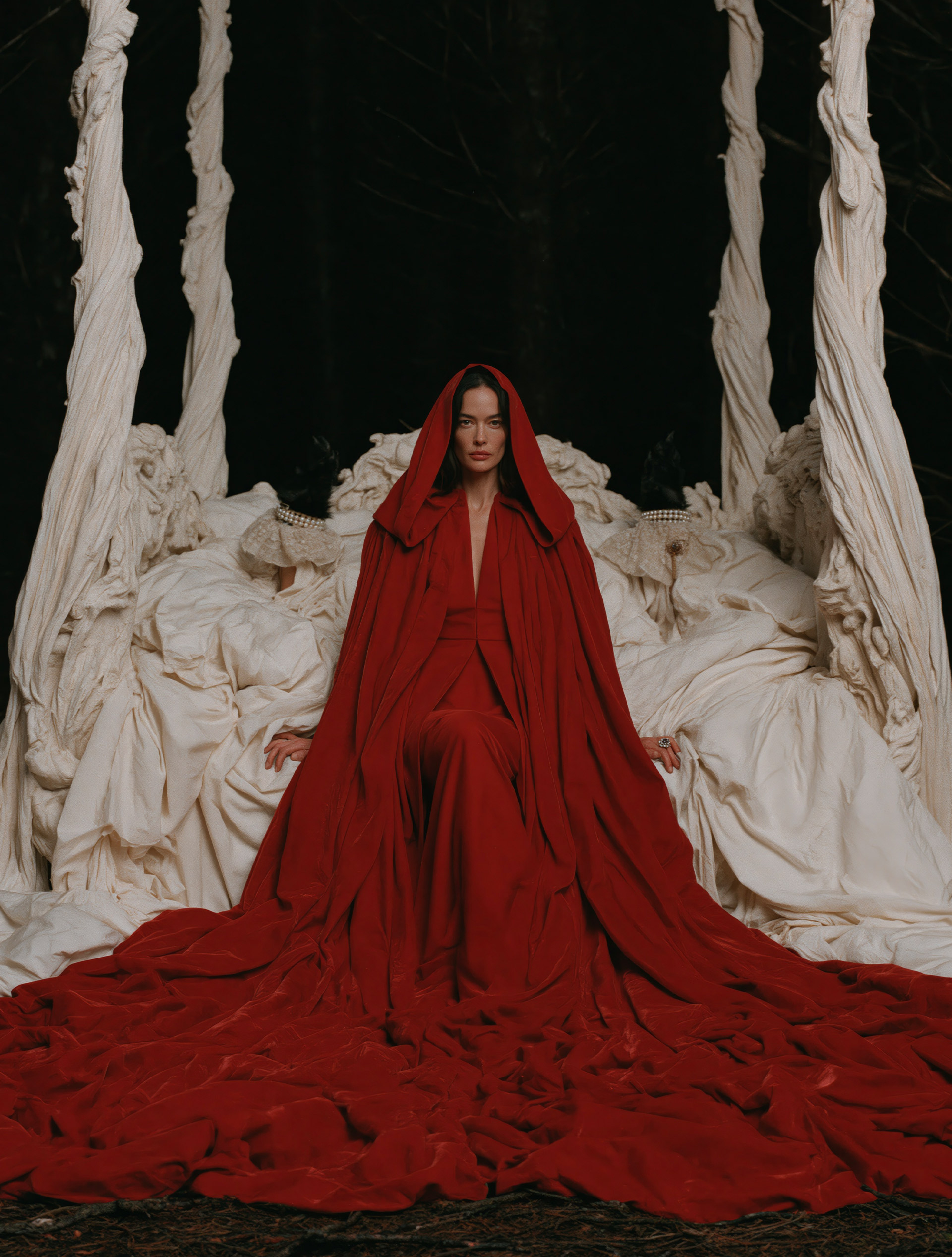
I developed the work as a sequence. The full moon introduces the inherited story, and the forest becomes a threshold she enters by choice. In the central composition, the woman sits in the foreground while the bed and two wolf figures appear behind her. A closer scene reveals the wolf occupying the grandmother’s bed, with her hands still visible beneath him. I kept this detail so that the violence of the original story would not be erased or softened.
In the final image, the woman and the wolf stand side by side, both facing forward. The wolf has not disappeared, been defeated, or become domesticated. What has changed is the woman’s relationship to him: she recognizes the danger but no longer allows fear to determine her role or her ending.
The full moon represents the completion of the inherited cycle. The crescent moon in the final image marks the beginning of a new one.
The main challenge was to make this psychological shift visible without overexplaining it. I refined the sequence through composition, gaze, recurring colour, character continuity, and the transition between the two lunar phases.