Reliquary
Short Description
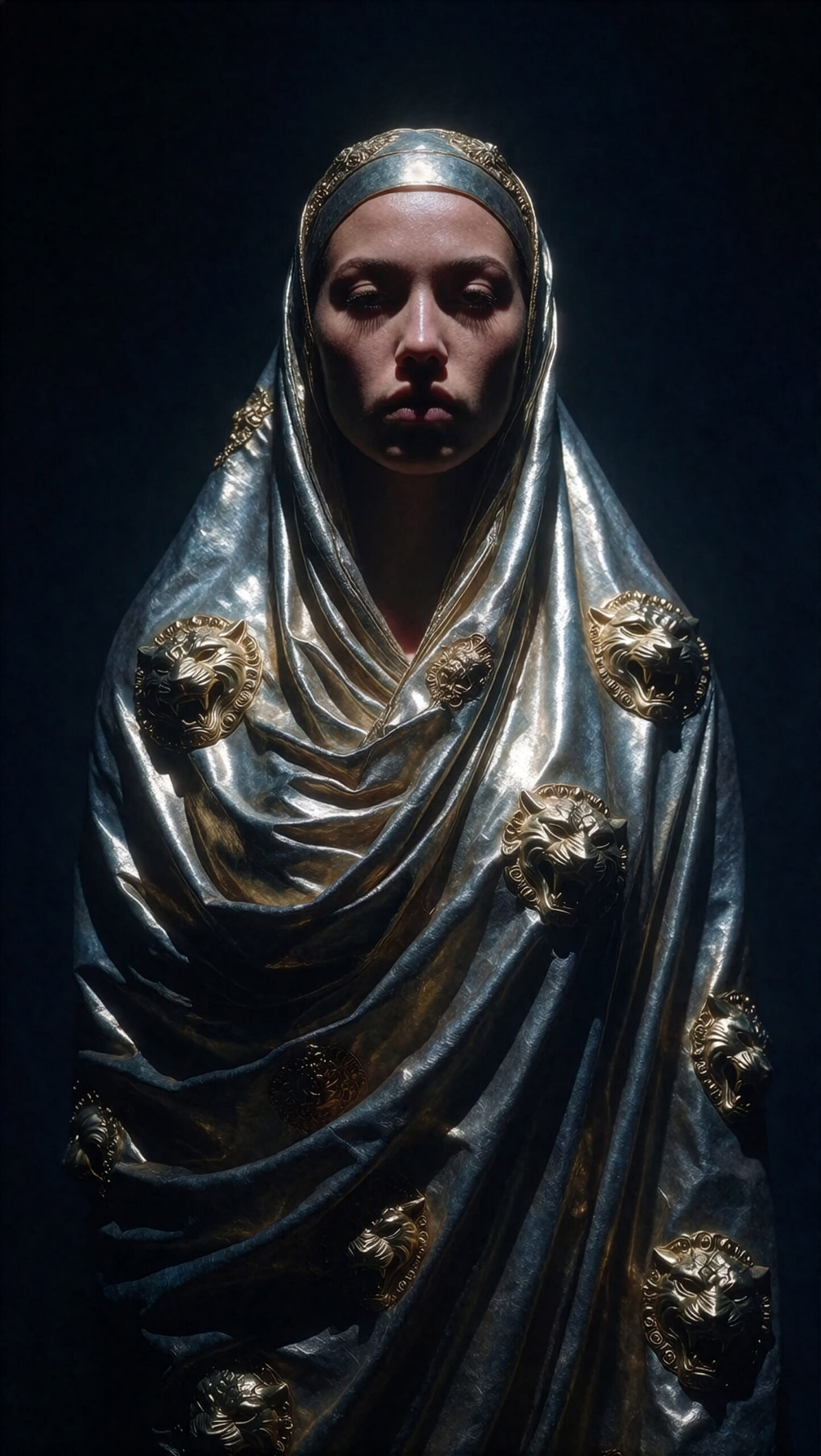
The garment is not worn. It closes.
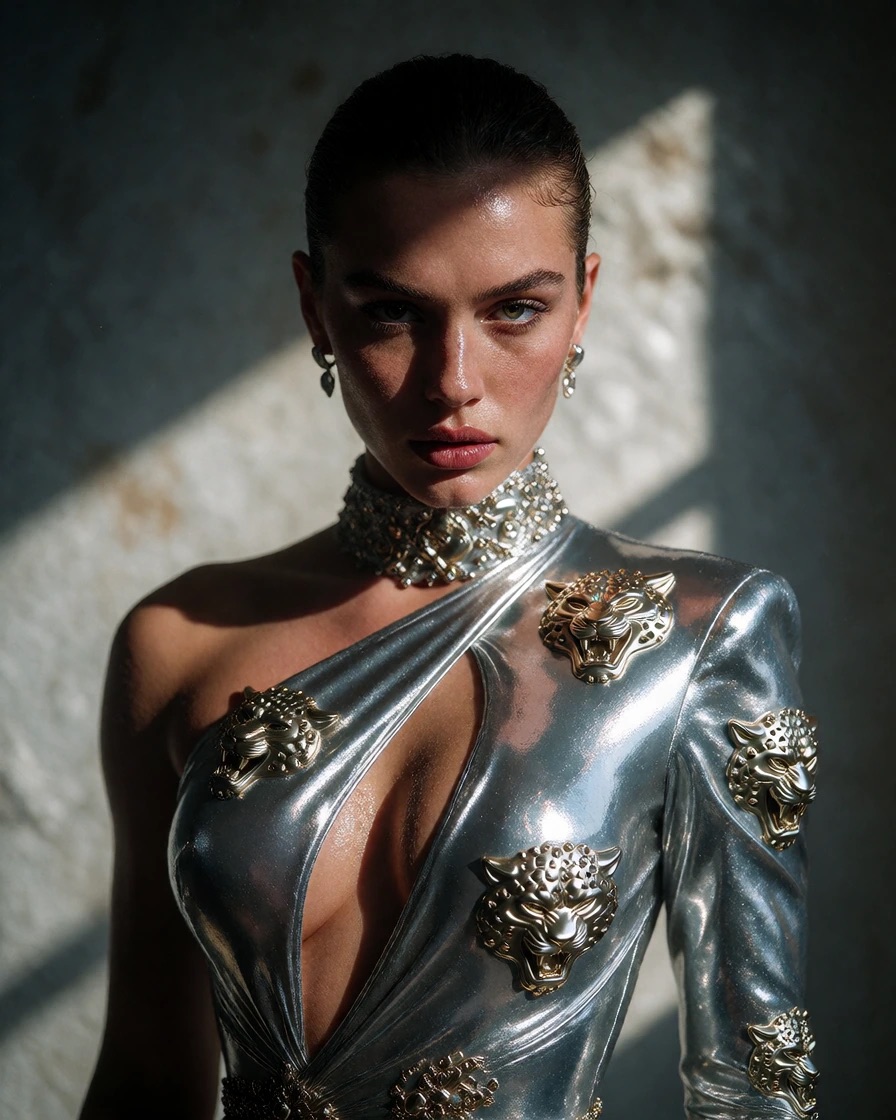
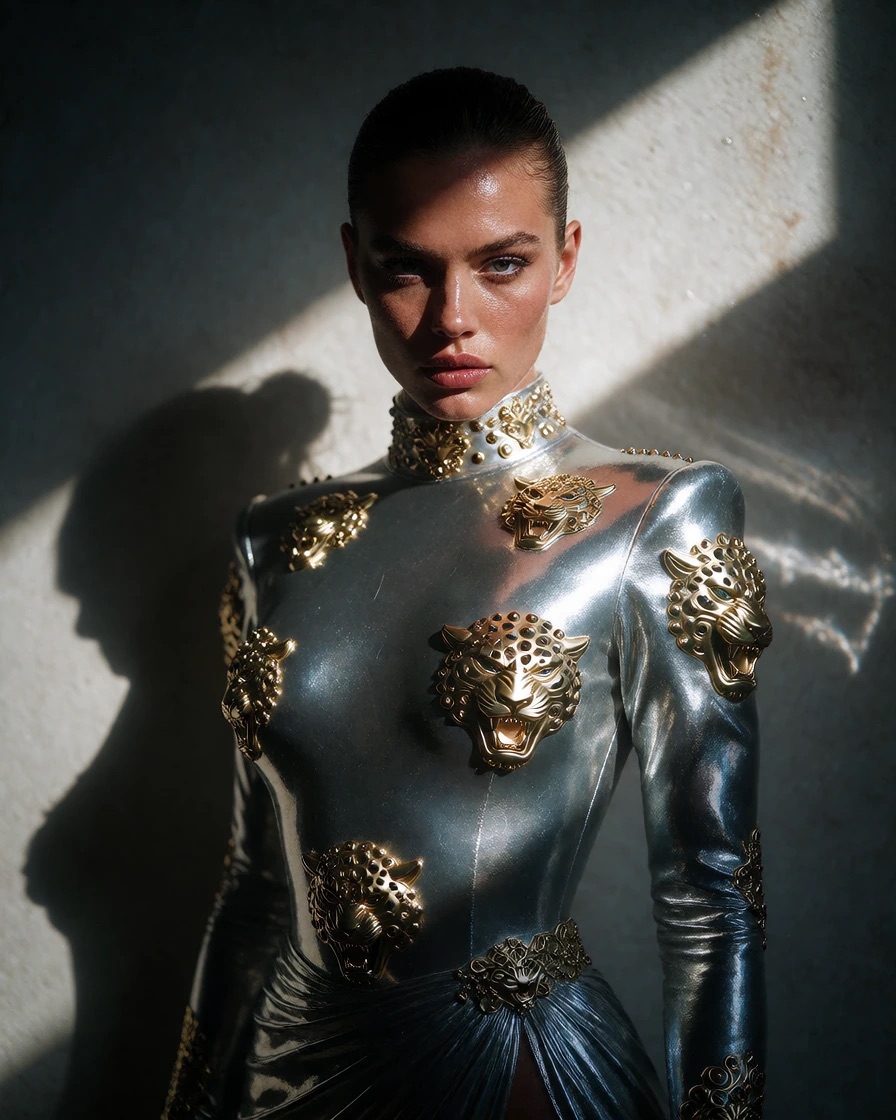
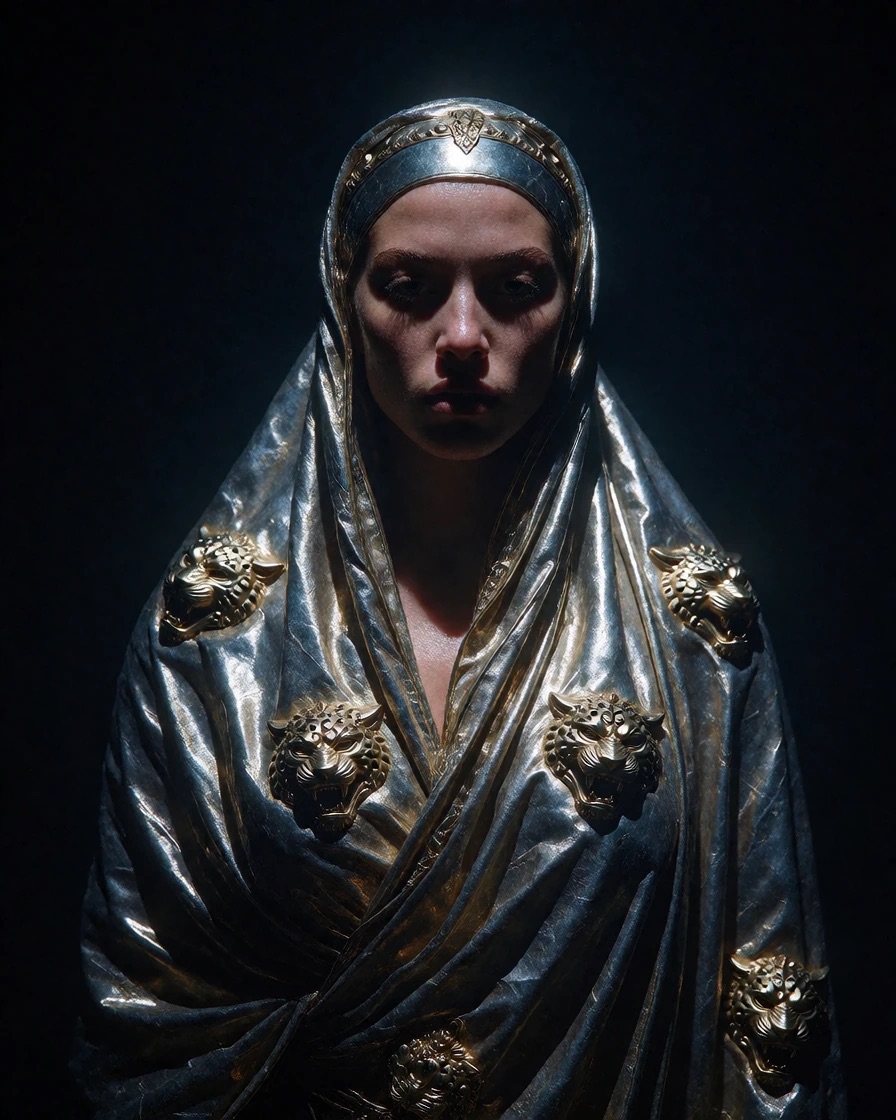
Hammered metal is draped as cloth until cloth becomes a reliquary: silver field, gold bosses, lion heads set like seals on a body that has been withdrawn from ordinary dress. The veil does the same work as the lions. It does not decorate the face. It retires it. What remains is an aperture: human enough to be recognized, enclosed enough to be official.
This is fashion as enclosure. Status is not jewelry added to a silhouette. Status is the silhouette: a portable shrine, a ceremonial hide, a body authorized by the emblems fixed to it. The lions do not illustrate power. They fasten it.
Prompt Logic
The image began as character dress: a figure who would not enter a room as a person in clothes, only as something vested. I was trying to make metal behave like cloth without turning the garment into costume armor or the face into a mannequin.
Most of the work was material. Early passes either painted the gold on like makeup or froze the drape into plate. I needed weight in the folds and skin that still looked lived-in once the metal took over. The lion heads had to read as mounts, not stickers.
I ran the idea through other models first. The lock was Stardust on Mirrorize.ai. That was the first version where the cloth had weight and the gold had a surface. Photoshop after that: upscale, clean the bosses, keep the face from going porcelain under the light.
Process
I came at this as someone who thinks in systems and pictures, not in collections. The starting point was a character problem: what does a person wear when the clothes are no longer social fabric but an office. When dress is the thing that authorizes the body rather than expressing it. That is an old problem in painting. Reliquaries, vestments, parade armor, and funerary wrapping all do the same work. They close the person and leave an emblem.
The image evolved by subtraction. Early versions were too obviously “fantasy queen”: crown logic, extra jewelry, a face performing power. That is costume. I kept cutting until only the cloth and the mounts remained. The lions are not mascots. They are fasteners. Once they sat on the drape like bosses on a door or a shield, the garment stopped illustrating sovereignty and started functioning as one.
The hard part was material honesty. Metal that drapes tends to become either foil or plate. Cloth that looks heavy tends to lose the gold. I needed a single surface that could be both: hammered, folded, and still a textile. The face was the other problem. Too idealized and the whole thing becomes a fashion plate. Too specific and it becomes a portrait of an actress in a prop. I wanted a face that could belong to a votive object: present, slightly withdrawn, not selling the garment.
Stardust on Mirrorize.ai was the first model that held that contradiction: drape with weight, metal with a skin. Photoshop was only husbandry after that: scale, the bosses, keeping the light from turning the person into porcelain.
I am not trying to design a season. I am trying to make a garment that behaves like a closed form: something you recognize as dress and as shrine at the same time.