
Penelope

Threads of Ithaca
Short Description
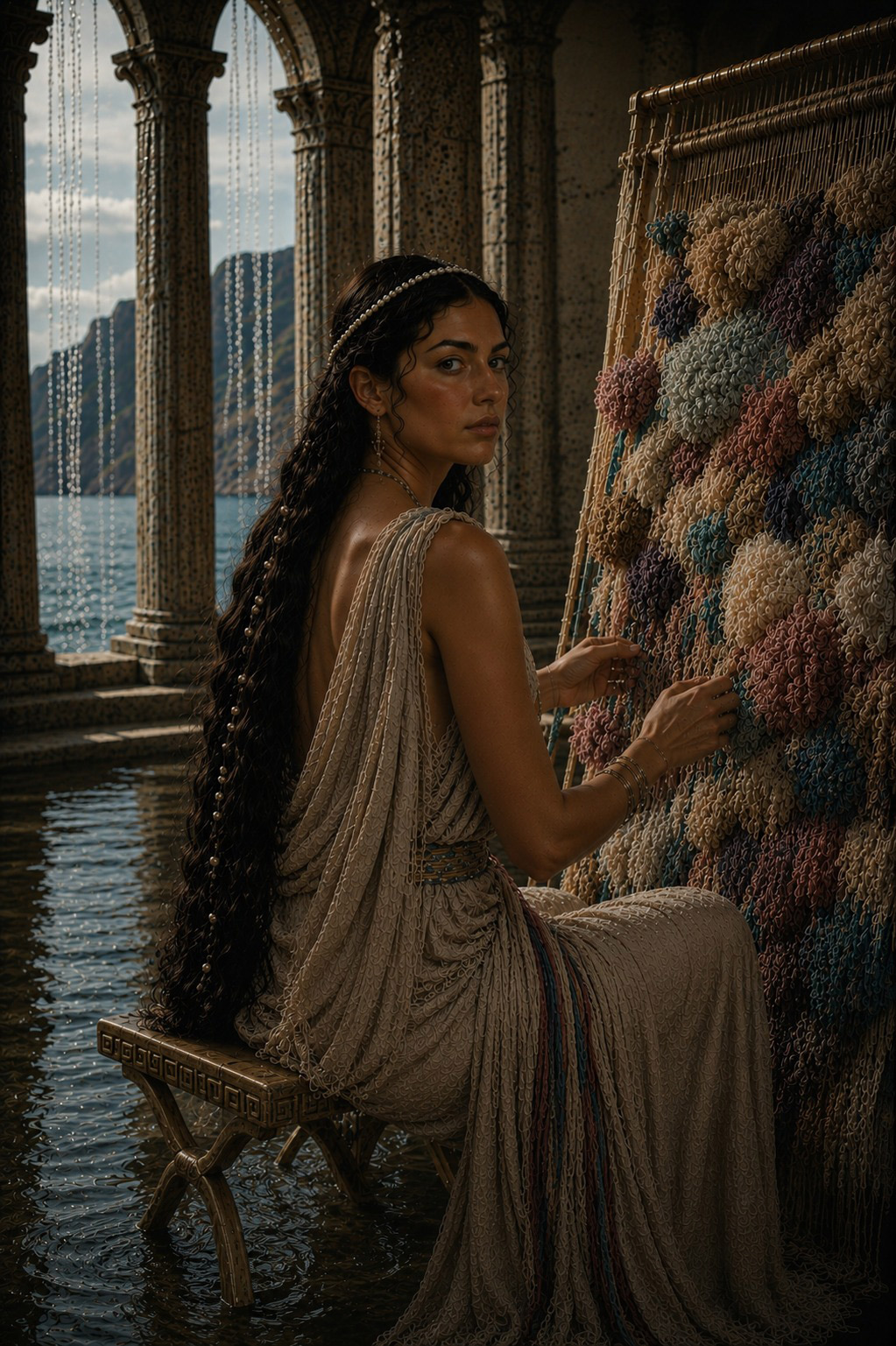
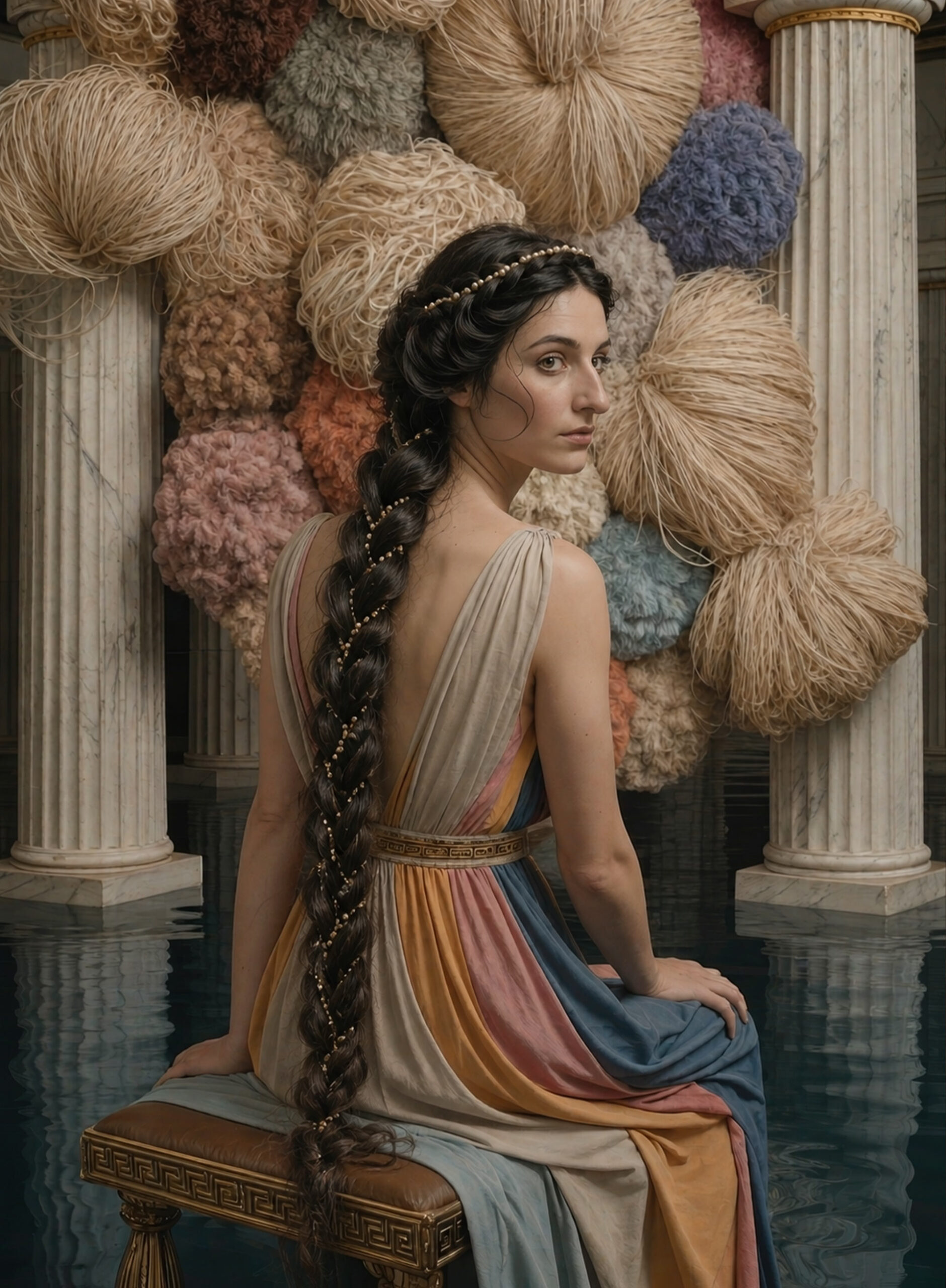
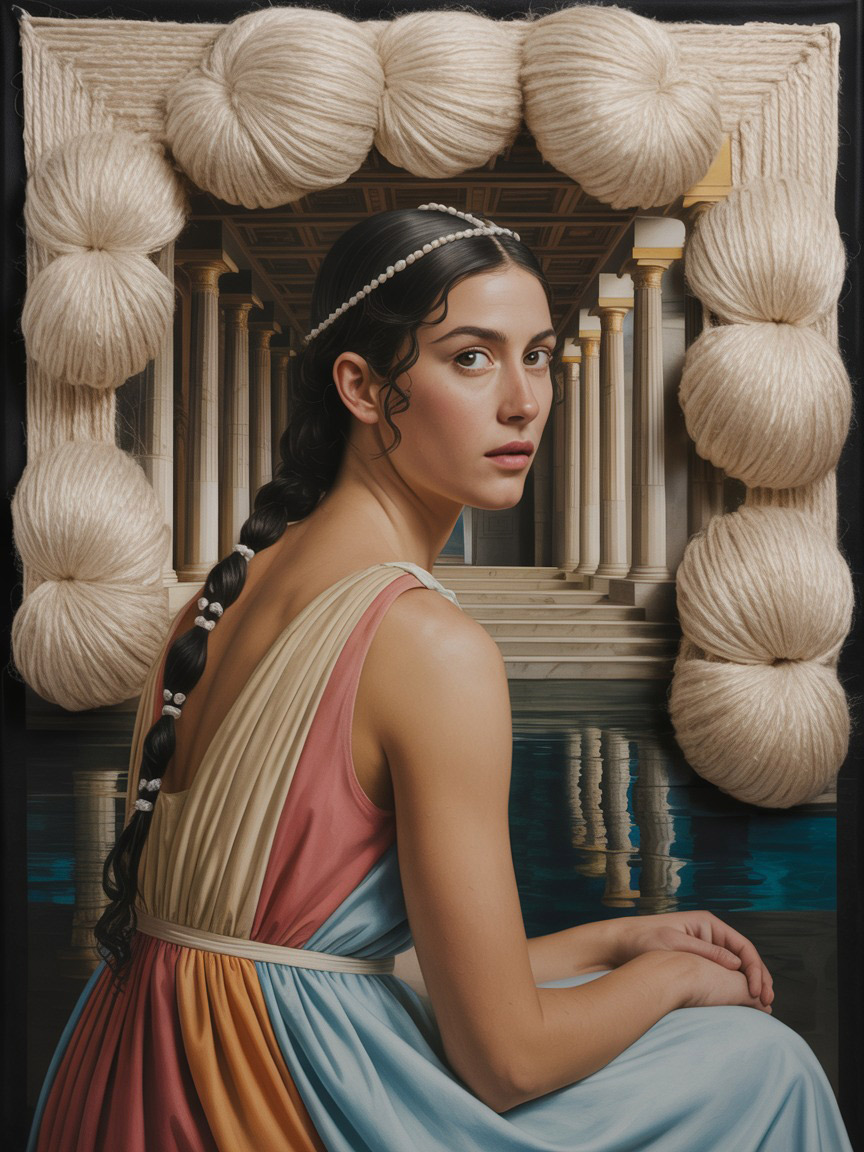
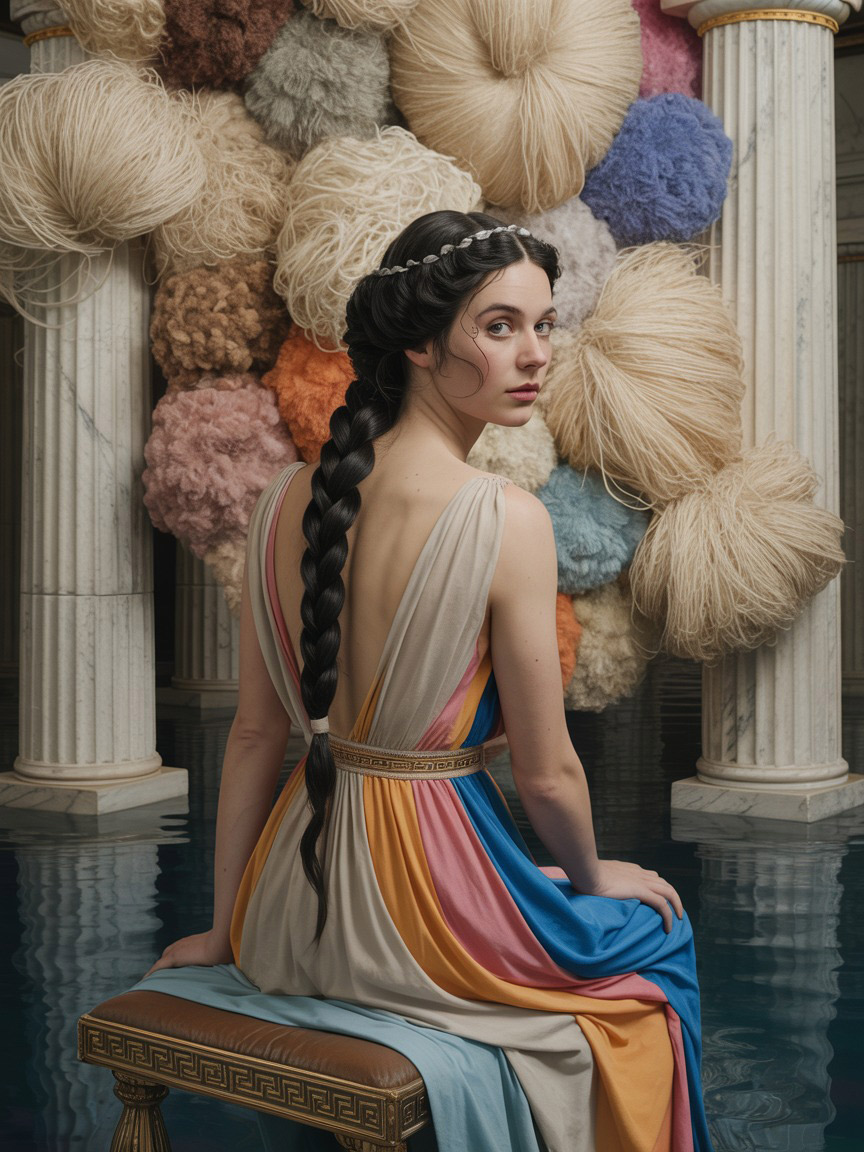
This portrait reimagines Penelope not as a passive figure of waiting, but as the unseen force holding Ithaca together during Odysseus’ absence. Inspired by ancient Greek iconography and contemporary fiber art, the image blends mythology, textile installation, and portrait photography into a timeless visual narrative.
The woven structure surrounding her symbolizes memory, strategy, patience, and emotional endurance. The threads become an extension of her inner world — fragile yet impossible to break. The water surrounding the space evokes isolation and captivity, while the marble architecture recalls the grandeur and weight of her role as Queen of Ithaca.
Her appearance intentionally avoids idealized beauty. The facial features, profile, and gaze were designed to feel human, Mediterranean, and deeply rooted in ancient representations of Greek women. The long braided hair, intertwined with subtle ornamental details, reflects both ritual and resilience.
This work explores Penelope not as “the woman who waits,” but as a woman who survives, protects, and silently resists through intelligence, discipline, and time itself.
Prompt Logic
The visual direction was built around the idea of Penelope as the emotional and strategic pillar of Ithaca rather than a passive mythological figure.
The prompt combined ancient Greek feminine iconography, Mediterranean facial features, textile installation art, and contemporary fiber art aesthetics.
Particular attention was given to avoiding idealized beauty by introducing asymmetry, natural skin texture, and references inspired by classical Greek paintings and pottery.
The environment was designed to merge mythology and emotional symbolism through water, marble architecture, and woven structures representing memory, patience, and resistance.
The color palette intentionally balances desaturated Mediterranean tones with muted textile accents to create a timeless atmosphere between ancient and contemporary visual language.
Process
The project evolved through a progressive visual exploration aimed at transforming Penelope from a traditional mythological figure into a contemporary emotional symbol.
The first stage focused on establishing the core visual language: Greek architecture, water, textile elements, and a restrained Mediterranean color palette. Early compositions explored the relationship between classical mythology and fiber-based contemporary art installations.
The second phase concentrated on character refinement. Multiple variations of hairstyle, facial structure, profile, and styling were developed to move away from idealized “AI beauty” and toward a more human and historically inspired interpretation. Ancient Greek paintings and pottery references influenced the facial proportions, gaze, and distinctive nose shape.
As the process evolved, the woven structures became increasingly important narratively. The traditional loom was reinterpreted as a symbolic fiber-art installation representing memory, patience, resistance, and emotional endurance. Texture, textile density, and material realism were progressively refined to create a stronger tactile presence.
The final image focused on emotional balance and visual cohesion. Hair design, muted textile tones, water reflections, and architectural depth were carefully adjusted to create a timeless atmosphere suspended between mythology, fine-art portraiture, and contemporary installation art.
The entire process was driven by the intention to portray Penelope not as a passive figure waiting for Odysseus, but as the silent force holding Ithaca together through resilience, intelligence, and time.