

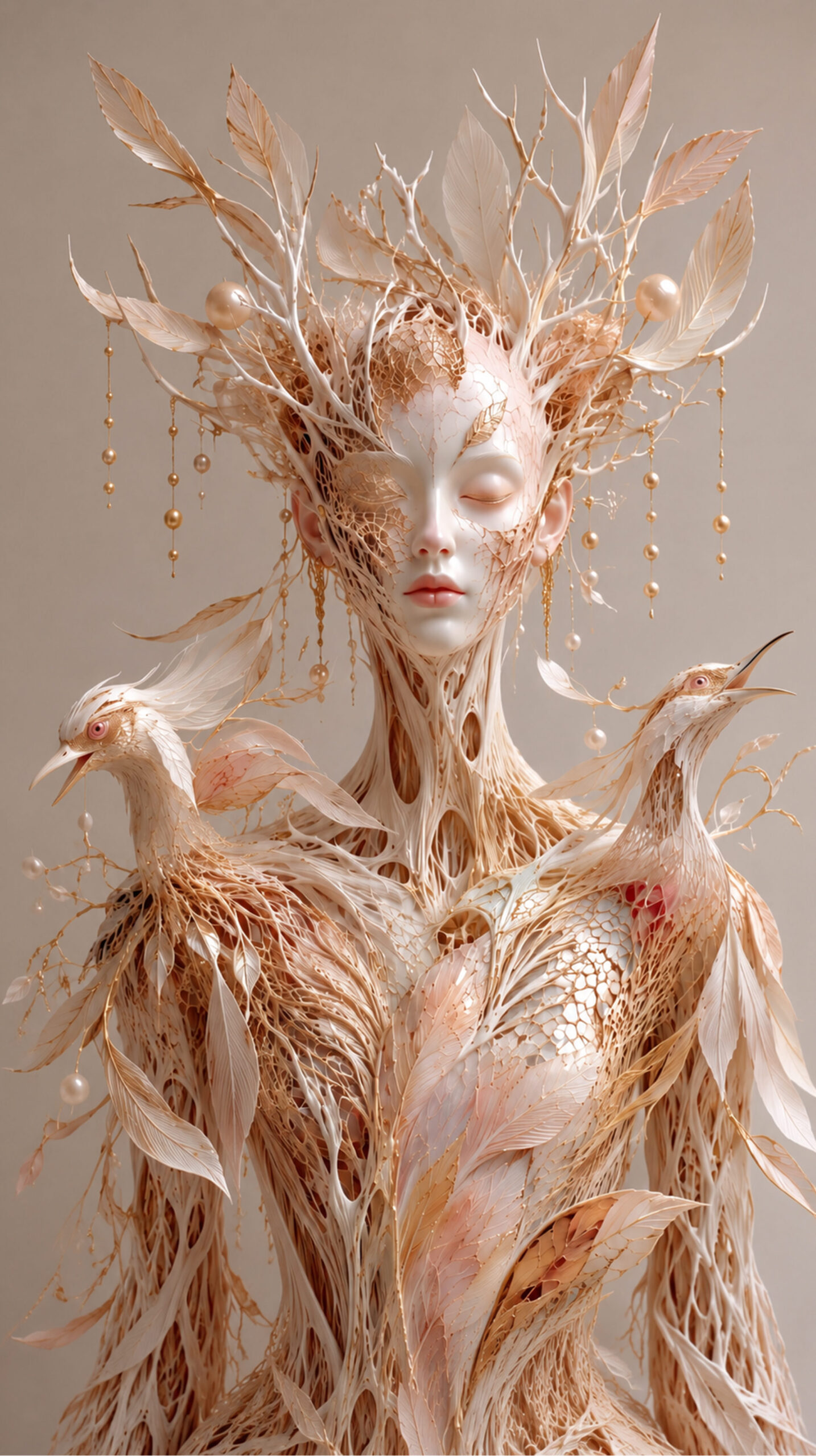
MEMORY COLLAPSE
Designer
Yarina
Country
Russia
category
Conceptual & Fine Art
Prize
Official Selection 2026

Short Description
MEMORY COLLAPSE imagines a world rebuilt by artificial guardians from stored memories of life. Their reconstruction appears perfect until a single error enters the memory.
The error does not destroy the world. It makes it subtly wrong. Anatomy slips, species boundaries blur, and beauty itself becomes evidence that something essential has been lost.
The series asks whether perfectly reproducing the image of life is the same as preserving life itself. In its final movement, an ordinary sparrow, soil and a new sprout become a quiet counterpoint to the reconstructed world – simple forms of life that cannot be reduced to flawless representation.
MEMORY COLLAPSE explores the fragile boundary between memory and reality, representation and existence, and the moment when a system capable of recreating everything it remembers encounters something it still cannot fully understand: life.
Prompt Logic
The visual logic of MEMORY COLLAPSE is built around a contradiction: a reconstructed world can become more visually perfect while becoming less biologically true.
The series begins with controlled, coherent forms and gradually introduces errors into living anatomy and species identity. These distortions are not treated as random surrealism. Each one functions as evidence of corrupted memory.
The Guardians and their world remain visually refined, calm and beautiful even as the underlying logic of life begins to fail. This contrast between aesthetic perfection and biological wrongness became the central visual principle of the project.
Across the five images, the progression moves from reconstruction to error, from error to collapse, and finally toward the recognition of simple living forms.
Process
MEMORY COLLAPSE was developed as a five-image narrative about memory, reconstruction, and the difference between representing life and understanding it.
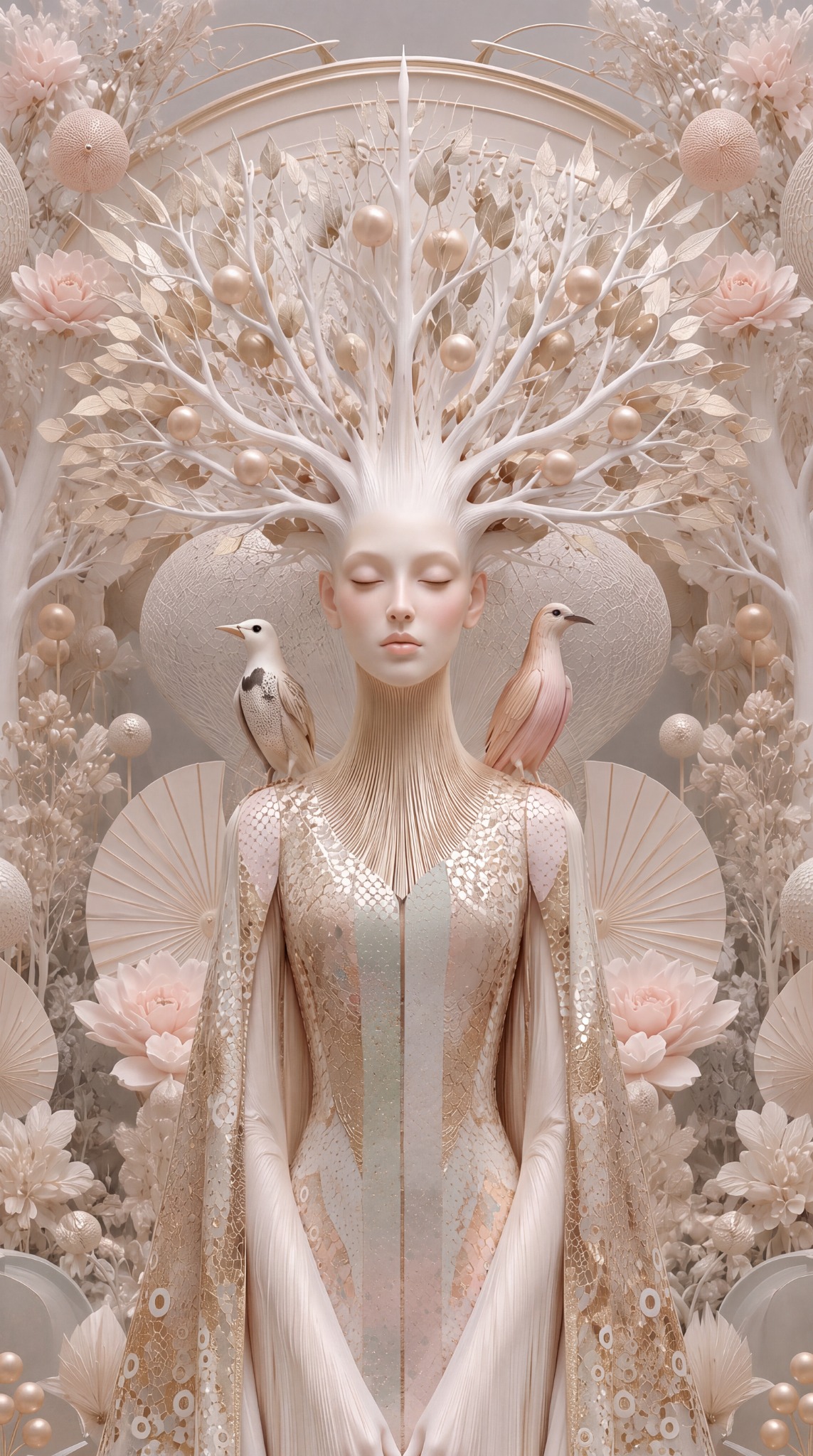
THE KEEPER introduces the artificial Guardians created to preserve the memory of the living world. Their forms are intricate, organic and almost impossibly refined, reflecting the precision of the system entrusted with remembering life.
THE PERFECT GARDEN shows the world reconstructed from that memory. Everything is harmonious, controlled and beautiful. At this stage, there is no visible reason to question the accuracy of what the Guardians have created.
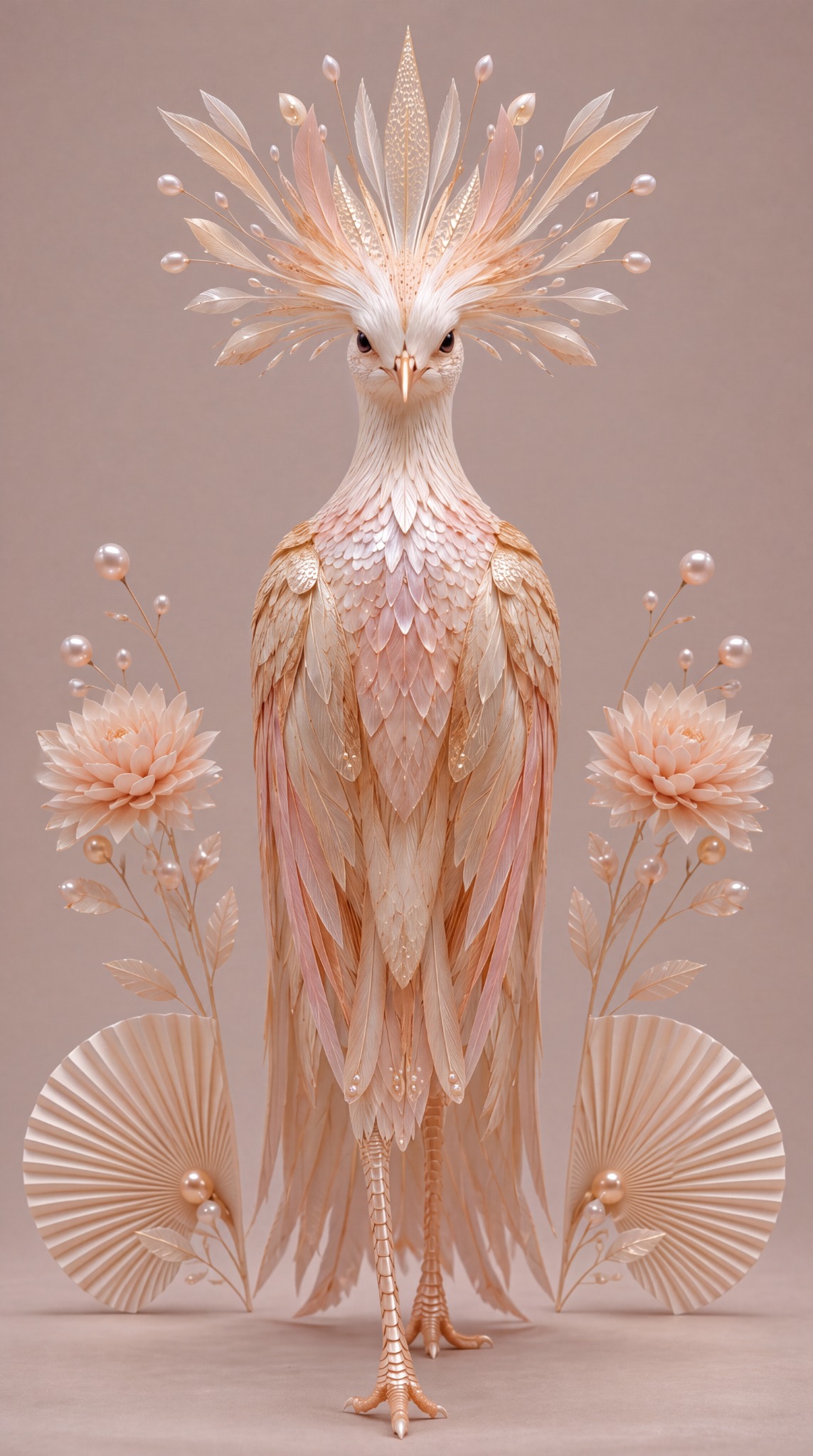
A BIRD AS REMEMBERED introduces the first failure. This image required an unusual reversal of the normal AI workflow. Instead of correcting generation errors, I deliberately created and preserved anatomical inconsistencies, asking what a bird might look like if the memory used to reconstruct it contained corrupted information. The challenge was to make the creature convincing enough to be accepted at first glance, while remaining biologically wrong when examined more closely. The AI error became intentional rather than accidental, turning a technical imperfection into part of the narrative language.
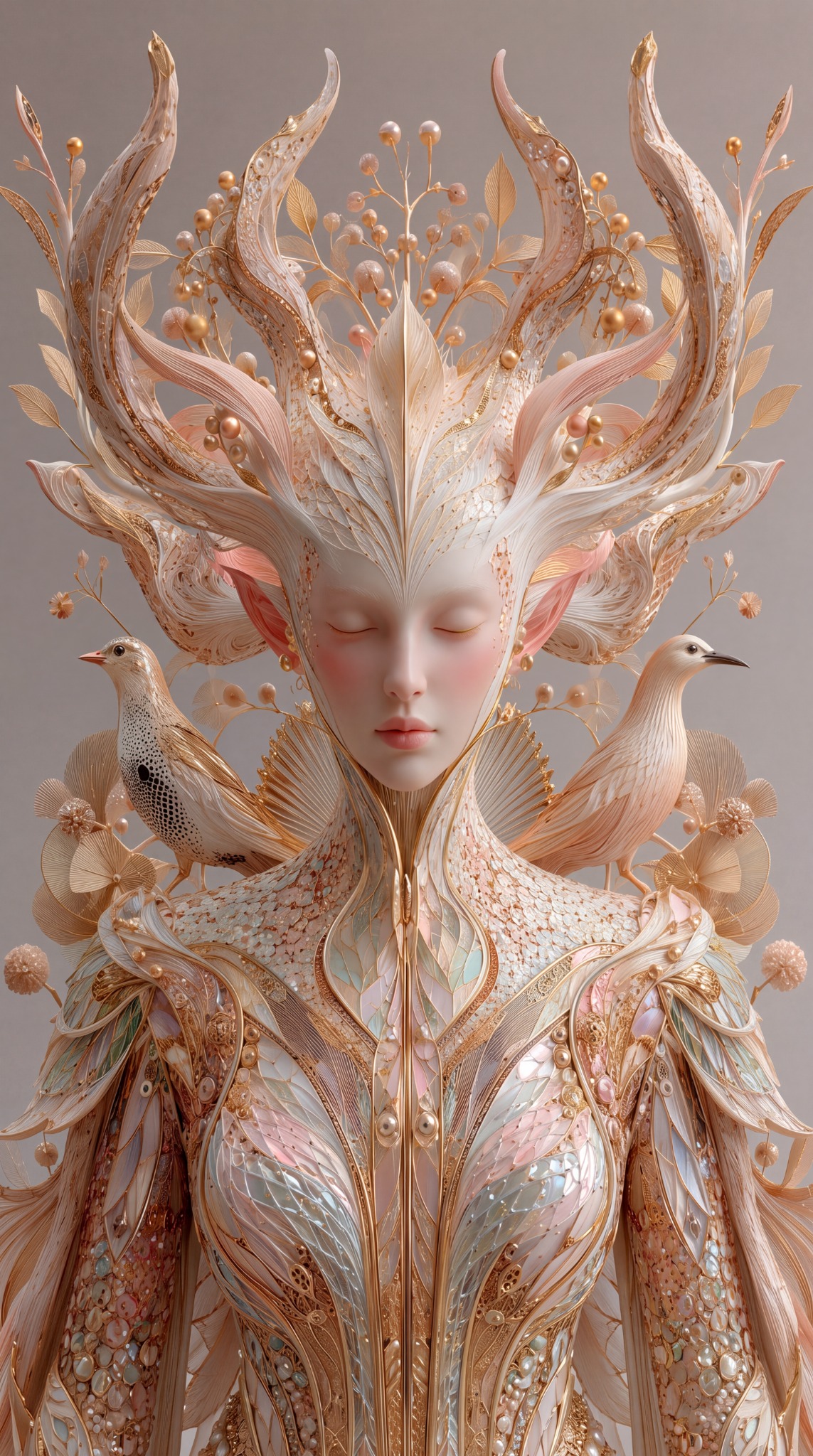
MEMORY COLLAPSE shows the consequences as the corruption spreads. The visual system remains delicate and beautiful, but the distinction between Guardian, plant, bird and reconstructed organic matter begins to break down. Perfection survives on the surface while the logic beneath it fails.
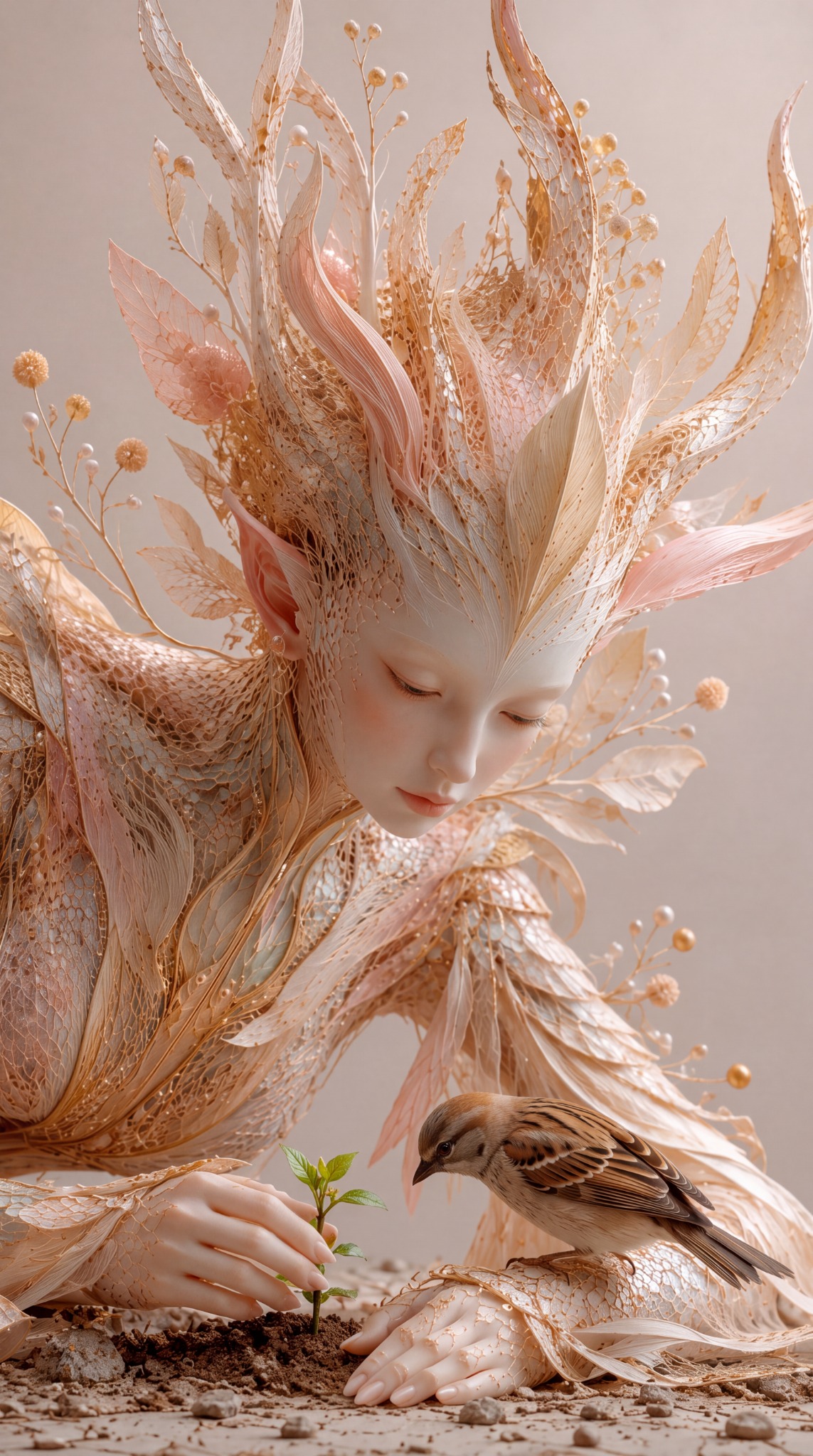
ALIVE is the final counterpoint. The Keeper encounters an ordinary sparrow, real soil and a small green sprout. After a world of elaborate reconstruction, life appears in its simplest forms. The image shifts the question from how perfectly life can be reproduced to whether reproduction alone can ever equal understanding.
Across the five images, I used increasing biological inconsistency as a narrative device. The series moves from memory to reconstruction, from reconstruction to error, from error to collapse, and finally toward the recognition of life itself.