Maratus Amabilia
Short Description
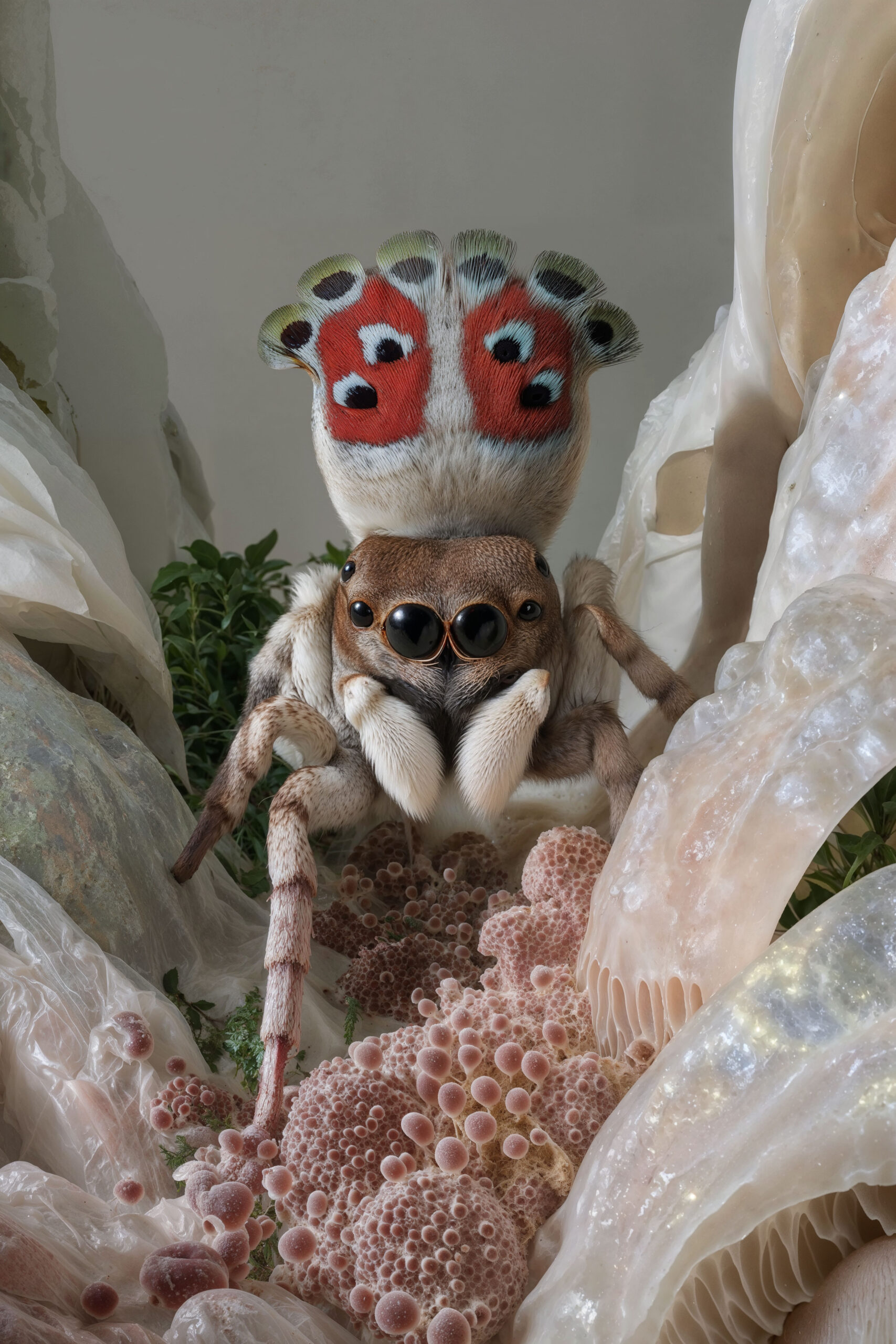
Maratus Amabilia is inspired by the peacock spider, one of nature’s most extraordinary performers.
My work often begins with nature as a living archive of forms, behaviours, colours, textures and rituals. The peacock spider fascinates me because its courtship is already a form of choreography, costume, risk and display. The male raises its coloured abdominal fan, moves its legs, vibrates, shifts position and performs for the female’s attention. Scientists describe Maratus volans as having one of the most elaborate courtship displays among arthropods, combining visual and vibratory signals.
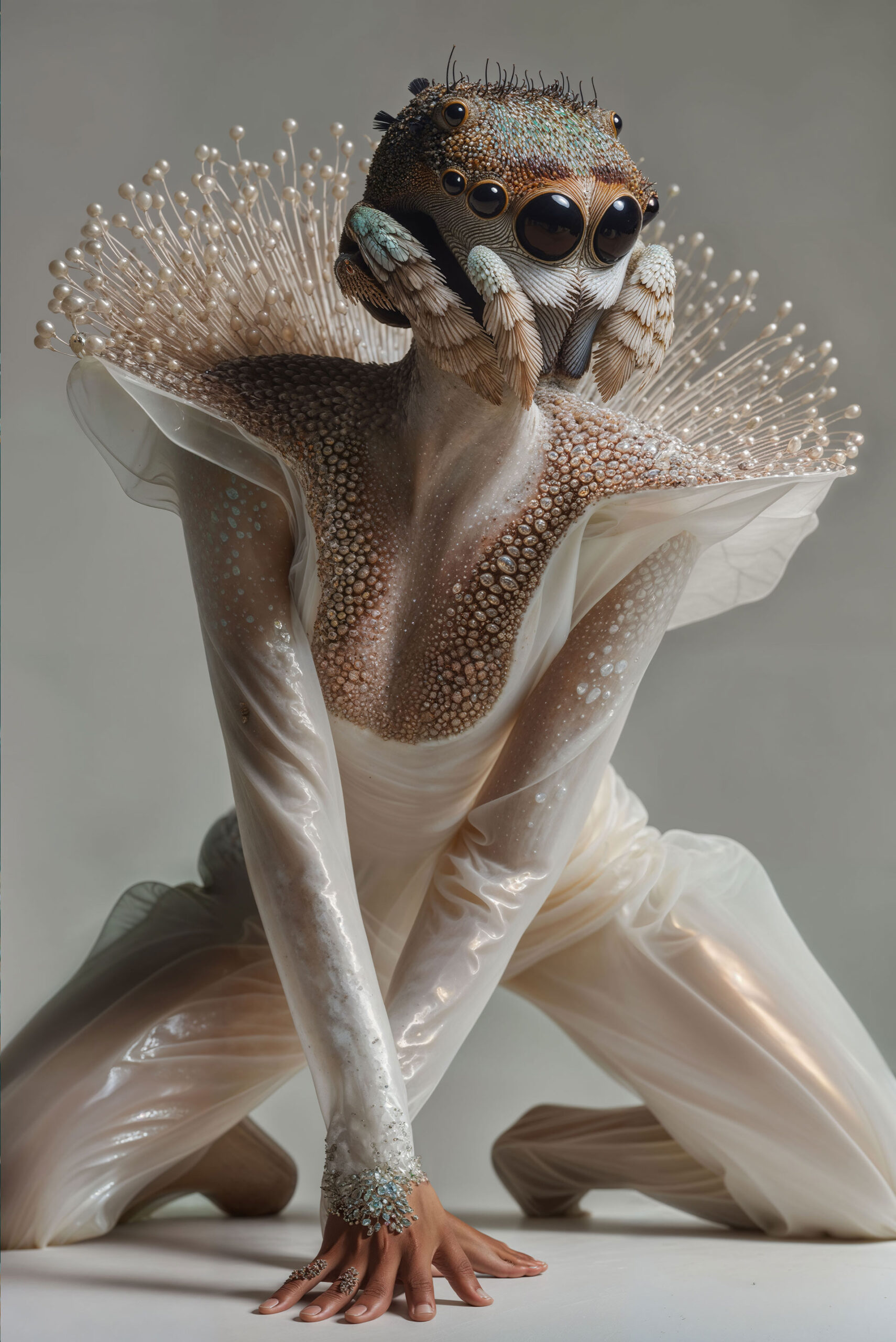
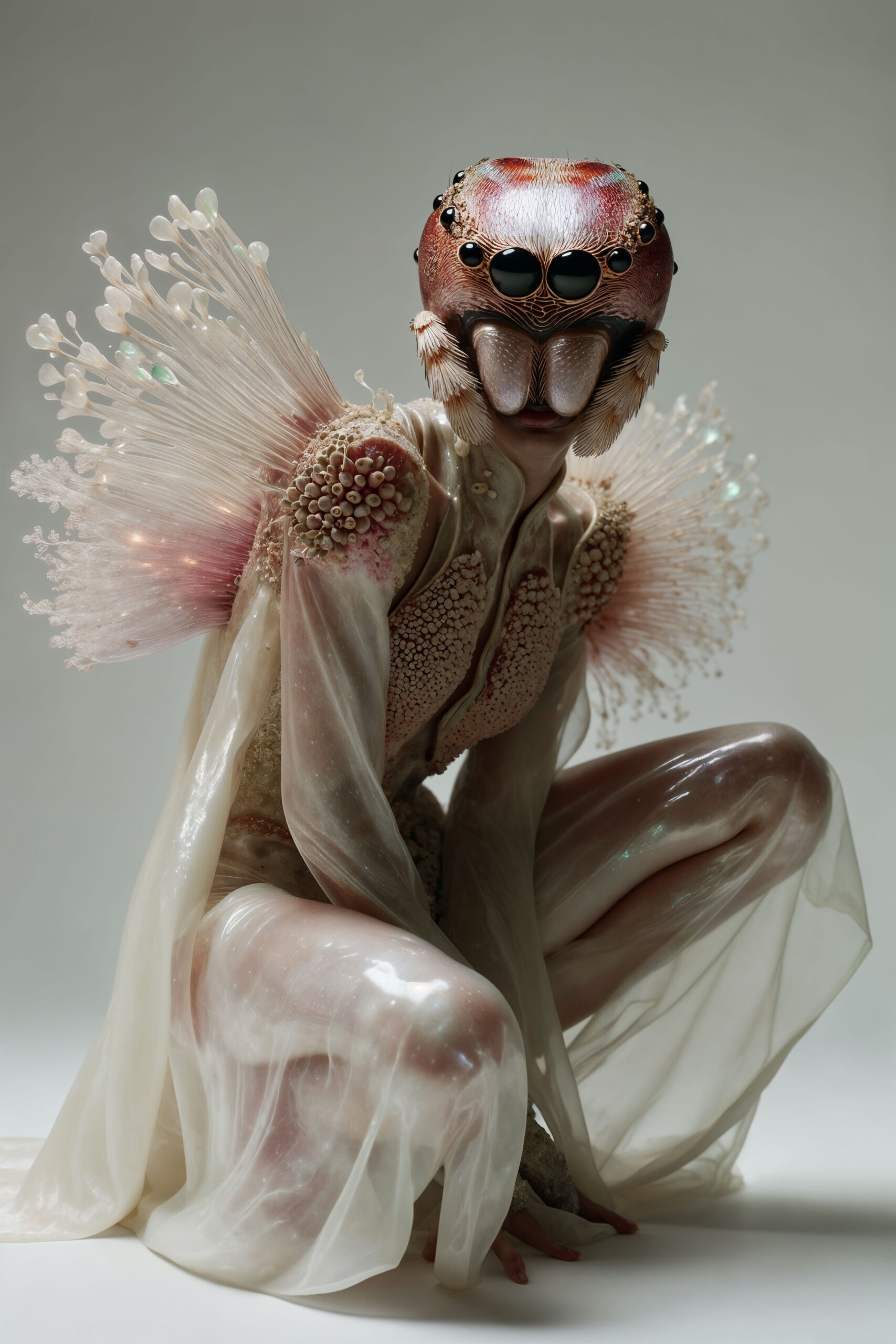
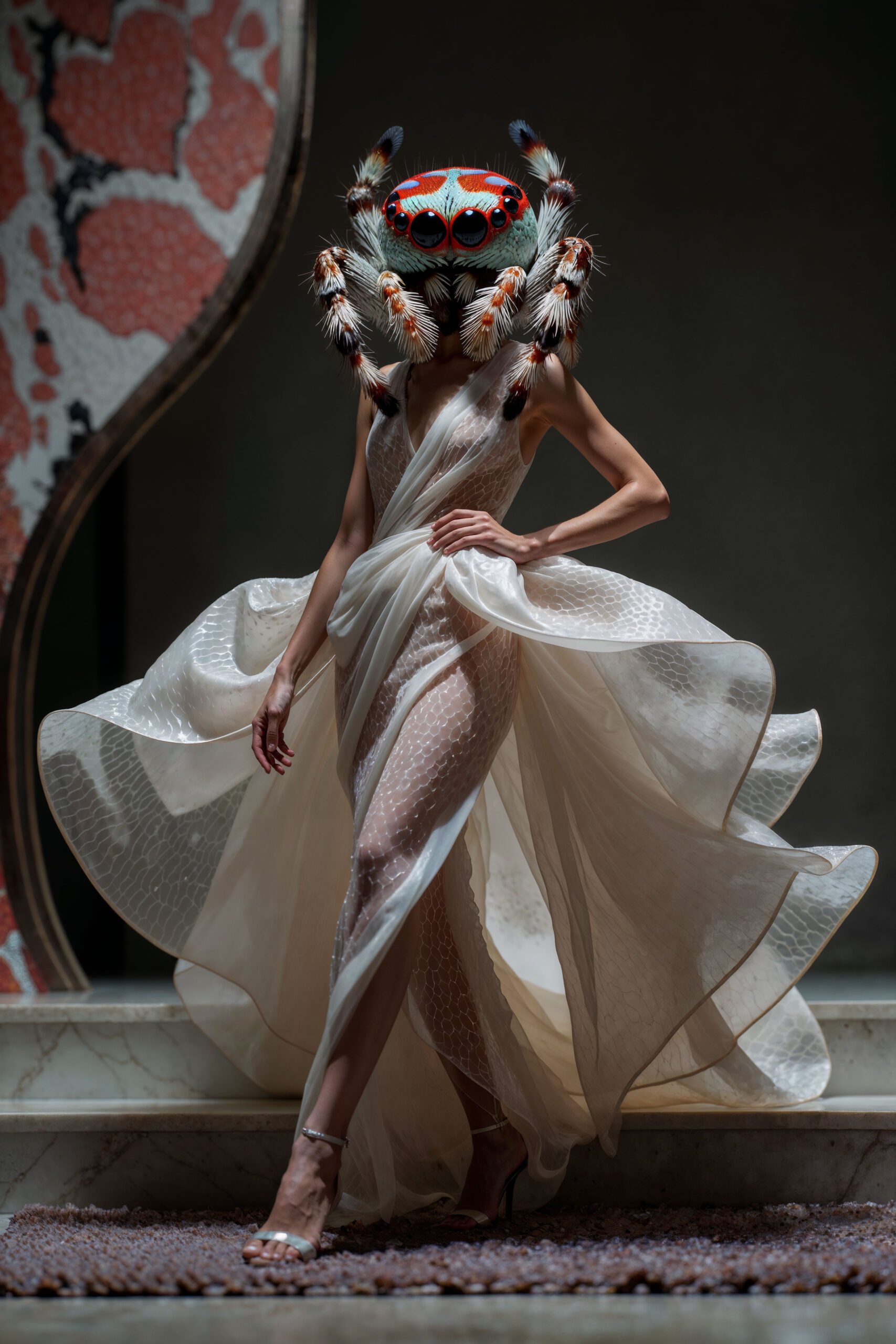
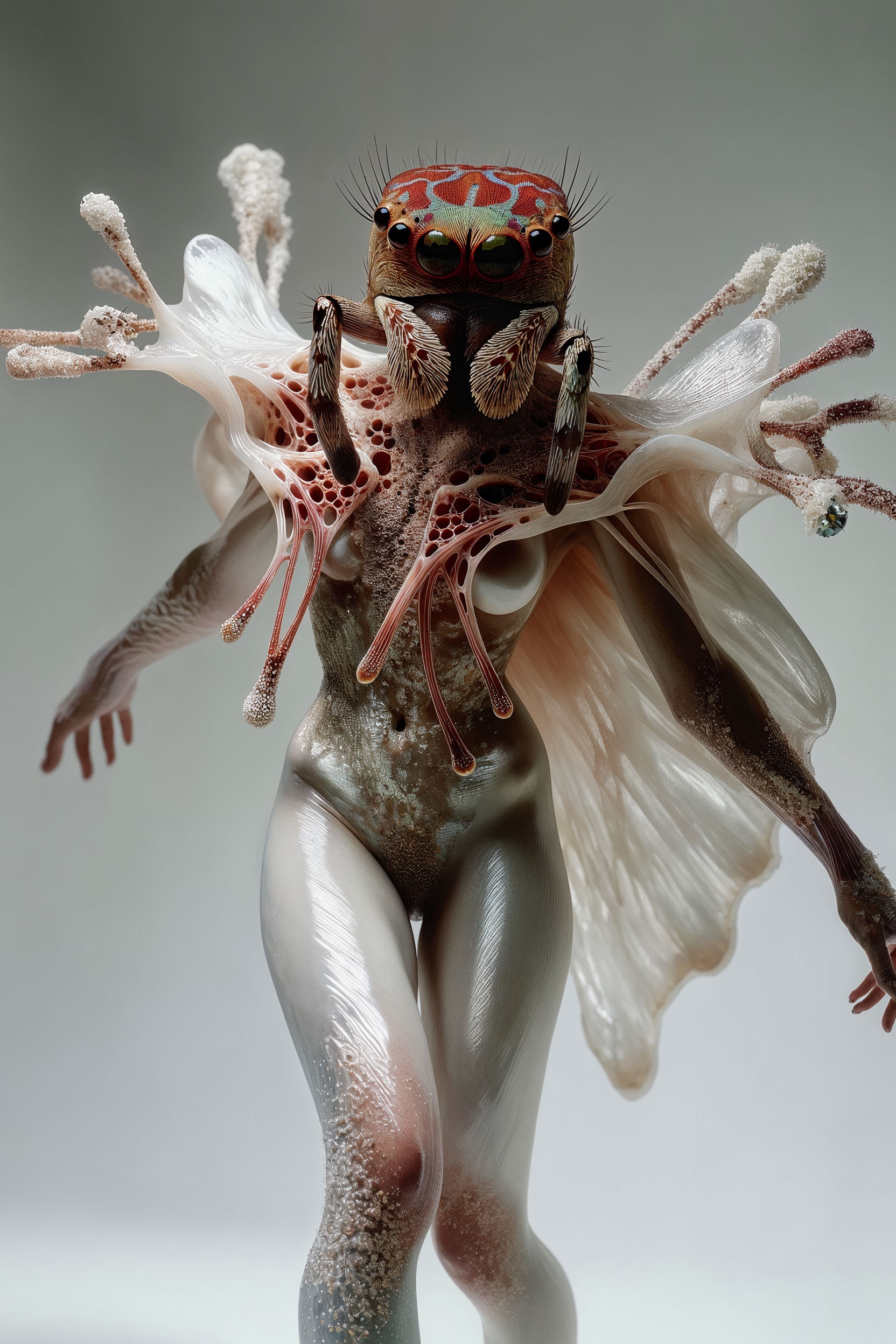
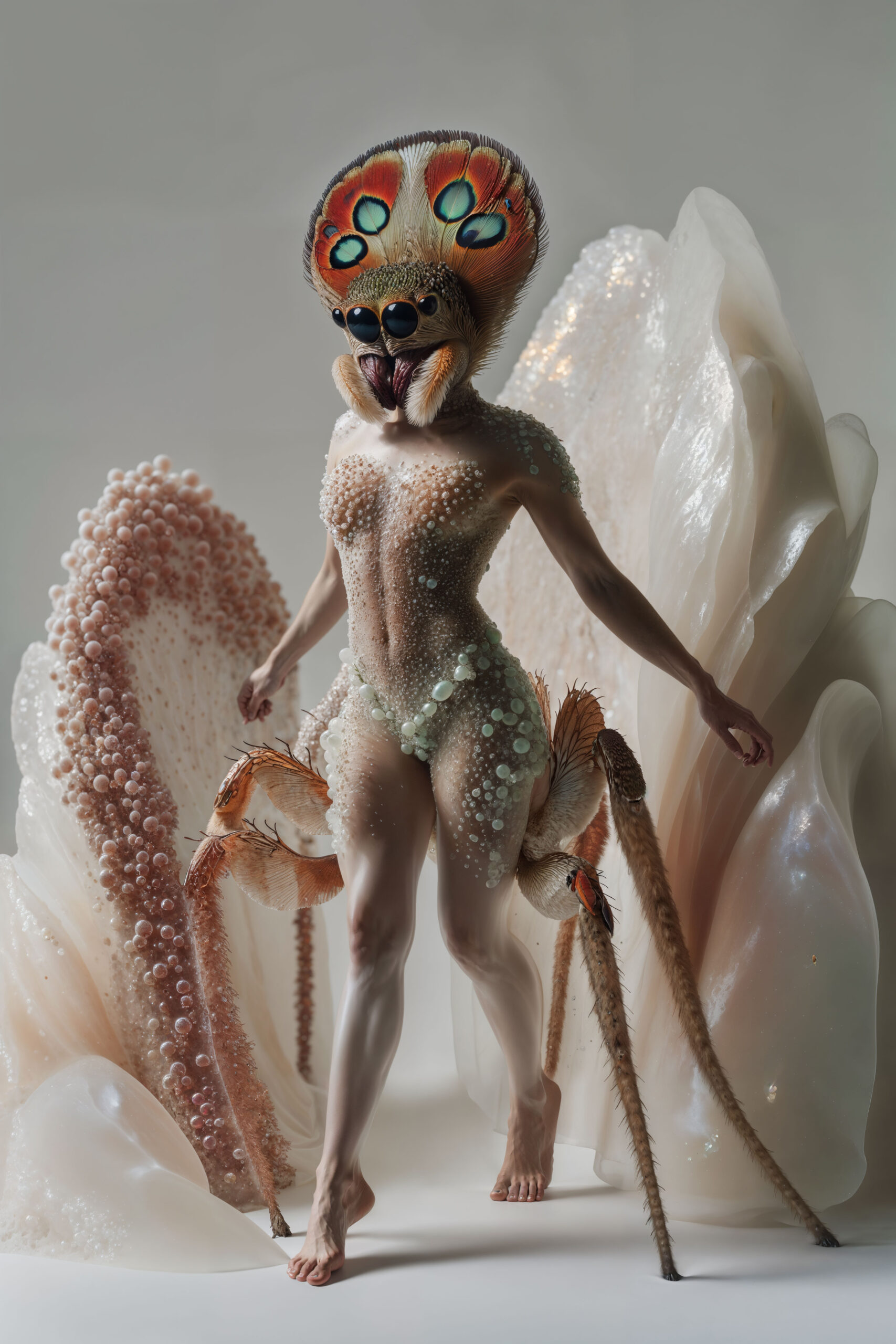
This image translates that natural spectacle into a fashion story, where the body becomes a hybrid between couture, insect anatomy and ceremonial presence. For me, the real red carpet is not human-made. It exists in forests, jungles, the deep ocean, microscopic worlds, and in the movement of birds, insects and marine organisms. Every organism carries its own visual intelligence. We are not the centre of the show, but we have the rare privilege of watching the parade.
Prompt Logic
My prompt logic began with the visual language of the peacock spider and its courtship display. I wanted to move beyond a direct animal portrait and create a striking hybrid figure, where the spider’s colours, eyes, facial structure, feather-like details, and fan-like forms could become part of a couture silhouette.
The main direction combined high-fashion editorial photography, organic costume design, translucent sculptural fabrics, pearl and coral-like surfaces, macro-insect textures, soft studio lighting, and a poised, ritual-like posture.. I worked through several iterations, testing how far the human figure could merge with spider anatomy while preserving the integrity of both. I focused on balance: enough biological detail to keep the reference alive, and enough elegance, restraint, and material control to place the image within the fashion category. The final image keeps the peacock spider as its central influence, while transforming its natural performance into a speculative couture portrait.
Process
This piece evolved through a series of visual studies around the peacock spider as a natural performer. I explored different body positions, masks, fan structures, translucent materials and hybrid anatomies before selecting the final image. The main challenge was to avoid turning the spider into a costume gimmick. I wanted the image to feel as if the organism had shaped the fashion language from inside the body. The pearls, membranes, textures and fan-like elements had to feel grown, not added.
Peacock spiders are tiny jumping spiders, often only a few millimetres long, yet their courtship displays have become famous because of their colour, movement and visual complexity. Museum Victoria notes that these spiders can look like ordinary brown specks to the naked eye, but under a macro lens their display reveals a dramatic world of colour and risk. That contrast shaped my idea: something very small becomes monumental, theatrical and almost regal.