

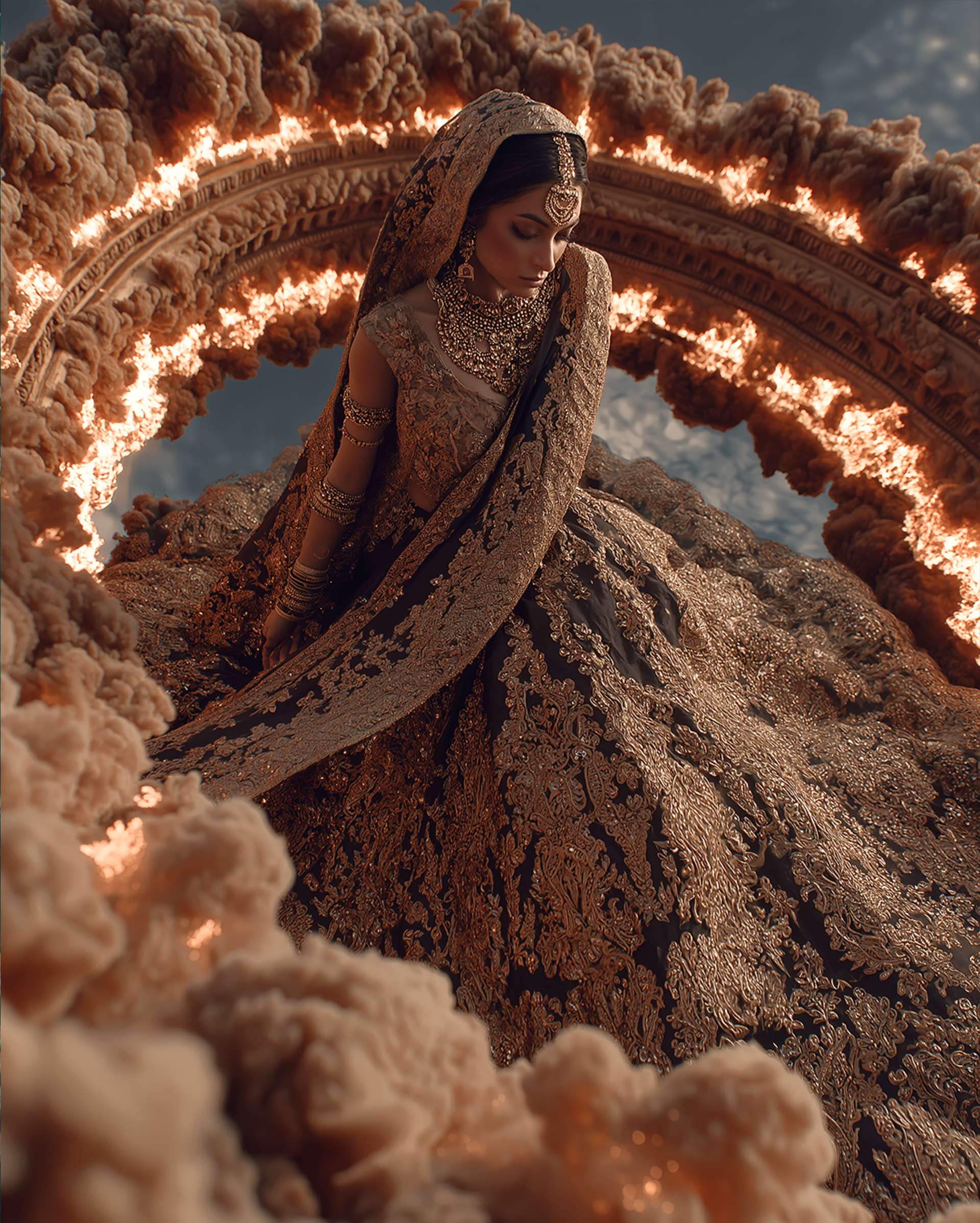
LAGAN – Trial by Fire

Short Description
“Lagan,” a Hindi term for marriage, reflects on tradition, identity, and transformation. At its center, a bride sits within a fiery Chakravyu, a circular formation used in ancient Indian warfare, symbolizing both protection and complexity. Its intricate carvings echo India’s heritage. As flames consume her attire, they represent both creation and destruction: marking new beginnings while erasing the past. Her stillness embodies a deeper truth—the inevitability of change. This emotional depth resonates in Advaita’s song Gorakh, expressing the pain of separation and the absence of a beloved. Just as the song stretches longing into eternity, the image captures the delicate balance of holding on and letting go, where marriage is not just a union, but also the shedding of former selves to embrace the unknown.
Prompt Logic
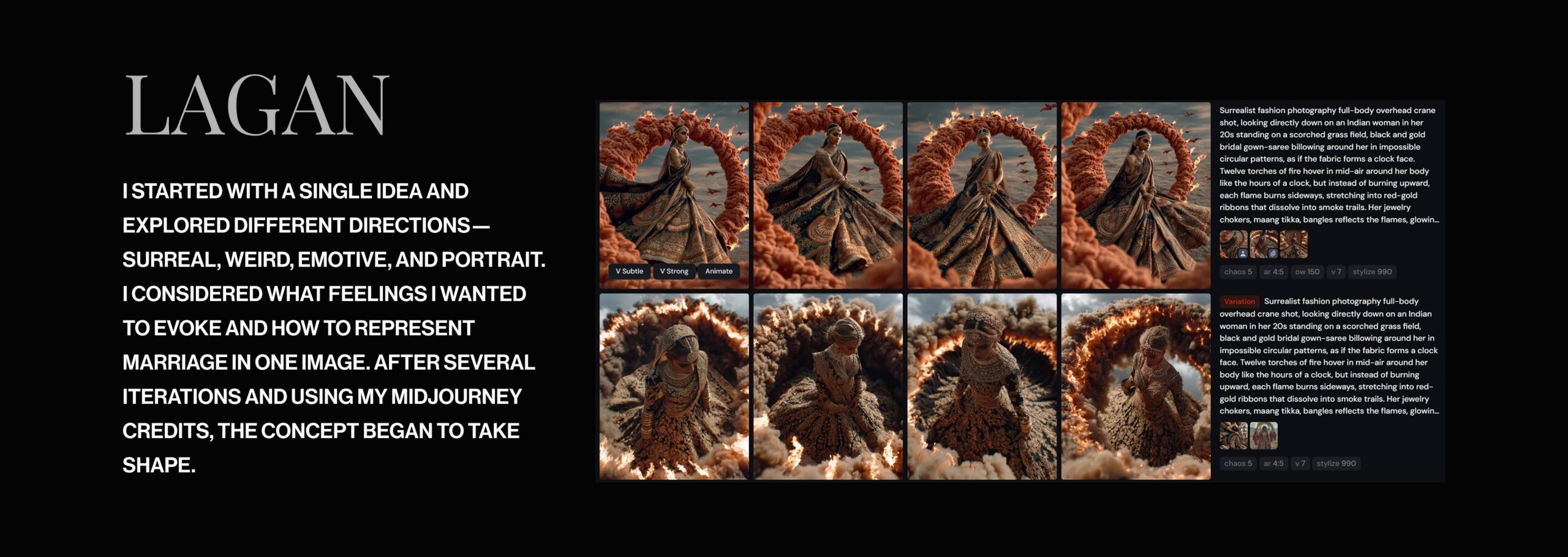
The prompt: Surrealist fashion photography full-body overhead crane shot, looking directly down on an Indian woman in her 20s standing on a scorched grass field, black and gold bridal gown-saree billowing around her in impossible circular patterns, as if the fabric forms a clock face. Twelve torches of fire hover in mid-air around her body like the hours of a clock, but instead of burning upward, each flame burns sideways, stretching into red-gold ribbons that dissolve into smoke trails. Her jewelry chokers, maang tikka, bangles reflects the flames, glowing molten, as if time itself is melting on her skin. The mirror-archway rises in the distance, distorted by the overhead view. Ultra-detailed textures, painterly surrealism, editorial finish.
Edits and changes were made to this prompt where the clock was changed to an archway, and then to a circle of rocks with descriptive ancient carvings. The framing, angles and expressions were thoroughly and carefully experimented with to bring the viewer’s attention on not just the outfit, but on the entire concept, depth, and emotions. The entire image must come together and create an experience.
Process
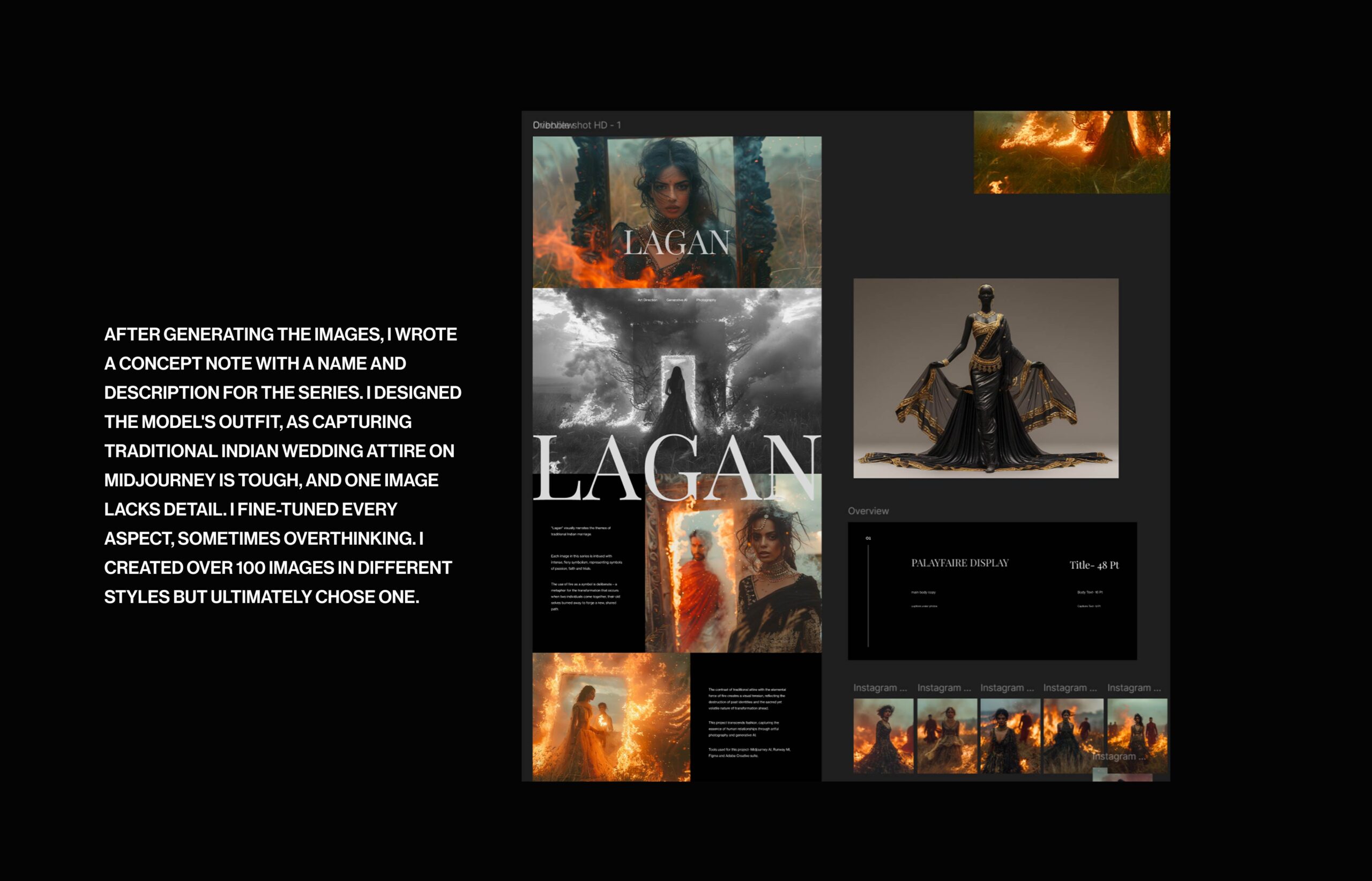
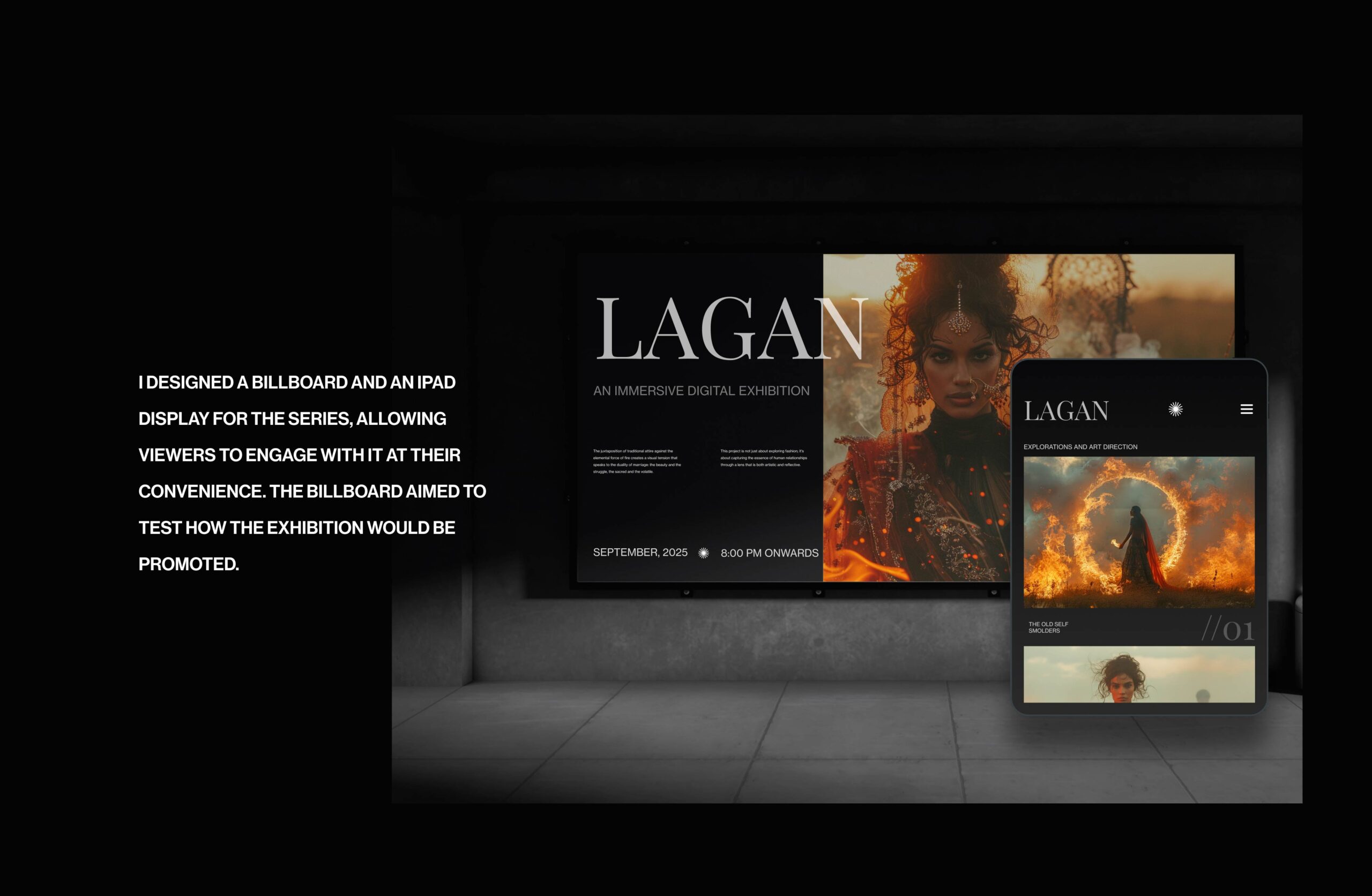
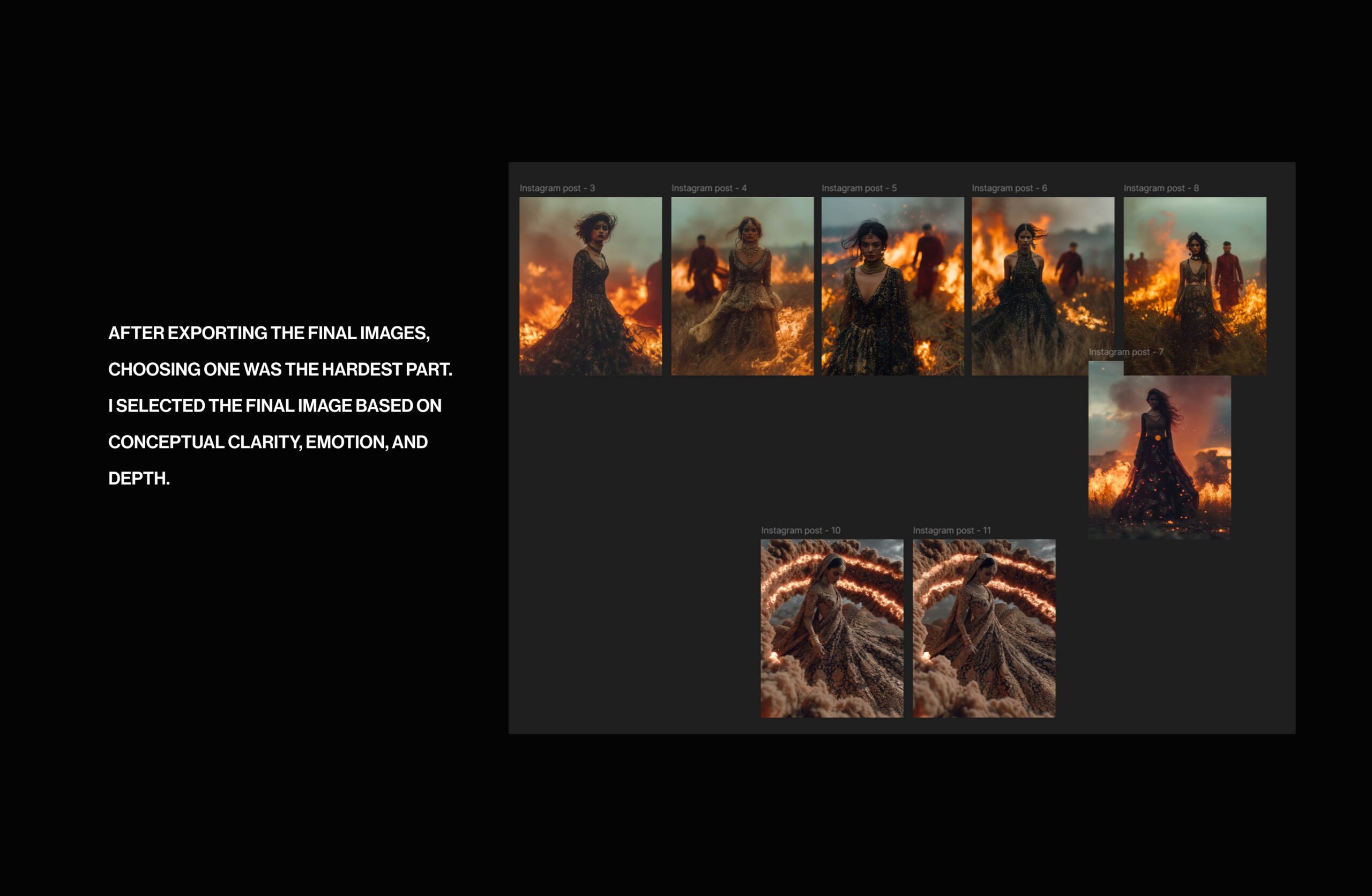
I began with a single idea and explored it through multiple directions—surreal, emotive, weird, and portrait—experimenting with how marriage could be captured in a single image. Using my MidJourney credits, I generated over a hundred variations, fine-tuning details from the mood to the model’s attire, which I had to design myself since traditional Indian wedding wear is difficult to render convincingly. Alongside the images, I developed a concept note with a title and description for the series, testing its presentation through a billboard and an iPad display to imagine how audiences might engage with it. The most challenging step was narrowing down the work: after much overthinking and iteration, I selected the final image for its clarity of concept, emotional resonance, and depth.
Prioritization, what to edit, how to visually depict centuries of a long standing tradition in one image were all really difficult challenges that I am glad I was able to rise to and meet head on. I hope and wish that what I wanted to capture came through. The main inspiration had come from attending 8 weddings over the past year and witnessing some of my friends and being an observer of how my friends change so much after marriage that they become almost unrecognizable.