Innocence
Short Description
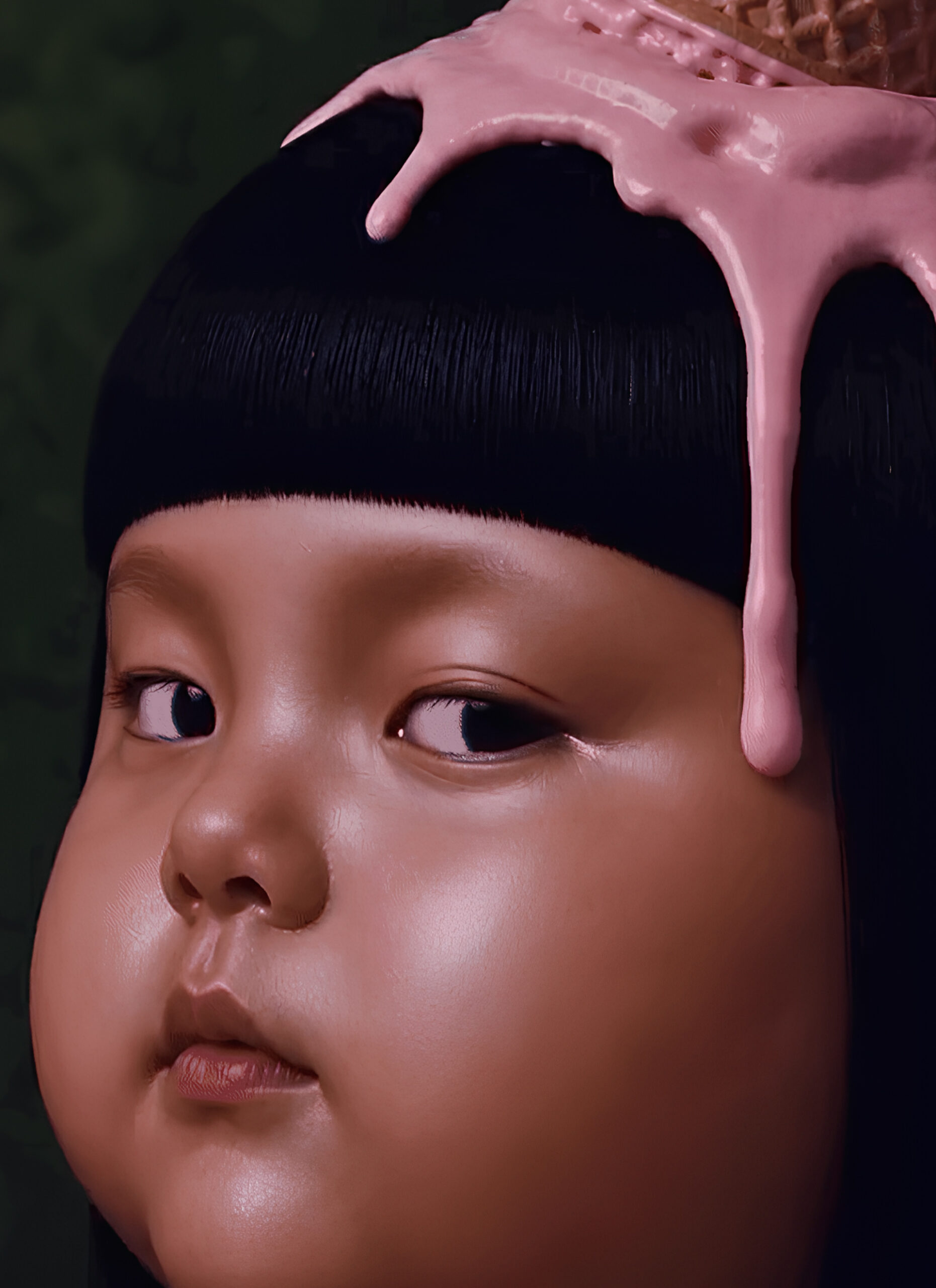
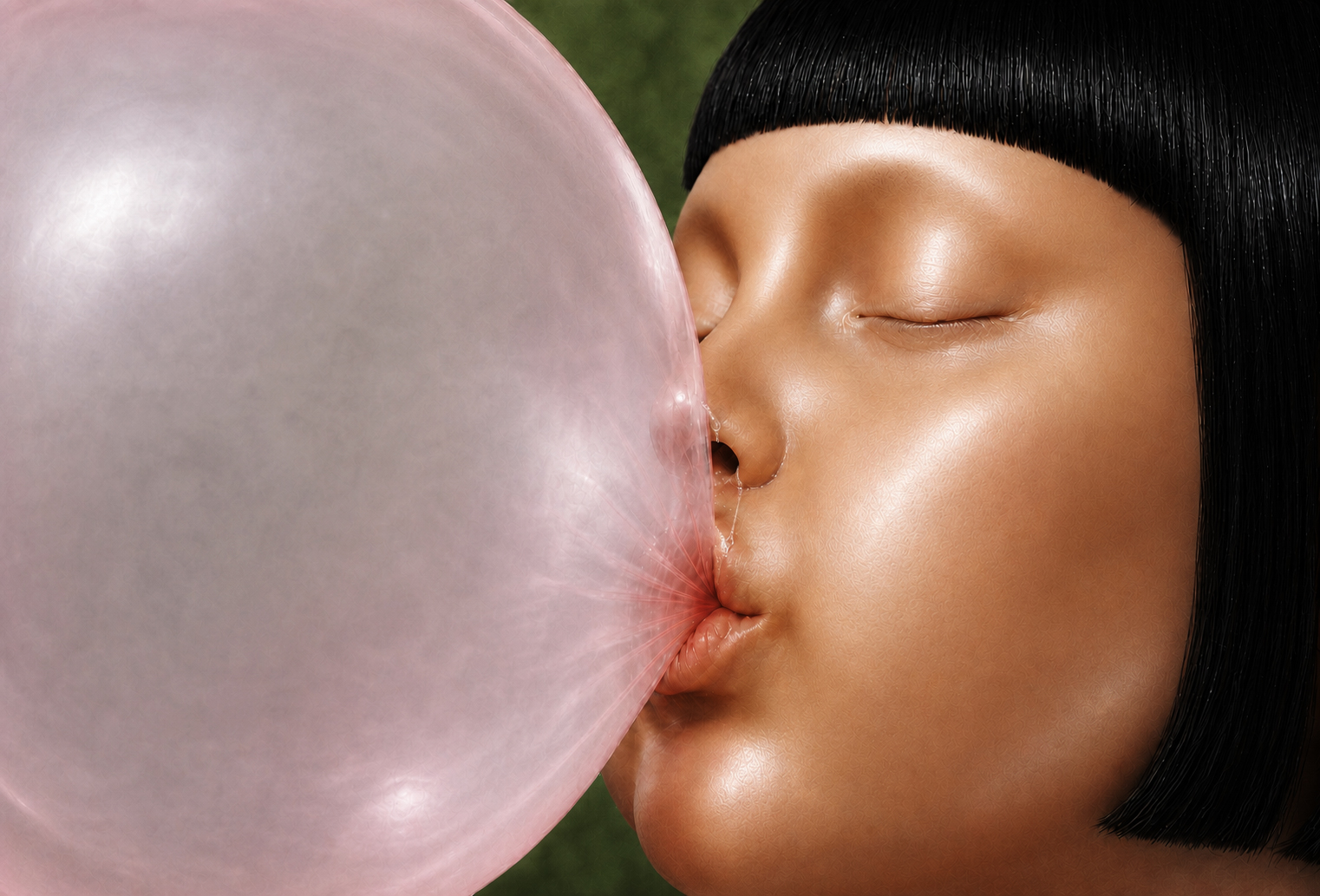
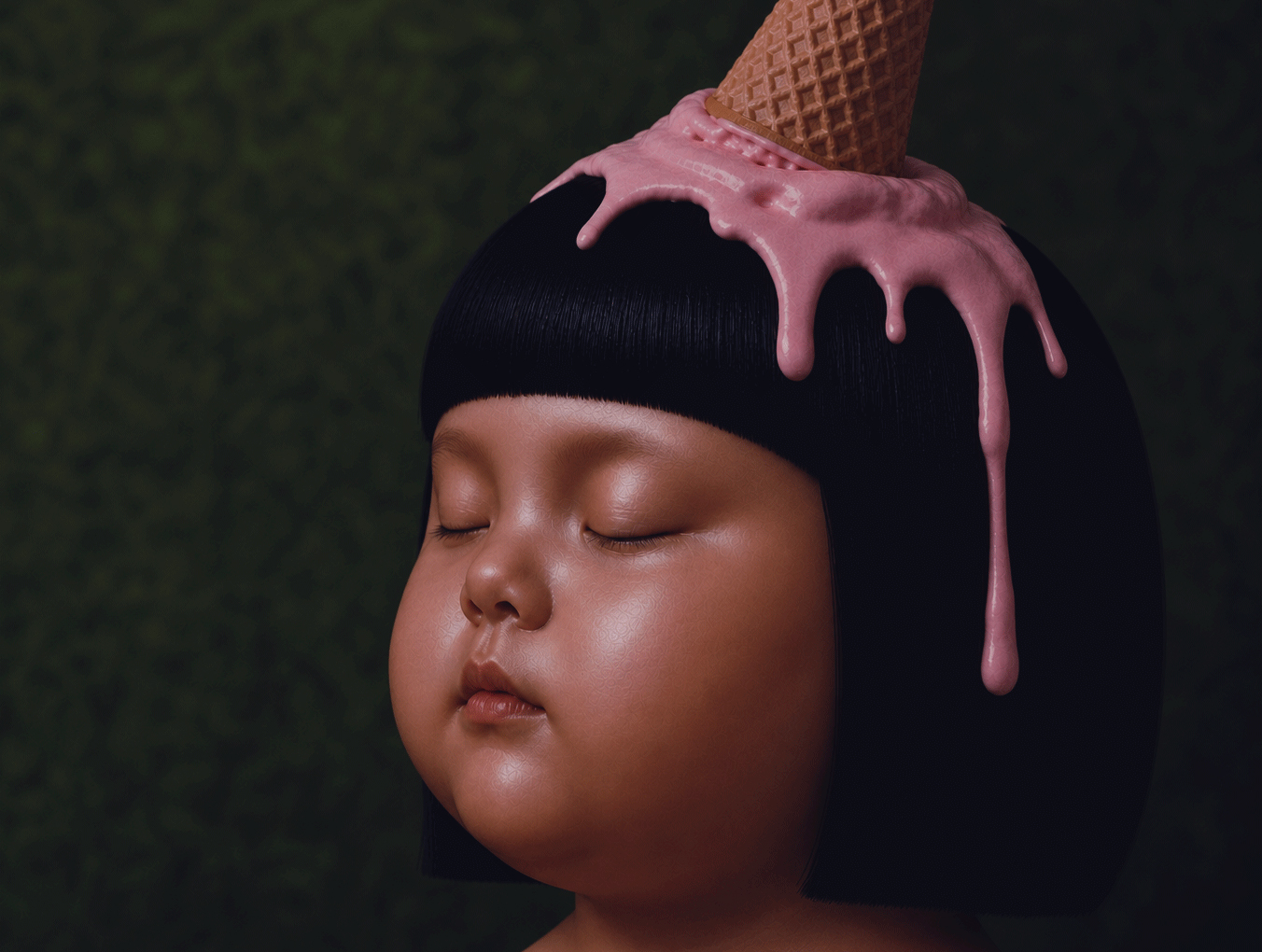
Innocence began as a playful motion experiment: a figure blowing bubble gum on a summer day. As I iterated, the imagery repeatedly drifted toward the visual language of beauty advertising and commercial representations of femininity—a direction I had neither requested nor intended. Rather than refine it, I interrupted it. The bubble gum became melting ice cream; the polished figure became a childlike character who quietly returns the viewer’s gaze. The work explores the tension between human intention and the cultural patterns embedded in generative systems, asking: who is shaping whom?
Prompt Logic
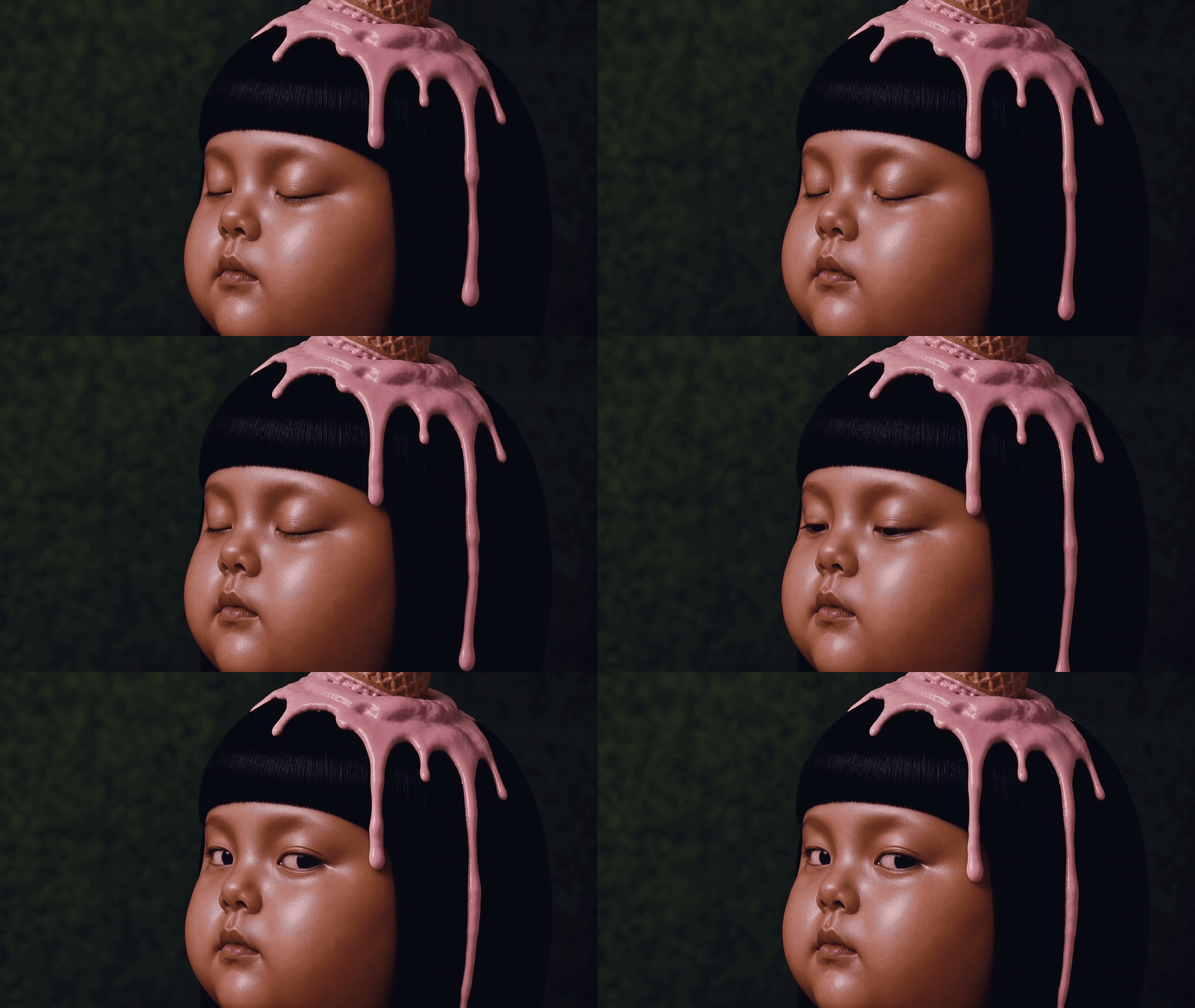
The work evolved through iterative prompting rather than a single prompt. I began with a simple human figure blowing a bubble, then repeatedly adjusted age, form, styling and movement while explicitly avoiding the aesthetics of beauty advertising. When those visual conventions continued to emerge, I reversed the premise: replacing the bubble gum with melting ice cream and shifting the character toward stillness and childhood. For the final motion study, the model was instructed to animate only the character’s eyes and the dripping ice cream, preserving the otherwise motionless composition.
Process
Innocence began as an experimental motion study. I wanted to start with the simplest possible summer image: a person blowing a bubble with chewing gum. The initial figure was deliberately minimal, but through successive generations it moved through human and alien-like forms before settling into the image of a young woman.
As I animated and refined it, I noticed that the outputs repeatedly drifted toward the visual conventions of beauty campaigns and commercial photography. The character became polished and performative, with an uncomfortable undertone I had not requested. Even when I explicitly prompted against this direction, it continued to reappear.
That became the real subject of the work. Generative models do not begin with a blank visual history; they draw from patterns embedded in existing cultural material. The process started to feel less like directing a neutral tool and more like negotiating with an enormous visual archive.
Instead of continuing to perfect the image the model seemed to expect, I interrupted it. I replaced the bubble gum with an ice cream melting absurdly over the character’s head, made her younger, and reduced the movement to almost nothing. In the animation, only the ice cream and her eyes move.
The resulting character is neither performing nor passively being observed. She looks back—calm, curious and slightly suspicious—as if asking, “What are you looking at?”
The greatest challenge was preserving that tension: keeping the image humorous and visually inviting while allowing its discomfort to remain unresolved. The work asks where human intuition diverges from statistical expectation, and whether we shape generative systems or are quietly shaped by the visual assumptions they return to us.