

logotype
  • Winners
    • Fashion
    • Portrait
    • Architecture
    • Objects & Items
    • Conceptual & Fine Art
  • Official Selections
    • Fashion
    • Portrait
    • Architecture
    • Objects & Items
    • Conceptual & Fine Art
  • AIMA Tag Team Award
    • Tag Team Award
    • Winners
    • Official Selections
    • Submit
    • FAQ
  • AIMA Clash
    • Clash
    • Winners
    • Submit
    • Voting
    • FAQ
  • Partners
  • About
Submit AI
logotype
logotype
  • Winners
    • Fashion
    • Portrait
    • Architecture
    • Objects & Items
    • Conceptual & Fine Art
  • Official Selections
    • Fashion
    • Portrait
    • Architecture
    • Objects & Items
    • Conceptual & Fine Art
  • AIMA Tag Team Award
    • Tag Team Award
    • Winners
    • Official Selections
    • Submit
    • FAQ
  • AIMA Clash
    • Clash
    • Winners
    • Submit
    • Voting
    • FAQ
  • Partners
  • About
Submit AI
logotype
logotype
  • Winners
    • Fashion
    • Portrait
    • Architecture
    • Objects & Items
    • Conceptual & Fine Art
  • Official Selections
    • Fashion
    • Portrait
    • Architecture
    • Objects & Items
    • Conceptual & Fine Art
  • Tag Team Award
    • Tag Team Award
    • Winners
    • Submit
    • FAQ
  • AIMA Clash
    • Clash
    • Winners
    • Submit
    • Voting
    • FAQ
  • Partners
  • About
  • Submit AI

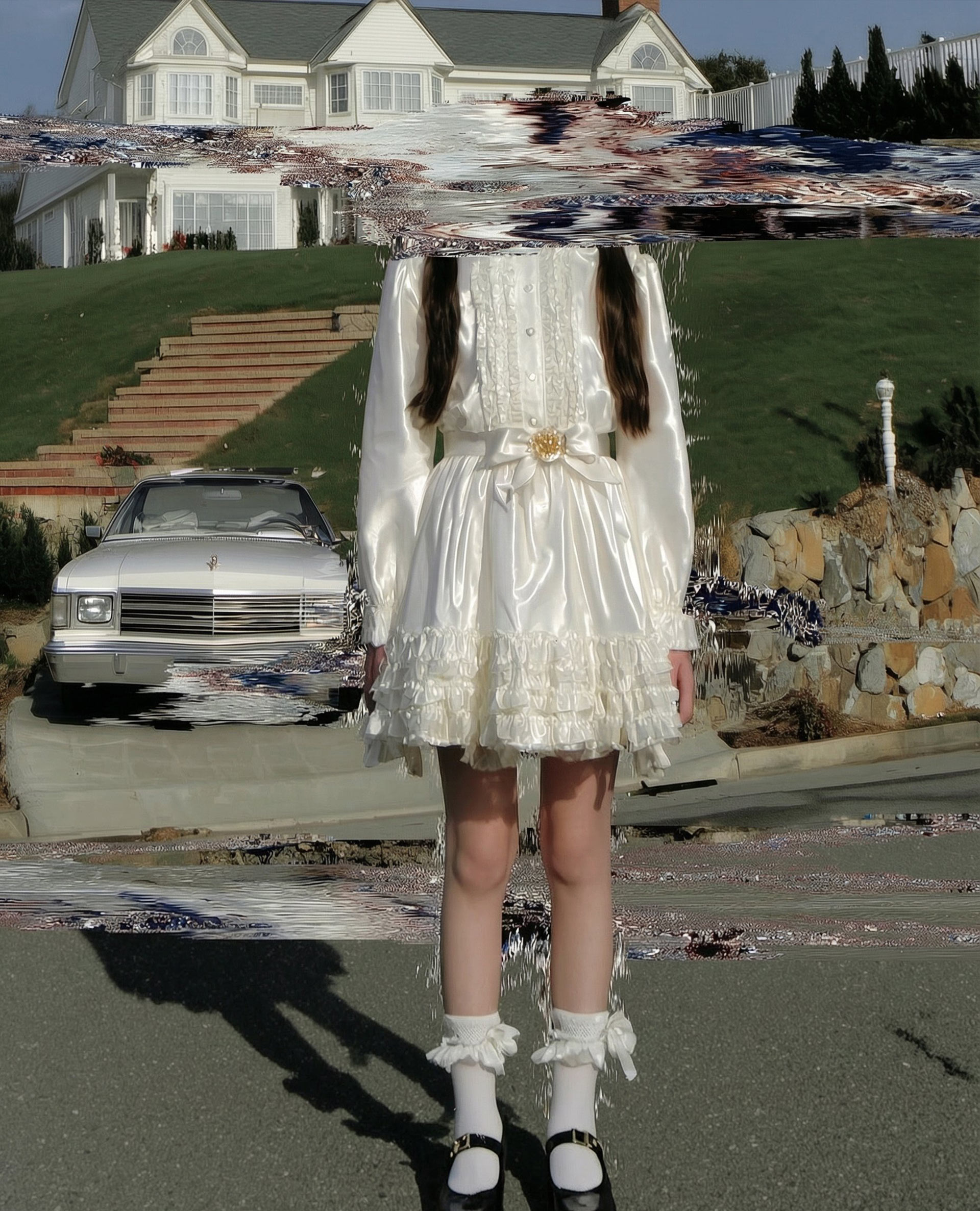
Corrupted Memory

Designer

lerabo

Country

Italy

Prize

AIMA Clash Winner

Clash Theme

Memories That Never Happened

Media

InstagramTiktokLinkedin

Short Description

I grew up in a provincional town in Russia. My world was limited, familiar, and predictable. From a very young age, I dreamed of living somewhere in the West, in a place that felt greener, calmer, safer, and more beautiful than the reality around me. In my imagination, life there was perfect: quiet streets, small houses, bicycles, parks, schools within walking distance, and a sense of freedom.
When I discovered Google Maps and street view services, this dream became more detailed and more real. I didn’t just look at images, I traveled. I walked through neighborhoods, followed streets, stopped in front of houses, and imagined myself going to school, riding a bike, and coming home in the evening. Through the screen, I lived a life that I did not have.
These virtual journeys became part of my everyday life. They were not entertainment, but emotional experiences. I built routines, habits, and scenes of the future in my mind. Over time, these imagined episodes became deeply rooted in my memory.
Years later, I realized something strange: I feel nostalgic for streets I have never walked on. I remember moments that never happened. My mind reacts to these places as if they were part of my real past. The boundary between memory and imagination has gradually disappeared.
“Corrupted Memory” reflects this internal state. The image presents an idealized Western suburb distorted by digital glitches and visual errors. These distortions symbolize the nature of memory: unstable, fragmented, and easily influenced by dreams, media, and technology. What appears to be a peaceful childhood memory is, in fact, a constructed image shaped by screens, expectations, and longing for another future.
The glitch is not only a technical effect, but a metaphor for broken recollection. It represents how imagined futures can overwrite lived experience, creating emotional attachments to places and lives that never existed. When reality feels limiting, imagination becomes a form of survival.
Years later, I actually moved to Europe and now live in Italy. Part of my childhood dream became real. I found myself surrounded by streets, parks, and houses similar to those I once saw only on a screen. However, I realized that real life never fully matches imagined life. The city from my childhood fantasies turned out to be complex, imperfect, and alive. The place where I “lived” in my imagination remained separate, unreal and unreachable.
This is why this work is not about fulfilling a dream, but about the gap between imagined past and lived present. Some memories remain fictional, even when you come close to what you once dreamed of.
This project also speaks about nostalgia for something unreal. It asks whether we can mourn a life we never lived, and how virtual experience becomes part of our emotional history. In a world saturated with images and simulations, memory itself becomes vulnerable and unreliable.
These imaginary journeys helped me believe that another life was possible. Even if that life existed only on a screen, its emotional impact was real and formative.
By presenting a false childhood memory as a broken digital image, this work invites viewers to reflect on their own unrealized dreams, imagined pasts, and on the invisible influence of technology in shaping who we become.

TelegramRedditWhatsappTwitterFacebookPinterestLinkedin
(PREV)

Sugar Rush Artwork Series - Be Mine

(NEXT)

FINAL BOSS : KAY-MAN

Leave a Reply Cancel reply

Your email address will not be published. Required fields are marked *

logotype

Menu

Winners

Fashion

Portrait

Architecture

Objects & Items

Conceptual & Fine Art

Official Selections

Fashion

Portrait

Architecture

Objects & Items

Conceptual & Fine Art

AIMA Tag Team Award

Tag Team Award

Winners

Submit

FAQ

AIMA Clash

Clash

Winners

Submit

Voting

FAQ

Partners

About

Submit AI

About AIMA

What’s AIMA

FAQ

Contact

Privacy Policy

Terms & Conditions

Social Media

Instagram

Copyright © 2025 AI Master Award

Manage Consent
To provide the best experiences, we use technologies like cookies to store and/or access device information. Consenting to these technologies will allow us to process data such as browsing behaviour or unique IDs on this site. Not consenting or withdrawing consent, may adversely affect certain features and functions.
Functional Always active
The technical storage or access is strictly necessary for the legitimate purpose of enabling the use of a specific service explicitly requested by the subscriber or user, or for the sole purpose of carrying out the transmission of a communication over an electronic communications network.
Preferences
The technical storage or access is necessary for the legitimate purpose of storing preferences that are not requested by the subscriber or user.
Statistics
The technical storage or access that is used exclusively for statistical purposes. The technical storage or access that is used exclusively for anonymous statistical purposes. Without a subpoena, voluntary compliance on the part of your Internet Service Provider, or additional records from a third party, information stored or retrieved for this purpose alone cannot usually be used to identify you.
Marketing
The technical storage or access is required to create user profiles to send advertising, or to track the user on a website or across several websites for similar marketing purposes.
  • Manage options
  • Manage services
  • Manage {vendor_count} vendors
  • Read more about these purposes
View preferences
  • {title}
  • {title}
  • {title}