

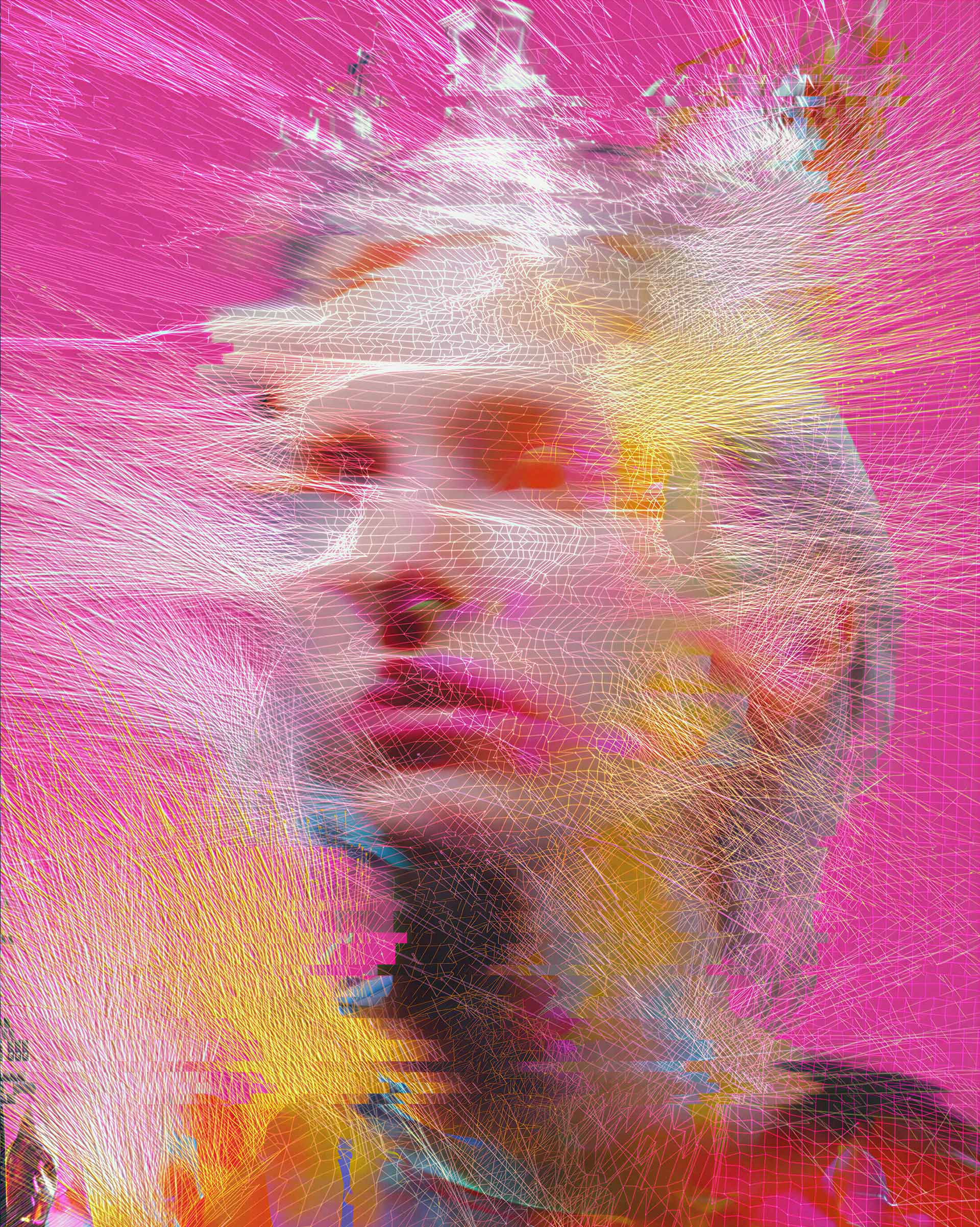
Museum of Prompt_234
Short Description
This project has been an ongoing exploration since 2024. From the beginning, I was deeply curious about “prompting” — not only as a tool to generate images, but as a new way of creating art, a new context, even a new language for our time. I wanted to understand what it means when images are born from words, and when creation happens in dialogue with an algorithm.
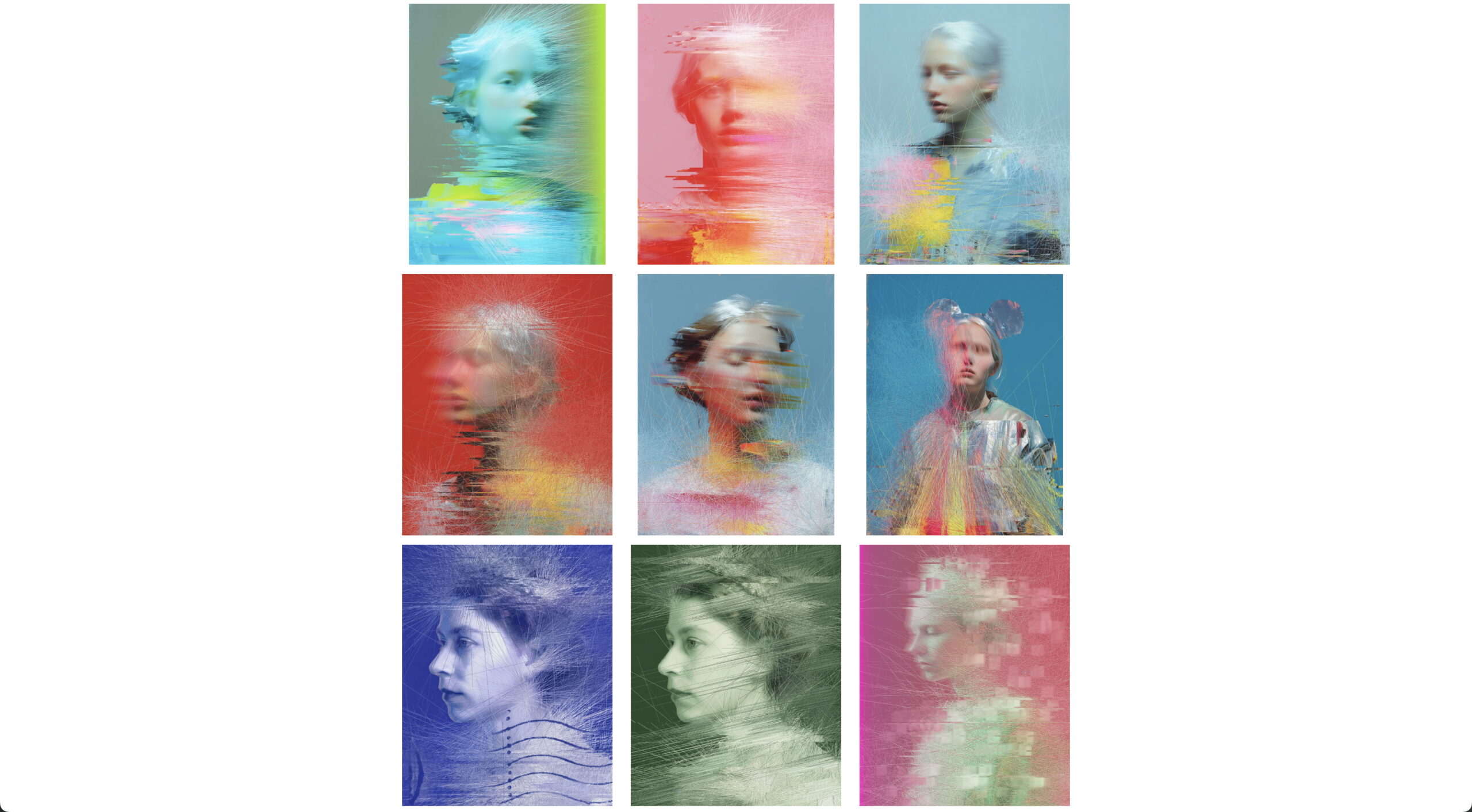
I began with unknown, generic faces. At first, I was drawn to the glitch aesthetic — the distortions, the strange beauty of error, and the way AI misreads language and produces something unexpected. Those broken translations felt alive. The glitch was not just decoration; it revealed the tension between instruction and interpretation, between what I intended and what the system understood. It showed me that the space between human input and machine output is not clean or fixed — it is unstable and expressive.
As I continued working, I started questioning the speed of the process. Prompting is immediate — you type a sentence, and within seconds an image appears. At first, this felt powerful and exciting. But over time, I felt that something was missing. Traditional forms of art often involve duration — repetition, layering, hesitation, and reflection. I began to miss that slower rhythm. I wanted to stay longer with the image, to build a relationship with it rather than simply produce it.
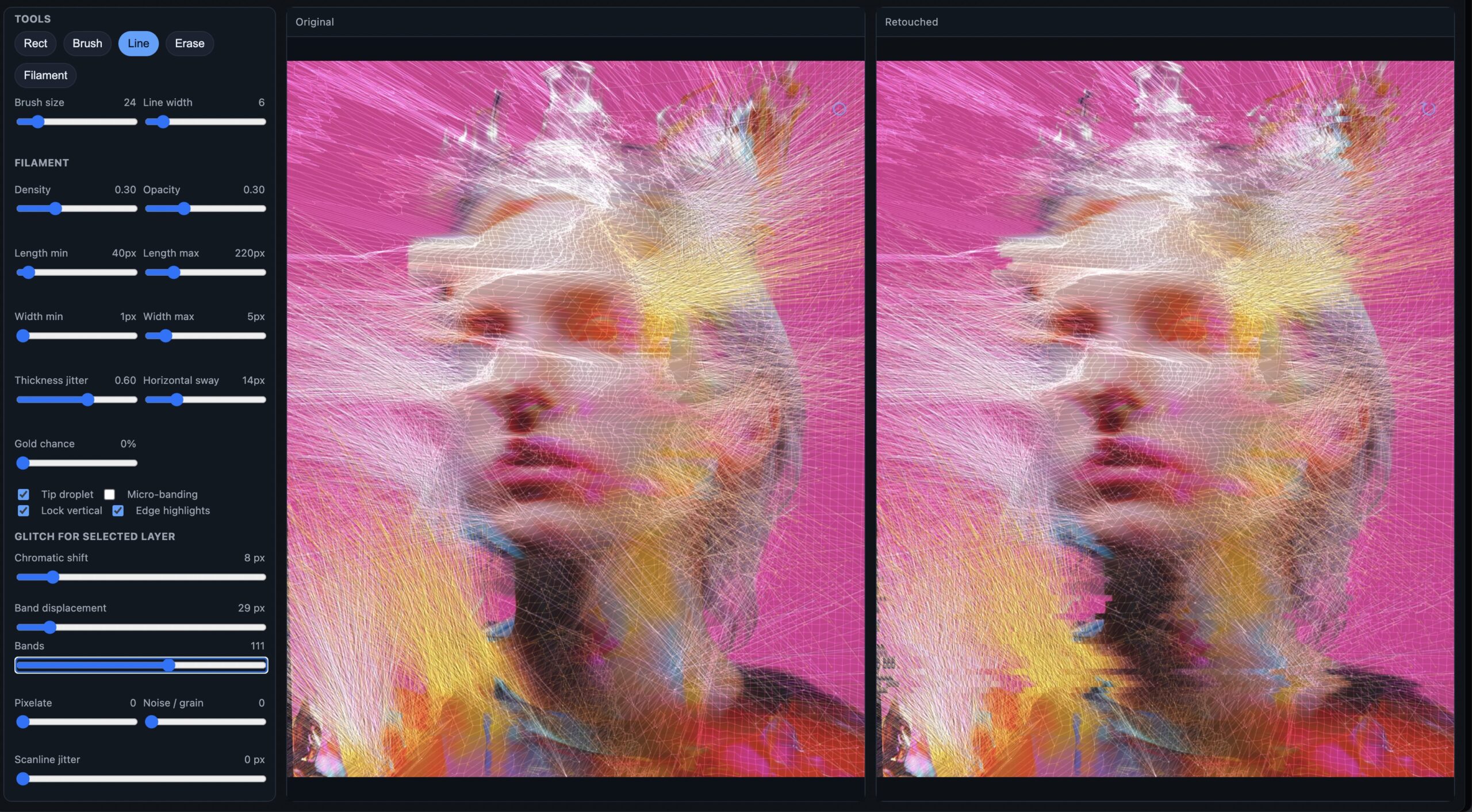
This led me to rethink my process. Instead of treating prompting as a finished act, I began to see it as a starting point. I moved into micro-editing — revisiting the images, adjusting textures, altering forms, and responding to small details. I tried to slow down the digital workflow and create room for reflection inside it. The image became less of an instant result and more of an evolving surface.
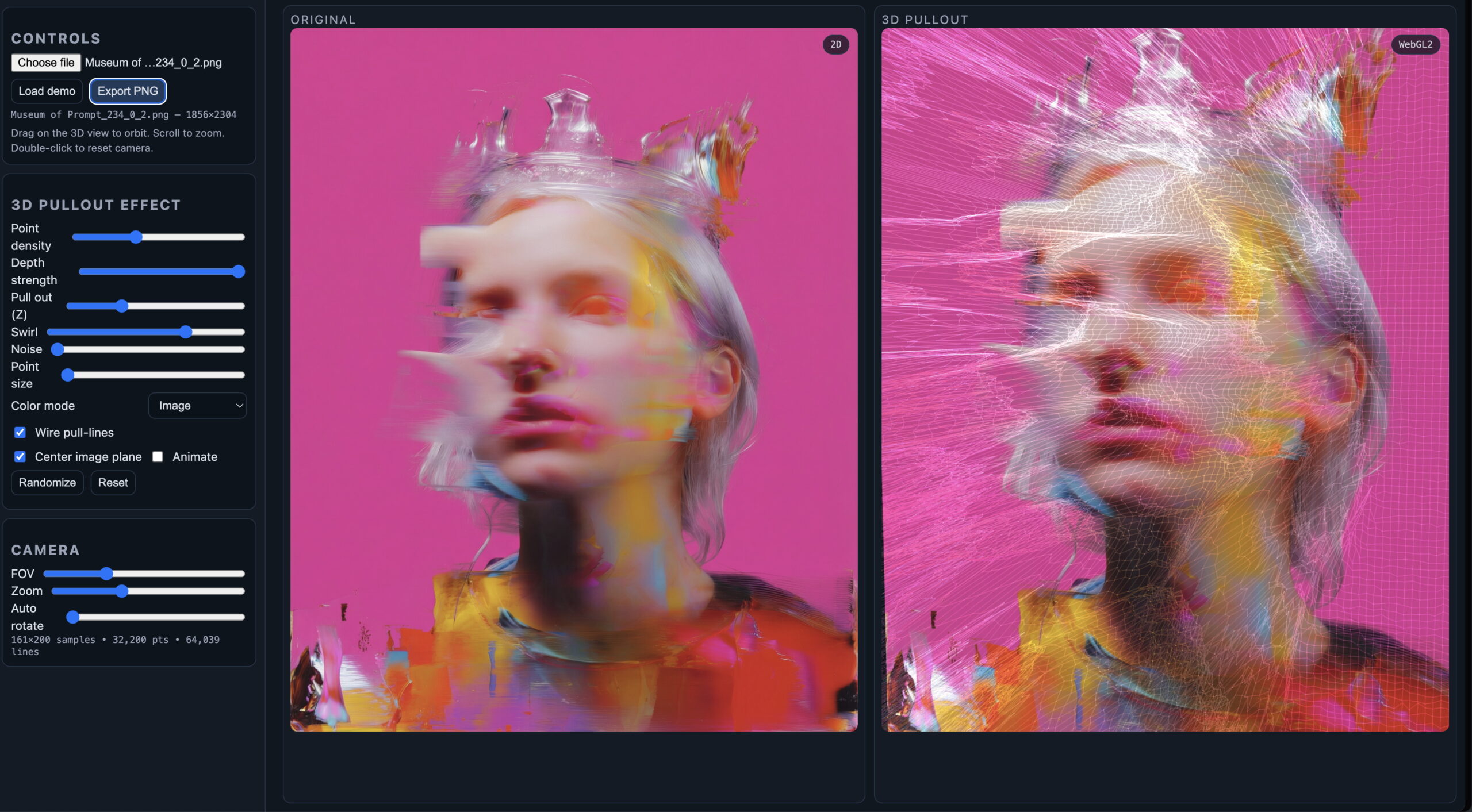
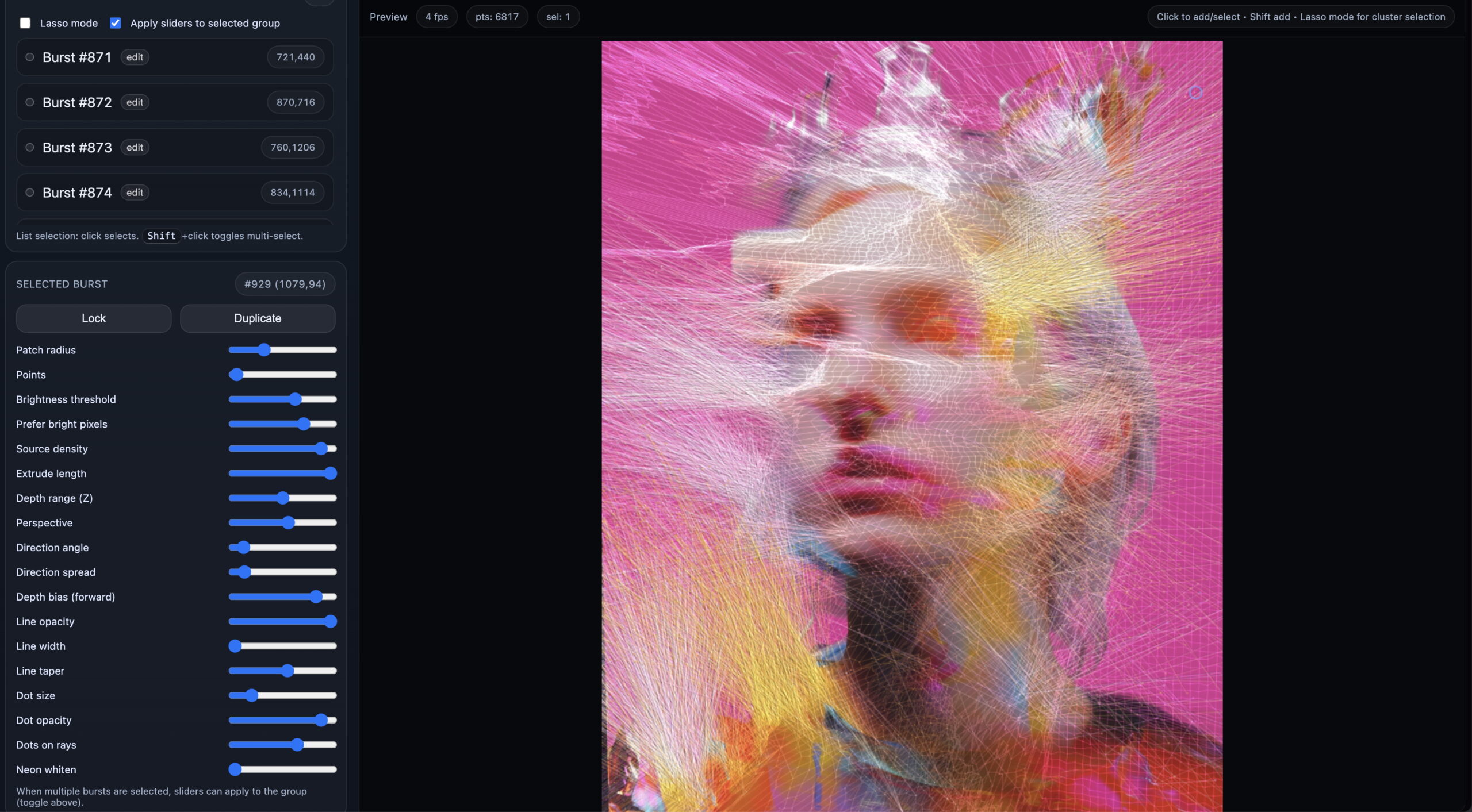
Eventually, this search for “time” in digital art brought me to vibe coding. By building small, personal visual applications, I found a way to shape the behavior of the image itself. Instead of relying entirely on pre-existing systems, I could design how colours shift, how pixels distort, how forms dissolve or reassemble. Vibe coding allowed me to construct my own tools, making the process feel more intimate and embodied. It feels closer to painting — but painting through logic and code rather than physical pigment.
The faces that emerge from this process are no longer just prompt outputs. They are layered results of dialogue: prompting, editing, coding, and responding. The glitch remains present, but it has shifted from accident to material — something I consciously work with and shape. The work exists between automation and intention, between speed and slowness.
Museum of Prompt has become a space where I explore how digital art can recover duration and presence. Through prompting and vibe coding, I am not only experimenting with AI but also redefining what it means to “paint” today. Code becomes brush. The screen becomes surface. The artwork becomes something that unfolds over time, rather than appearing all at once.
Prompt Logic
an extreme closeup portrait photography of an offset images of a silver hair girl, both eyes gazing at the camera, her image slightly out of sync. one split in scanner effect, in shimmering reflective silver, golden & transparent plastic glitch lines, another with image offset, in thick neon colour acrylic oil painting texture in sculptural forms, red background, neon pink details on girl, cinematic, lonely, depressed, minimalism