
The Glass Trojan Horse of AI

Short Description
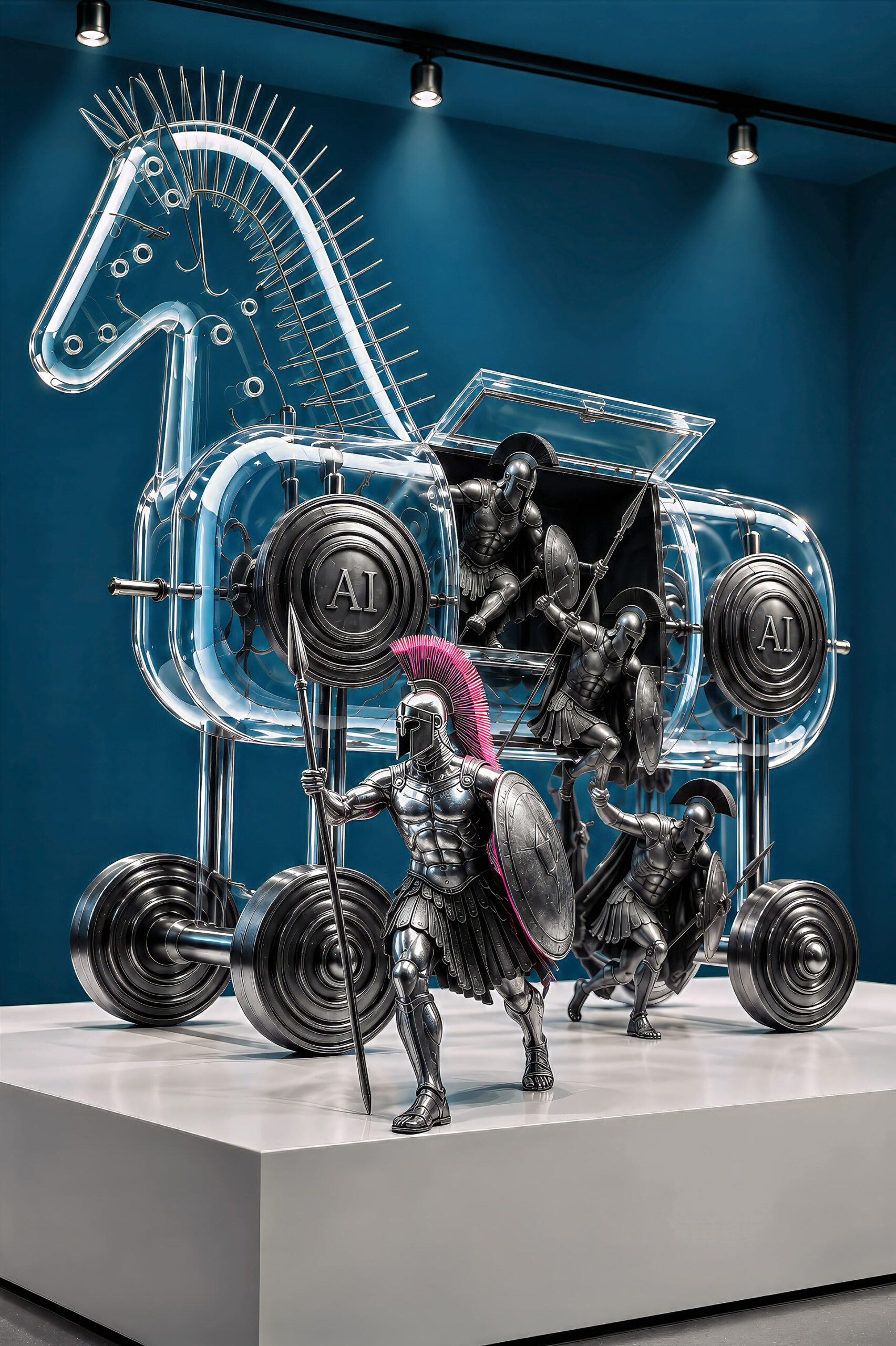
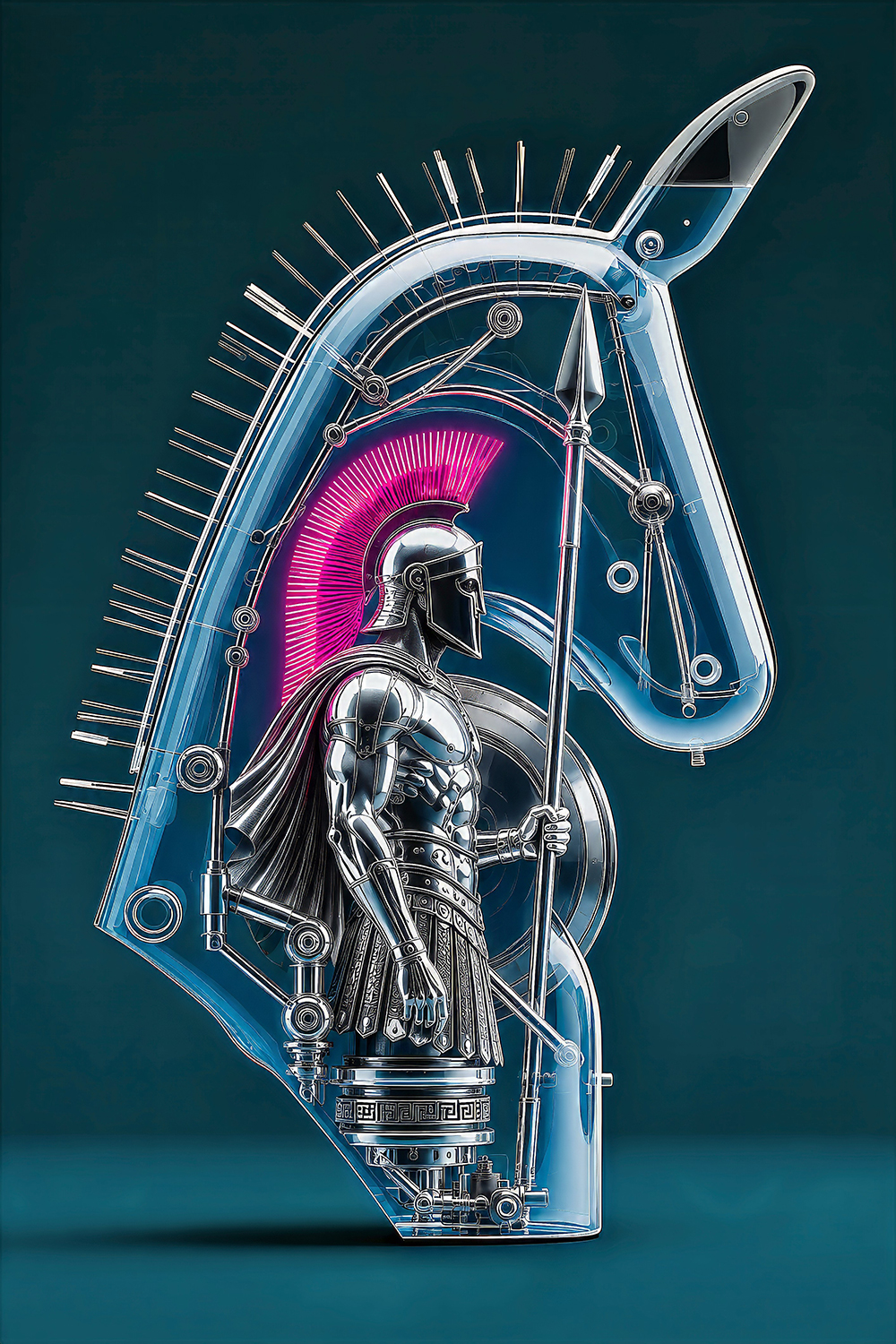
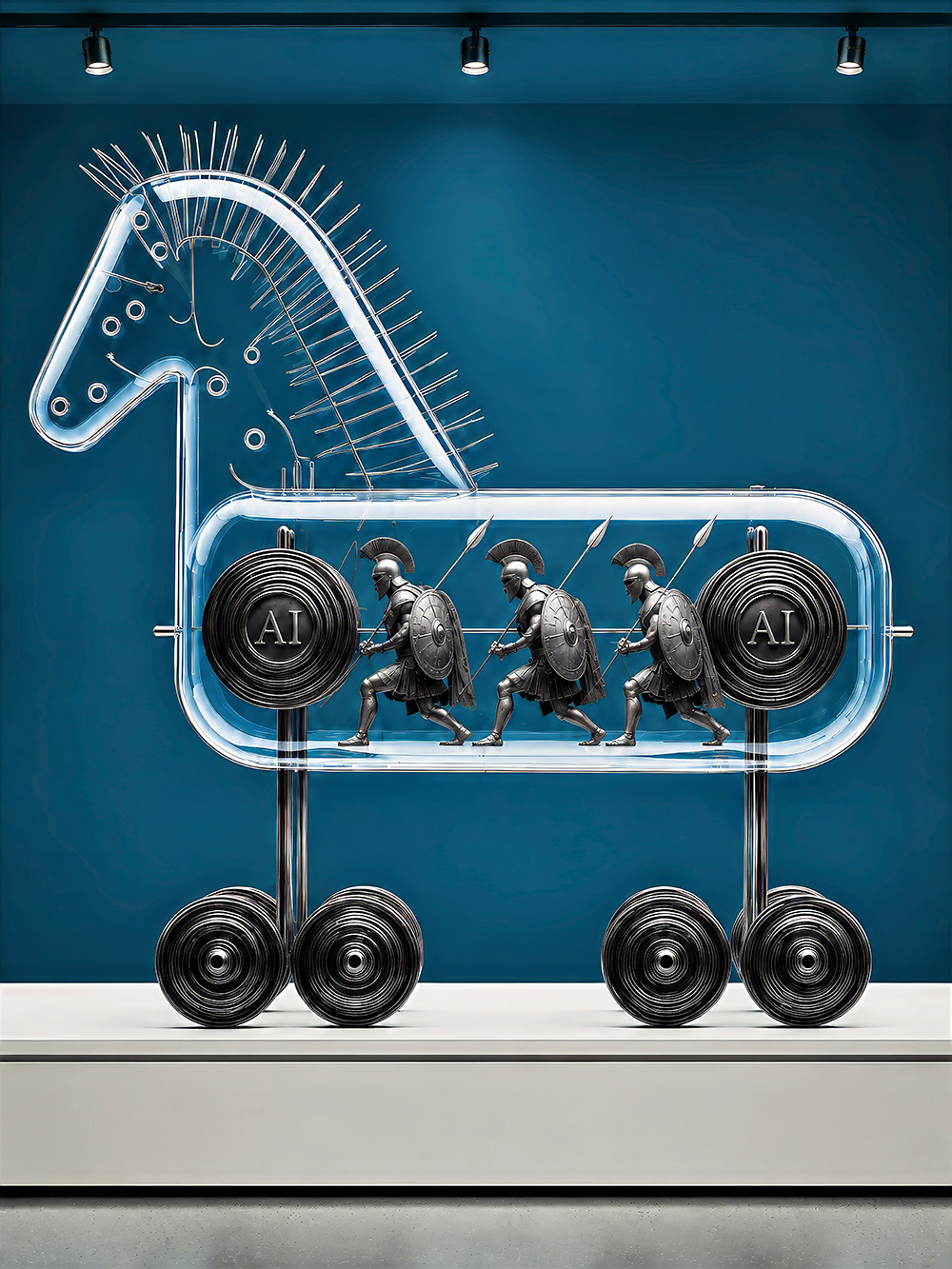
The Glass Trojan Horse of AI reimagines the Trojan Horse as a transparent machine. Its structure is visible, its occupants are exposed, and its mechanisms are open to view. Nothing is hidden, yet the question of control remains unresolved.
The work was created in the context of a broader cultural debate around artificial intelligence: whether visibility is enough, whether transparency produces trust, whether technical precision implies truth, and whether revisiting classical material today should mean strict reconstruction or radical reinterpretation.
Here, the ancient strategy of concealment is reversed. The soldiers inside the horse are no longer invisible. They can be seen. They know they are being seen. The danger is not secrecy, but agency.
By combining classical warfare imagery with glass, metallic surfaces, industrial design and a single disruptive neon accent, the image places myth, technology and power in the same visual field. The horse becomes both sculpture and machine, artifact and warning.
The work asks a simple but unresolved question: if we can see inside the machine, do we truly know who commands it, what intentions inhabit it, and where it is taking us?
The problem is not that the horse is made of glass. It is whether those inside or those outside hold the reins.
Prompt Logic
The central prompt logic was built around one contradiction: a Trojan Horse whose secret is made visible.
The visual system combines classical Greek iconography with transparent glass, chrome, mechanical structures and a controlled neon-pink accent. The horse had to remain immediately recognizable while functioning simultaneously as container, machine and sculptural object.
The image was constructed through a modular AI workflow. Horse, warriors, weapons, internal mechanisms and materials were first treated as separate visual problems and progressively recombined. Iterations focused on transparency, internal depth, scale, reflected light, figure placement and material continuity between glass and metal.
The warriors are positioned at different stages of emergence—inside the structure, crossing the opening and already outside—turning the classical logic of concealment into a visible process of deployment.
The final visual language deliberately avoids historical reconstruction. Classical forms are translated into a speculative technological object where myth, machine and museum sculpture coexist.
The secret is visible, but the strategy remains.
Process
The idea originated while developing the script for Lady Retrox’s forthcoming music video “La ternura que da el tiempo,” currently in production and planned for release before the end of the year.
The video reinterprets the entry into Troy and the ingenuity of Ulysses through a transparent Trojan Horse, exploring how this episode survives, mutates and reappears inside his memory rather than reconstructing it literally.
That narrative became connected to a broader contemporary debate around artificial intelligence: transparency and control, authorship, technical precision, and the tension between historical fidelity and artistic reinterpretation.
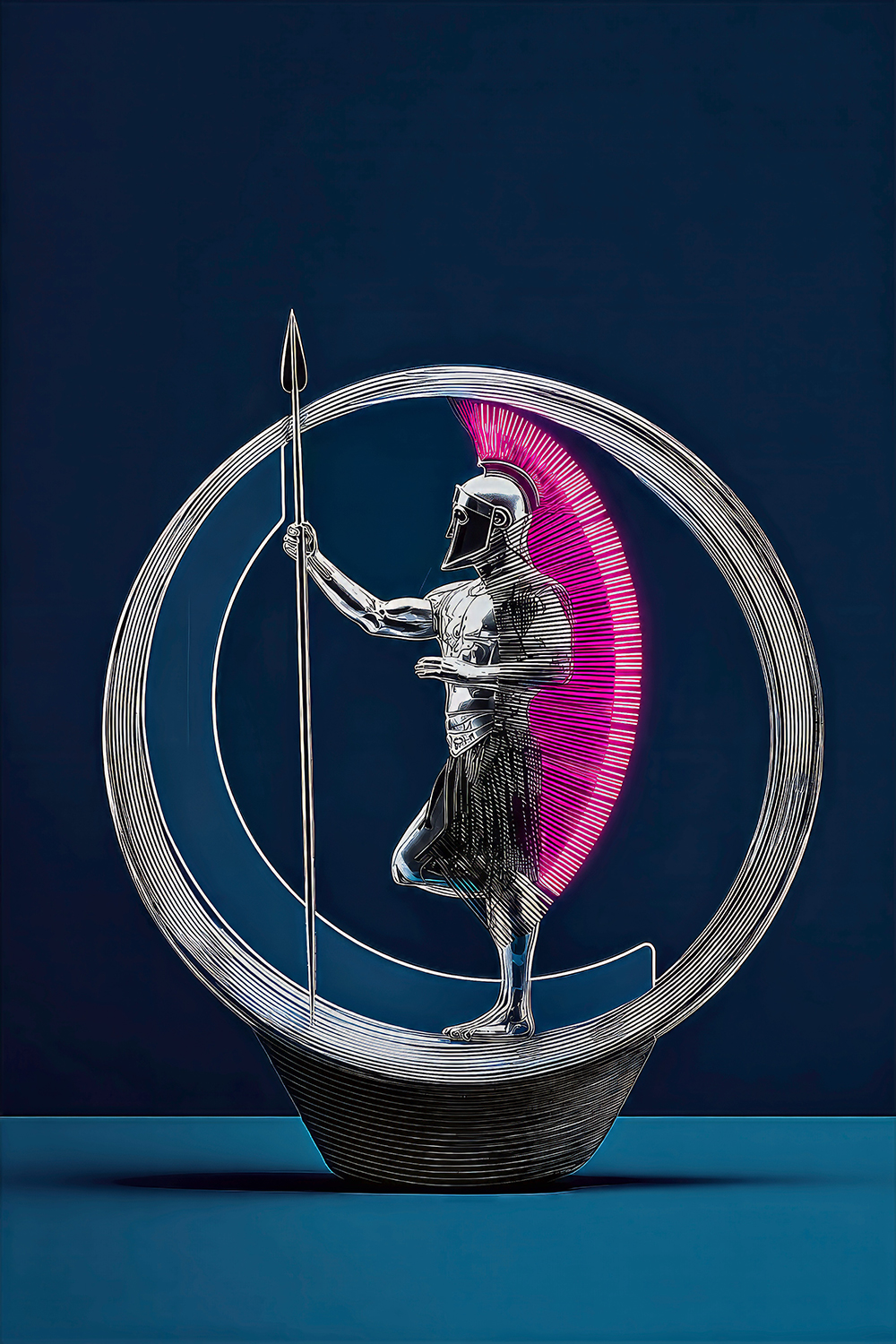
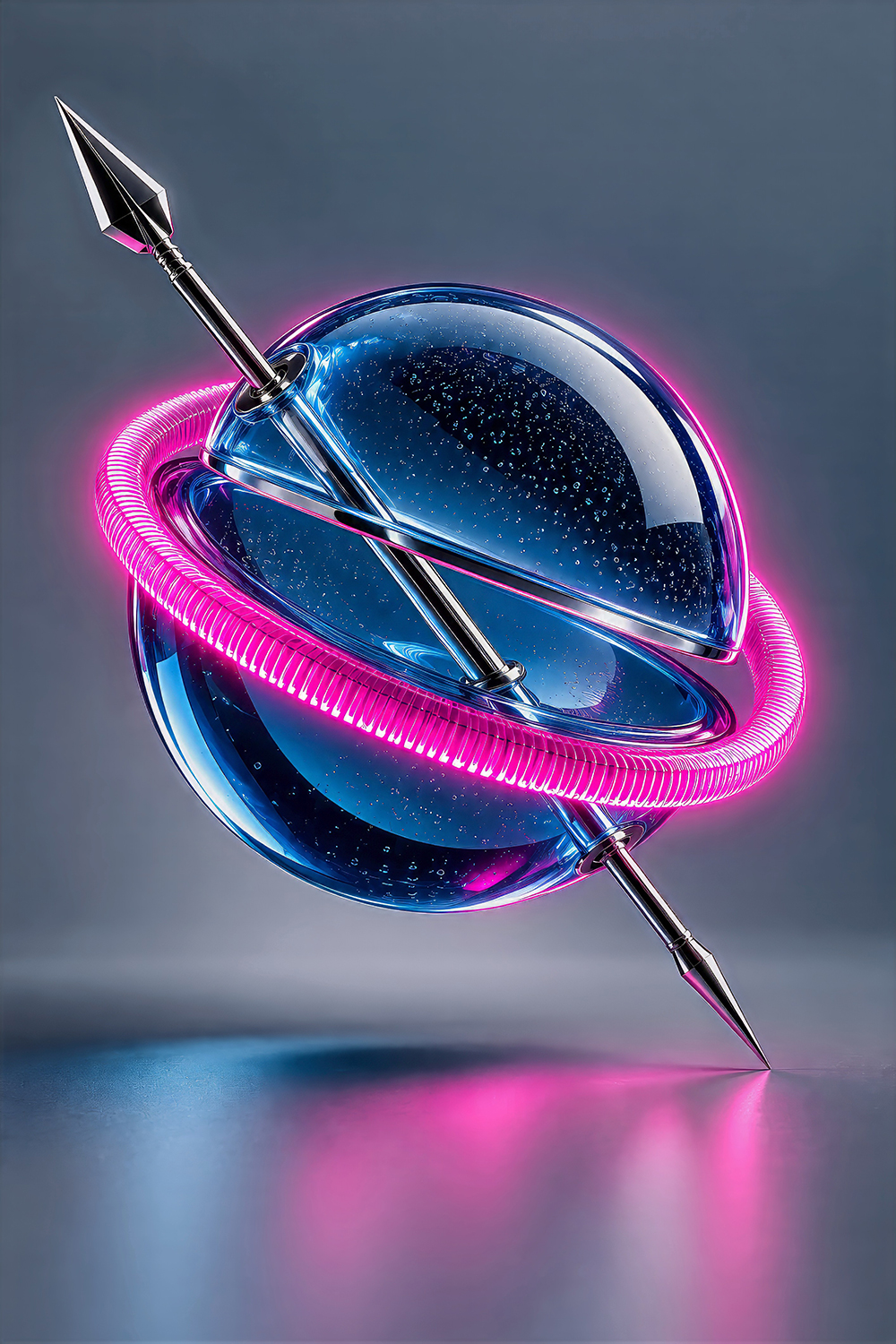
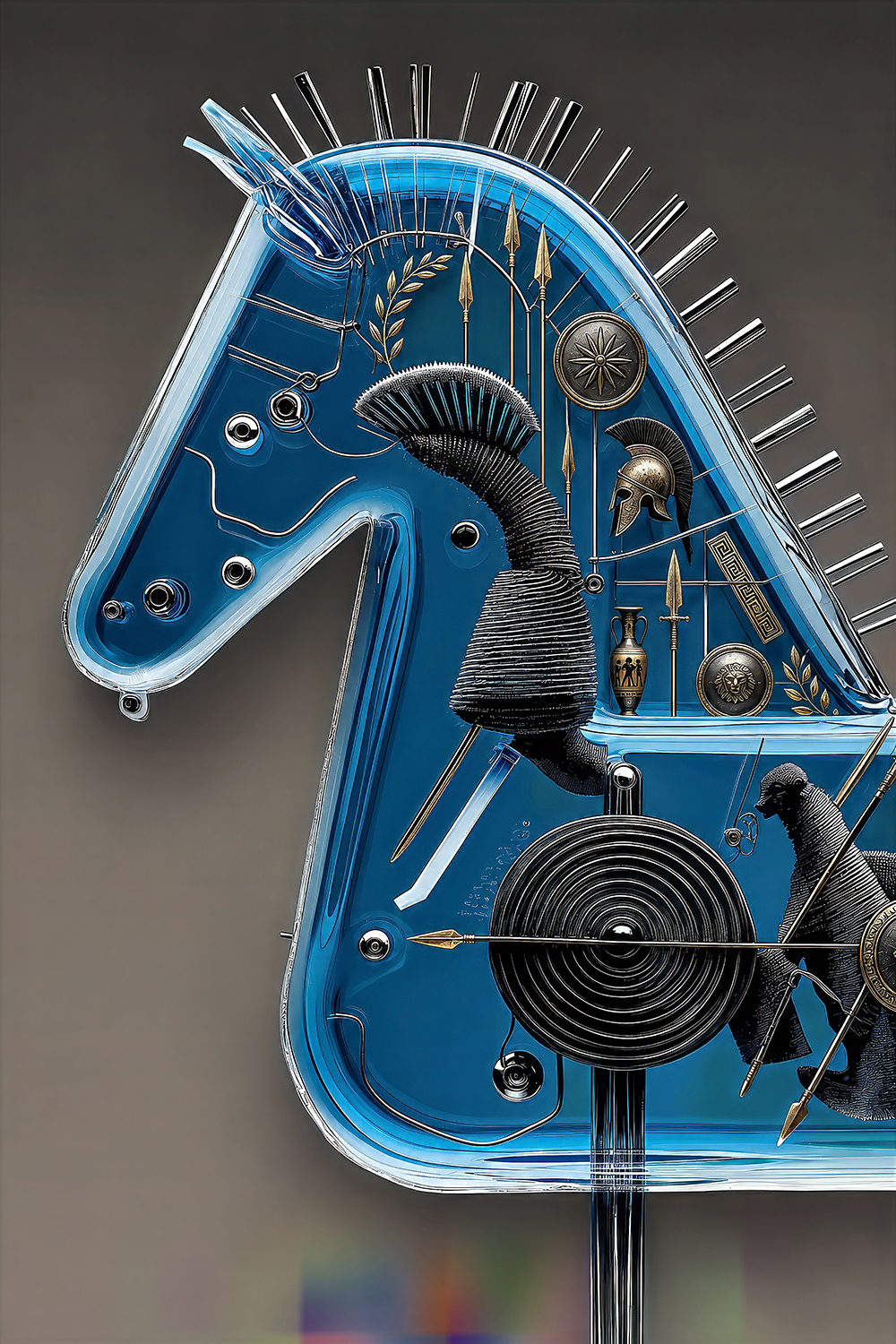
The final artwork emerged through a sequence of related AI-generated studies. One image isolated the warrior and established the metallic body and neon crest. Another explored the horse as a transparent container. Later iterations examined its internal anatomy, weapons, mechanical structures and symbolic fragments. The concept was then progressively reduced into more abstract relationships—spear, enclosure, penetration, visibility—before being reconstructed as the final horse.
The accompanying images document that evolution. They are not alternative versions of the submitted artwork, but stages of a visual investigation in which each image generated the conditions for the next one.
The final piece brings those experiments back together: a transparent horse that exposes its occupants and mechanisms while leaving the fundamental question unresolved—visibility does not necessarily mean control.