[001//iced.out]
Short Description
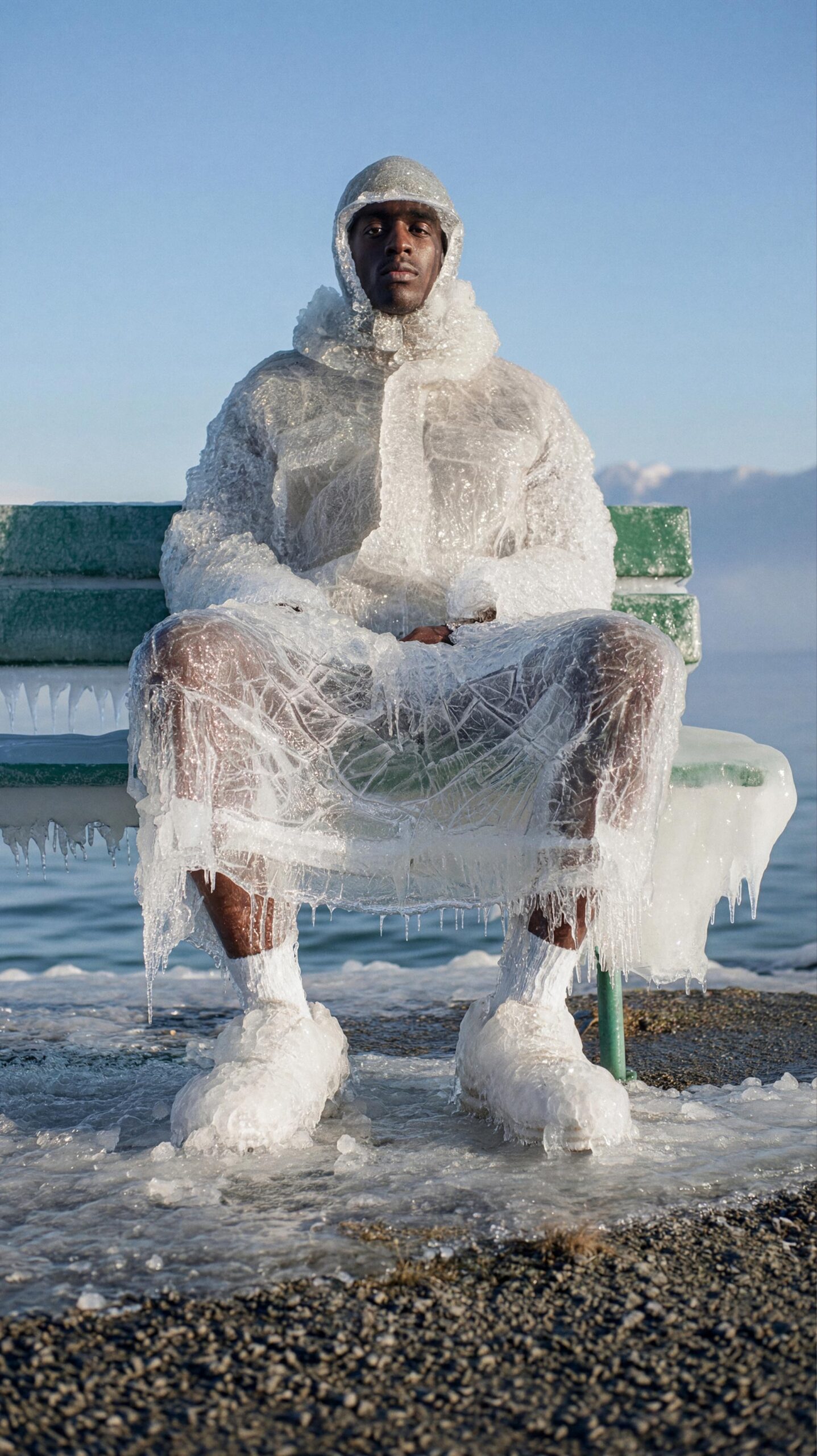
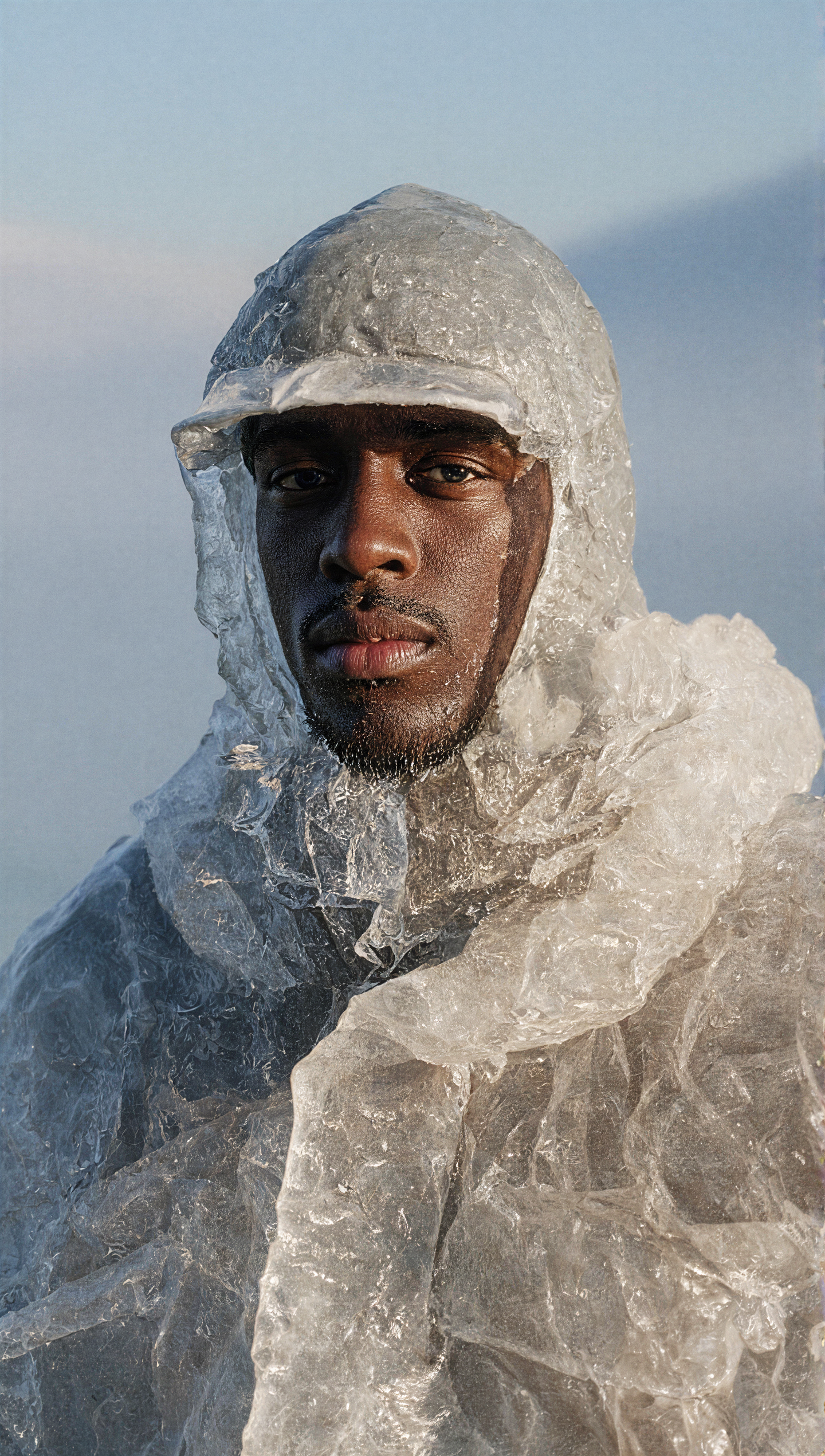
A figure sits still at the edge of a frozen landscape, dressed in a translucent garment formed entirely from ice. The piece exists in a fragile, transitional state — simultaneously solid and melting — reflecting a moment suspended between permanence and disappearance.
The environment is not a backdrop but an extension of the garment itself. Ice spreads across the bench, the ground, and the body, blurring the boundary between subject and surroundings. What appears natural becomes constructed; what feels impossible remains visually believable.
This work is part of an ongoing series investigating hyperreal materials and “near-impossible” fashion — images that exist on the edge of reality, where physical logic is respected, but subtly pushed beyond its limits.
Prompt Logic
The image was developed through an iterative AI-driven art direction process, focusing on material realism, composition, and environmental coherence.
Initial generations were guided by controlled prompts to establish structure, pose, and setting. The selected frame was then refined through a post-production workflow, including upscaling, detail reconstruction, and subtle compositing adjustments to enhance material behavior — particularly the translucency and melt of the ice.
Final refinements were carried out to balance contrast, texture, and lighting, ensuring the image remains grounded in physical realism while preserving a subtle sense of impossibility.
Process
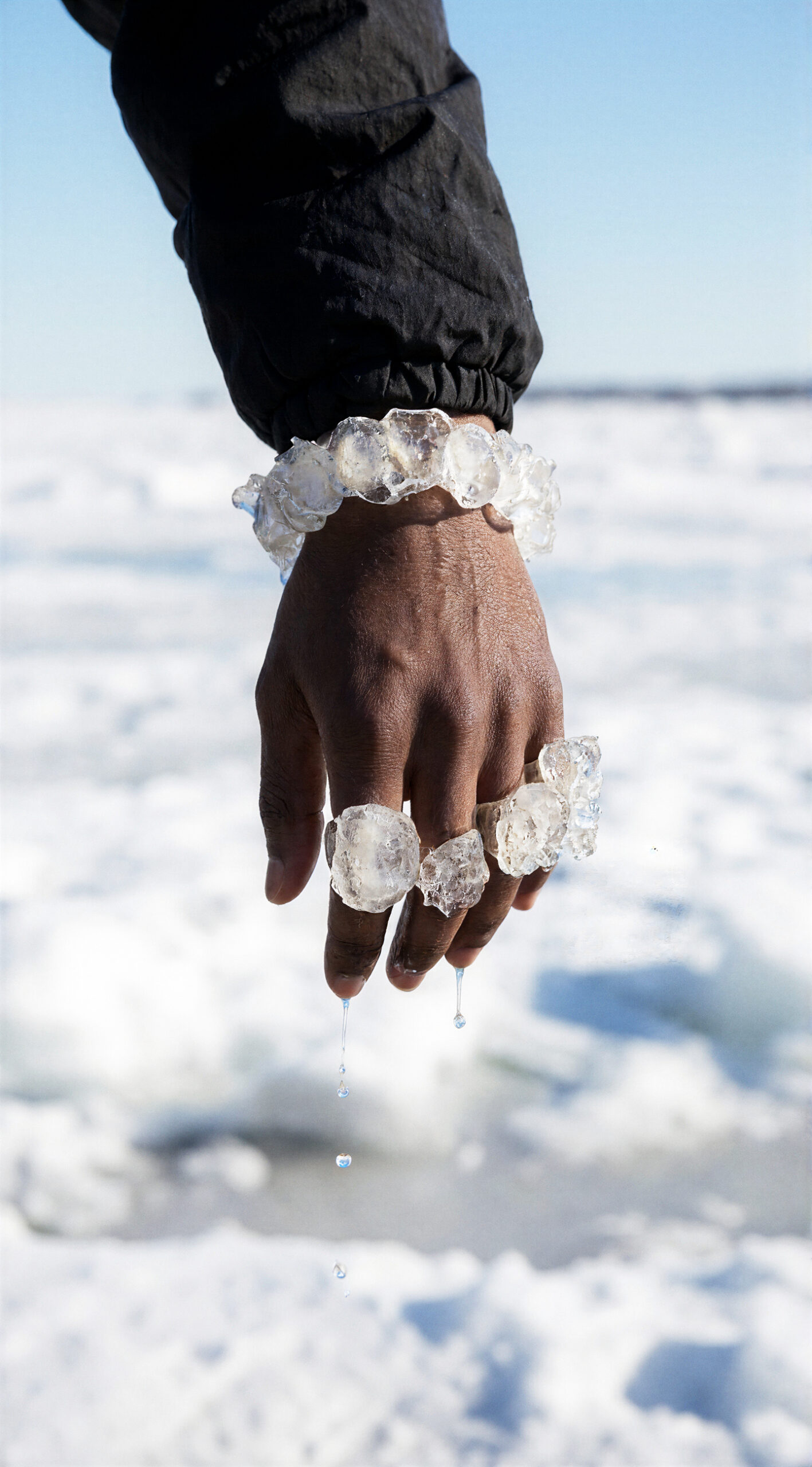
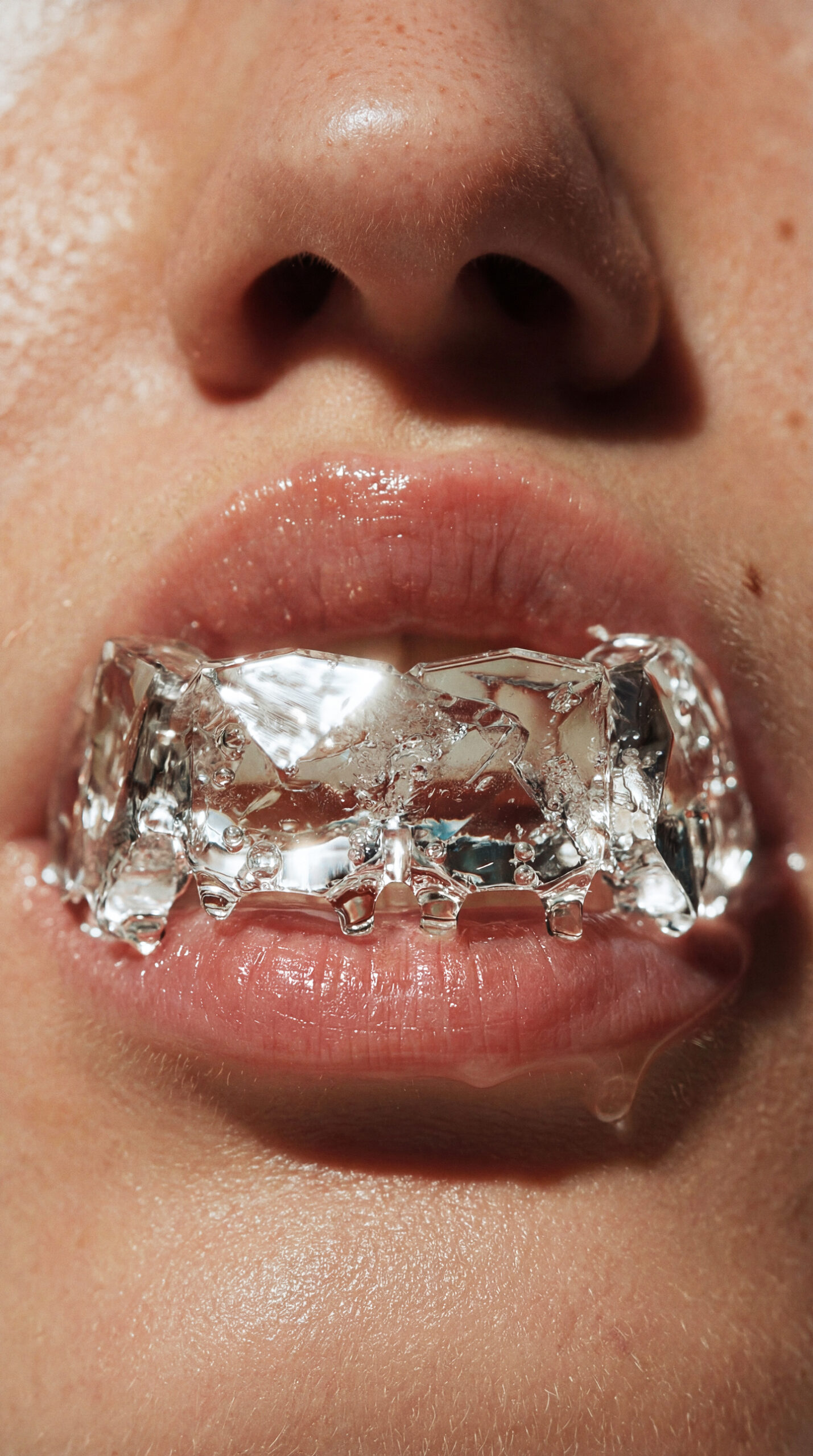
The piece started from a simple tension: translating the language of “iced out” — typically associated with jewelry and excess — into a full-body, material-driven fashion expression. Instead of representing ice as an accessory, the idea was to make it the garment itself, and extend it into the environment.
The process began with a series of explorations around silhouette, posture, and setting. Early iterations felt either too stylised or too artificial, so the direction shifted toward restraint — focusing on a calm, grounded pose and a believable lakeside environment. This allowed the material to carry the concept rather than the composition.
One of the main challenges was achieving convincing ice behavior. It needed to feel structured yet fragile, with a clear sense of thickness, weight, and melt. A lot of iterations were dedicated to refining how the ice interacts with the body, the bench, and gravity — particularly the transition between solid form and dripping elements.
The image evolved through multiple passes, combining generation and post-production to sharpen material definition, improve translucency, and balance the lighting. The goal was to keep the image physically coherent, while pushing it just beyond what would naturally be possible.
The final result sits in that space between reality and construction — where the scene feels real at first glance, but reveals itself as something slightly beyond reach.